


What does it take to navigate art school, build a career, and sustain a life in the arts? Since 2018, we’ve been asking CMU School of Art alumni about that very topic as part of our ongoing “5 Questions” series. Here’s some of what they had to say.
You don’t have to do it alone.
Joyce Kozloff (BFA ’64)
“Build a community, especially when you leave art school. I don’t see how anyone, particularly a young artist, can survive without it. Despite all the mythology about the great loner artists, it’s such a struggle, and there are so many disappointments. A support system really makes a difference.”
Jeffrey Augustine Songco (BFA ’05)
“Continue to keep your relationships with your classmates and your teachers fun and genuine. The relationships that you’re building now will support you the rest of your career through all the highs and lows.”
Lauren Hecht (BFA ’09)
“It’s also indispensable to have a group of people you trust that can still look at your artwork and give you a real critique.”
Carrie Schneider (BHA ’01)
“My best advice is borrowed from artist Paul Thek’s ‘Teaching Notes’: ‘Your classmates are your world, your future will be like this now, as you relate to your present, you will relate to your future, recognize your weakness and do something about it.'”
Everest Pipkin (MFA ’18)
“More than anything, I want to encourage you to spend time with and give to your communities, both inside and outside of the arts… The lift is easier with others.”
Fereshteh Toosi (MFA ’04)
“In addition to building community in the School of Art, it’s important to get out of the studio. Consider how you can cultivate a relationship with Pittsburgh, which is an amazing city.”
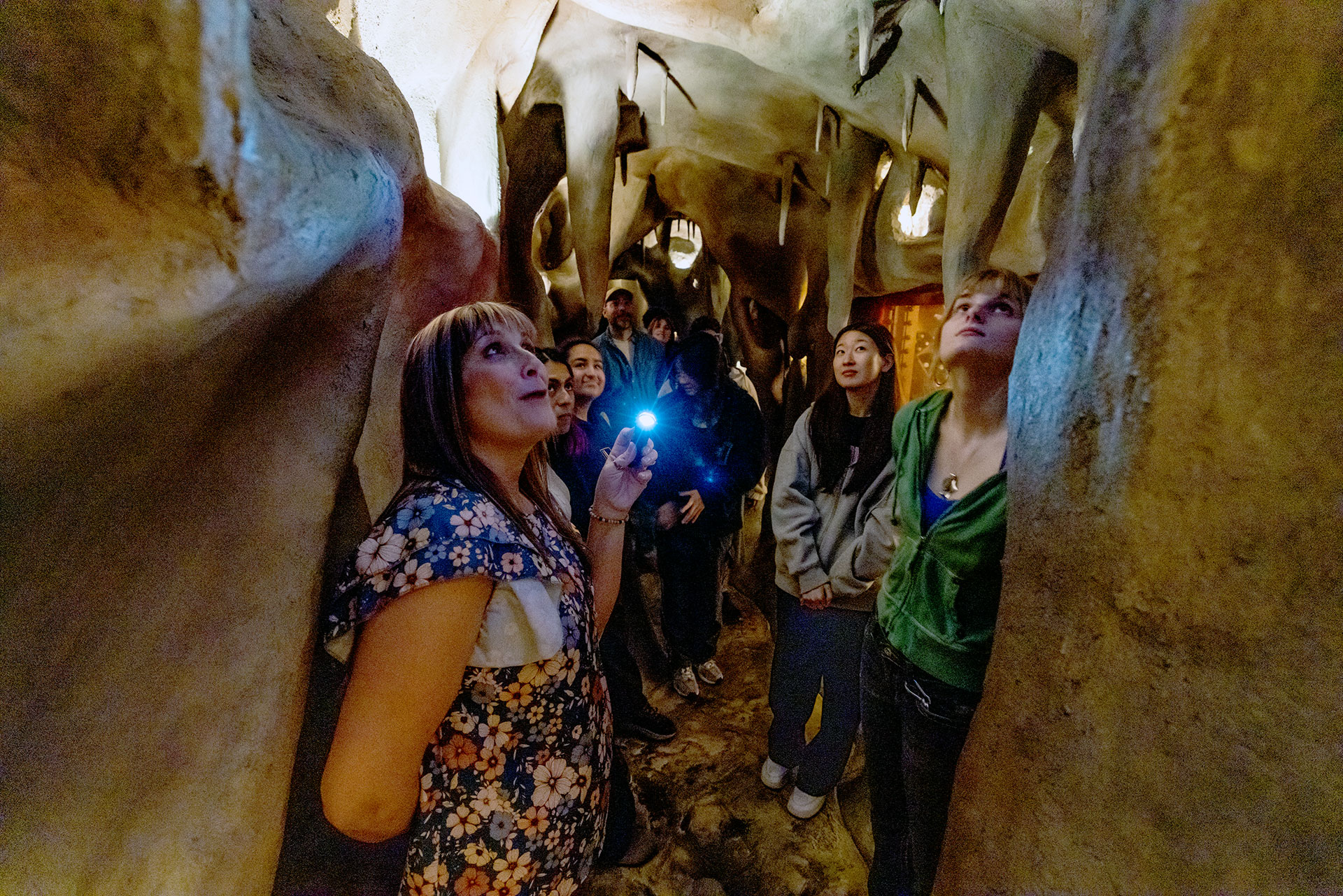

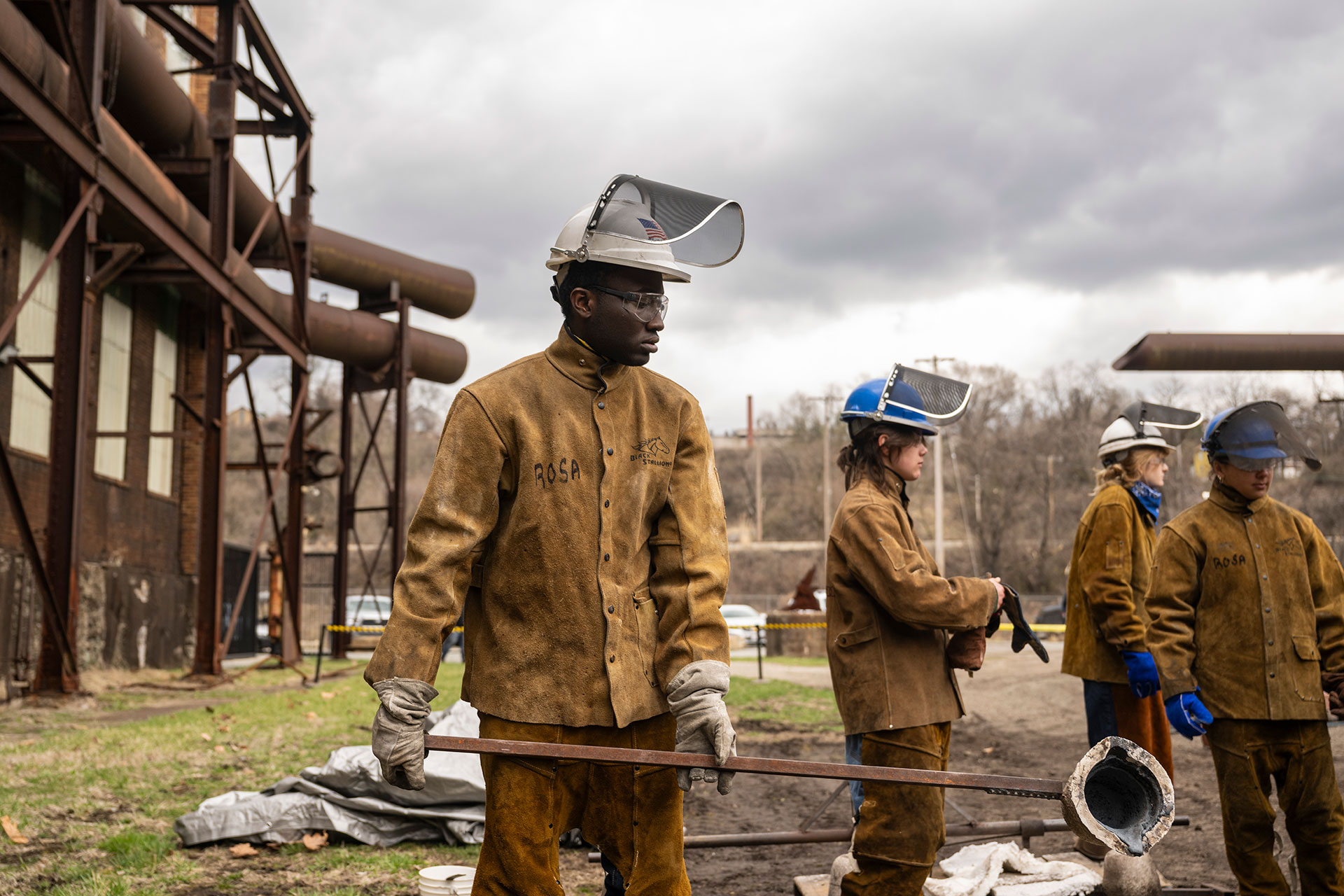

Class trips around Pittsburgh to explore the city’s many cultural institutions and organizations
Save your work. Repeat: save your work.
Jules Mallis (BHA ’12)
“Instead of always creating something new or working on new ideas, consider dipping back into an old idea and trying to do it again. You may have improved your skills or have found a new way to execute the idea at hand… Keep returning to yourself and your own works as inspiration.”
Ryan McGinness (BFA ’94)
“Keep all your work. You will appreciate it more and more with each passing year. Keep all your books, if you can… The rest of your life will be a slow burn of realizing what you absorbed.”
The entire campus is your playground.
Marlena Abraham (BSCA ’15)
“Learn as much as you can in as many areas as you can because you’ll never know what weird piece of esoterica, history, mathematics, or science will catch your eye and become part of your art.”
Shanna Tellerman (BFA ’03)
“I think my best advice is to explore. I feel like I spent my entire four years searching, and I didn’t know what I was searching for… My senior year, when I took the virtual reality class, I felt like I actually found it. That comes from exploration and the willingness to try things and to just search until you find it.”
Jessica Vaughn (BHA ’06)
“I would highly recommend taking as many studio courses in a variety of mediums as possible. The facilities at the University are unmatched, so take advantage of it particularly if you are new to a medium.”
Jessica Gaynelle Moss (BFA ’09)
“You just have to be able to articulate what your interests are, make an argument for why it’s important. Oftentimes you’ll be uplifted with the freedom to do and learn about your unique interests.”
Dana Lok (BFA ’11)
“I still think about this one philosophy course I dropped because the other kids seemed so much more on top of their game. I probably would have gotten a mediocre grade if I stayed put, but I would have learned something I’d really like to use today. Take the bad grade, take the risk, take the extra class! The end goal is to gain new experiences, not to achieve perfection.”
Elizabeth Monoian (MFA ’00)
“Develop partnerships and relationships with students, researchers, and faculty outside of your department and discipline. Learn more about their work and imagine what it might look like to collaborate with them. Some of the most innovative minds in the world are on the CMU campus and the possibilities for collaborations are endless.”
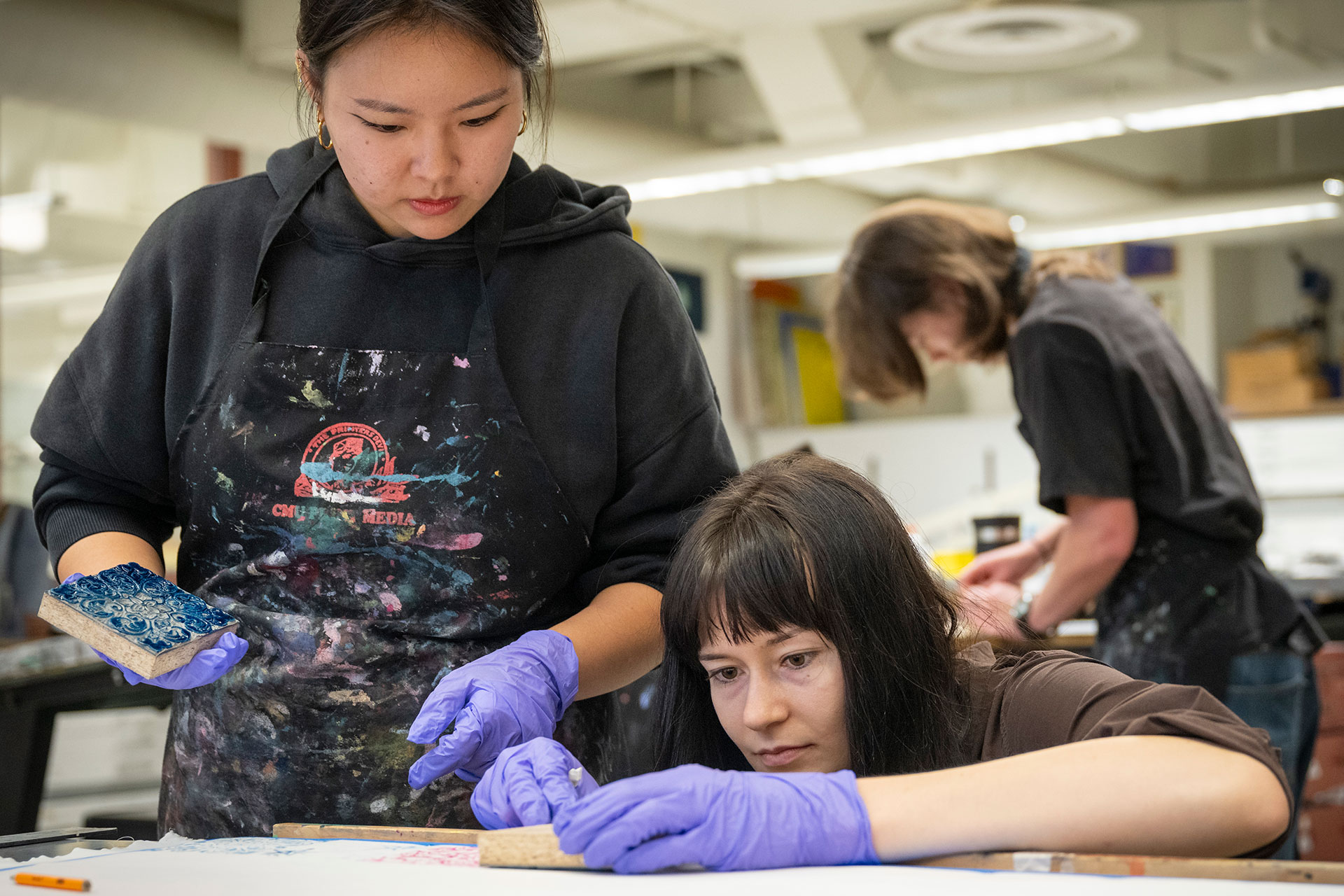

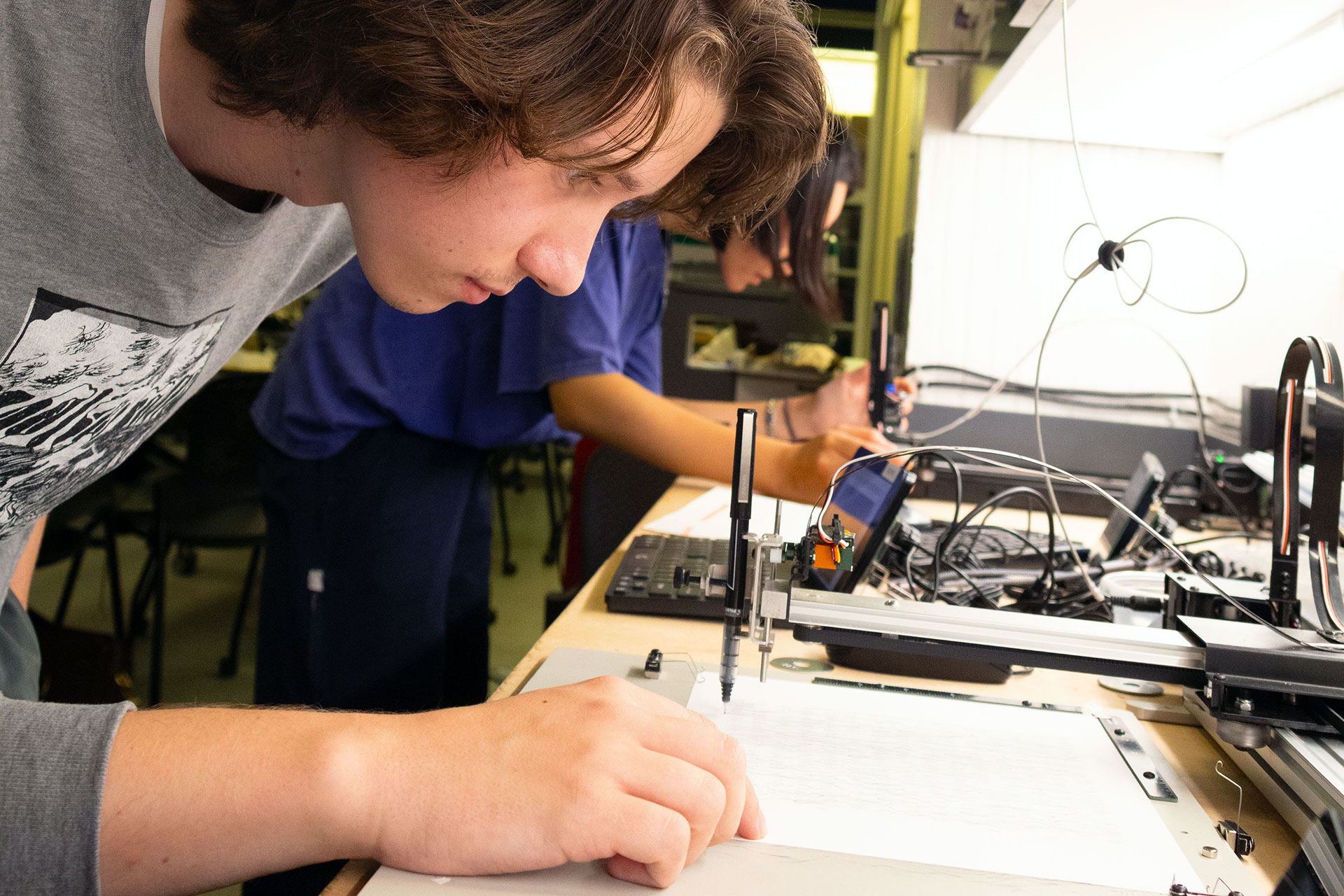
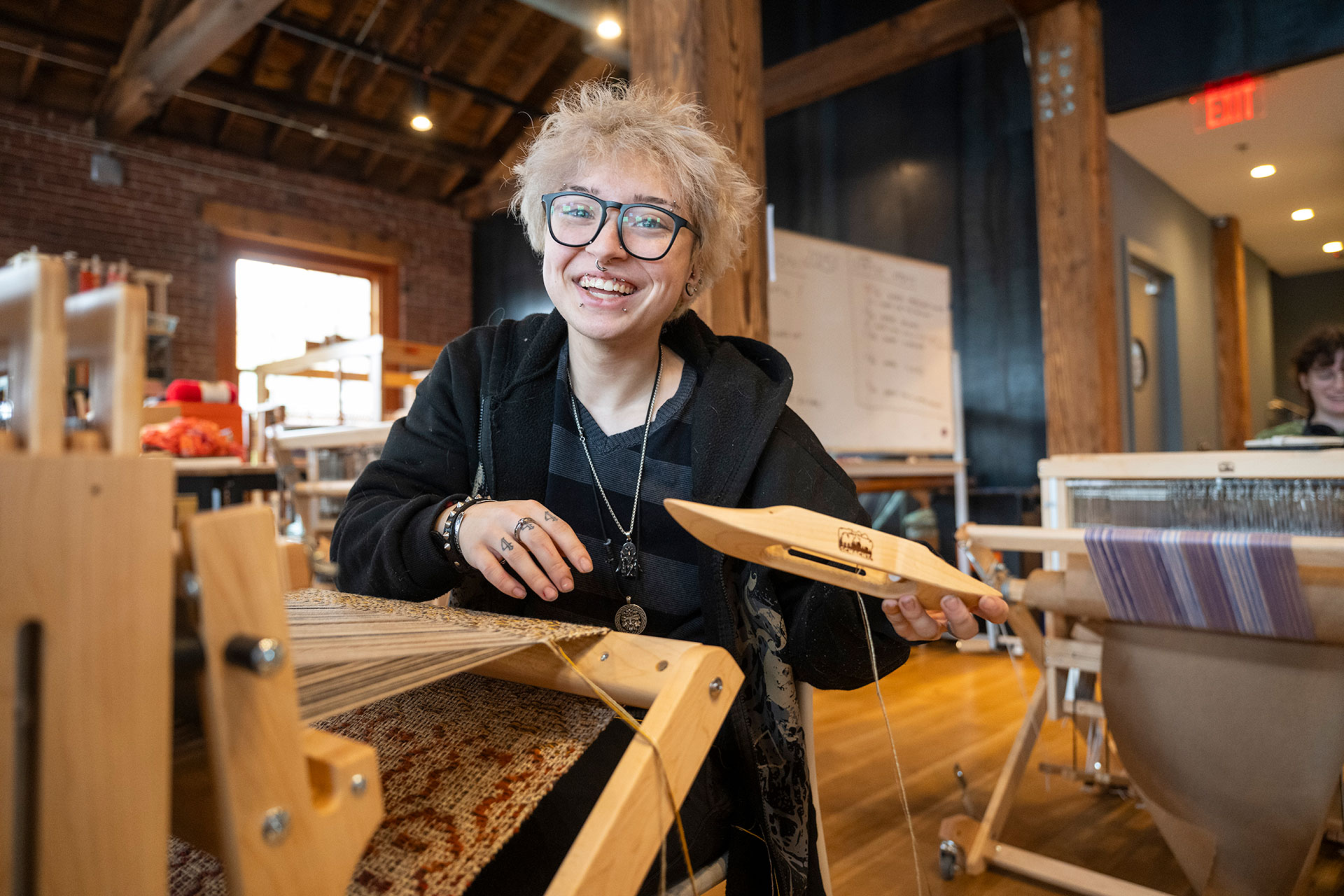
Students at work on class projects, from ceramics and print studios to machine-based drawing
Get comfortable being uncomfortable.
Mary Maggic (BSA ’13)
“My best advice is to stay confused. Navigating boundaries, borders, edges, and undefined spaces means you are bound to encounter confusion, and you should never shy away from that encounter.”
Chloé Desaulles (BHA ’19)
“Working with emerging technologies, there’s a huge lack of forward visibility. You don’t really know what to expect, because most of the technologies you’ll work with next year haven’t even hit the market yet. That lack of assurance makes it difficult to get started, but there’s also a hunger for it and people are excited. Just starting is the hardest part.”
Semi Ryu (MFA ’02)
“I have advice for international students dealing with language issues. The language problem was hard but it gave me tremendous opportunities for growth. It allowed me to contemplate important issues that I never thought about before, desperately asking questions about communication, self and identity.”
Jina Valentine (BFA ’01)
“CMU is a gem. It is singularly complex and weird and wonderful… My advice is to trust the path you are on, including any detours and impasses. Keep in touch with your mentors, old friends, and yourself. Oh, and keep making art.”
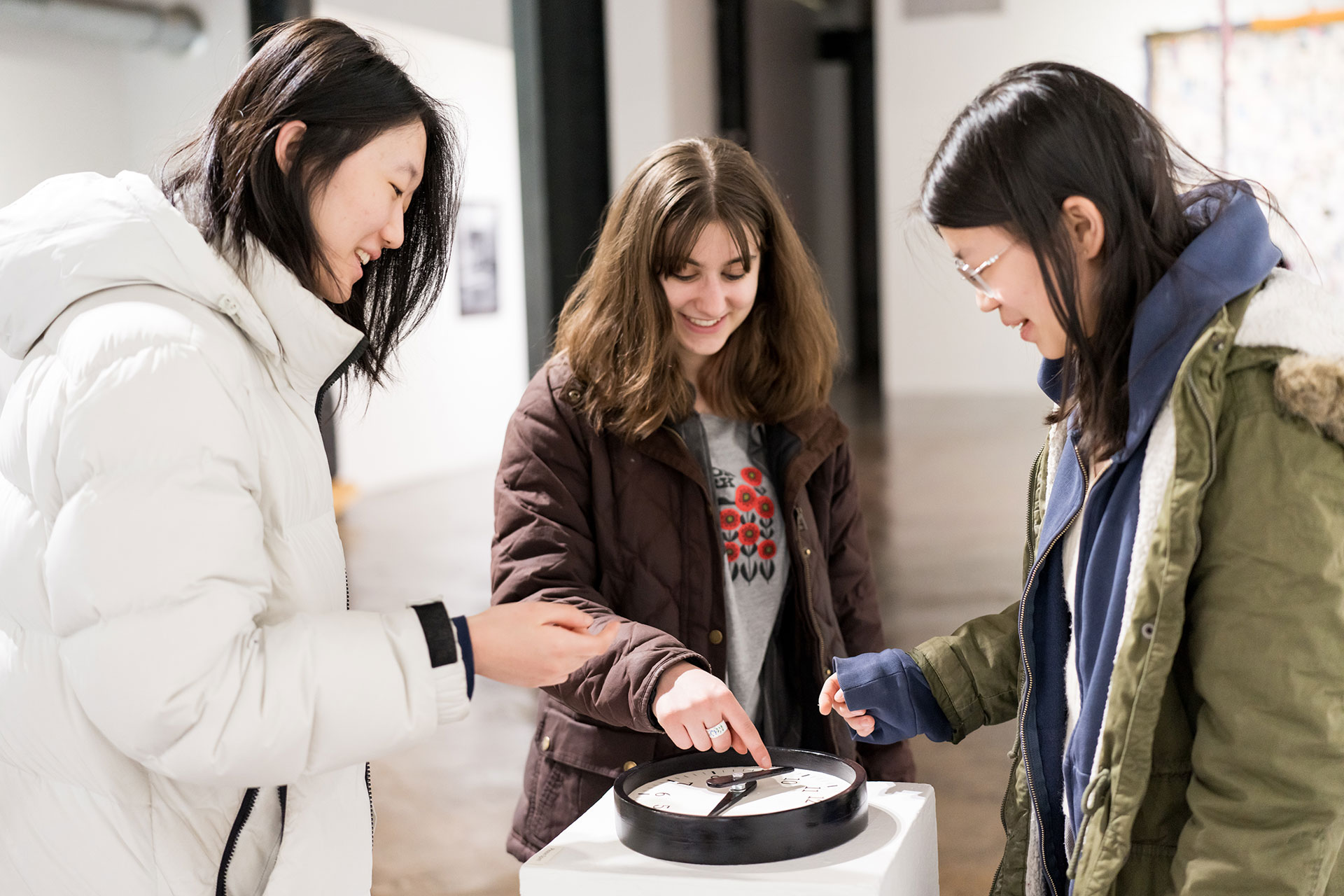
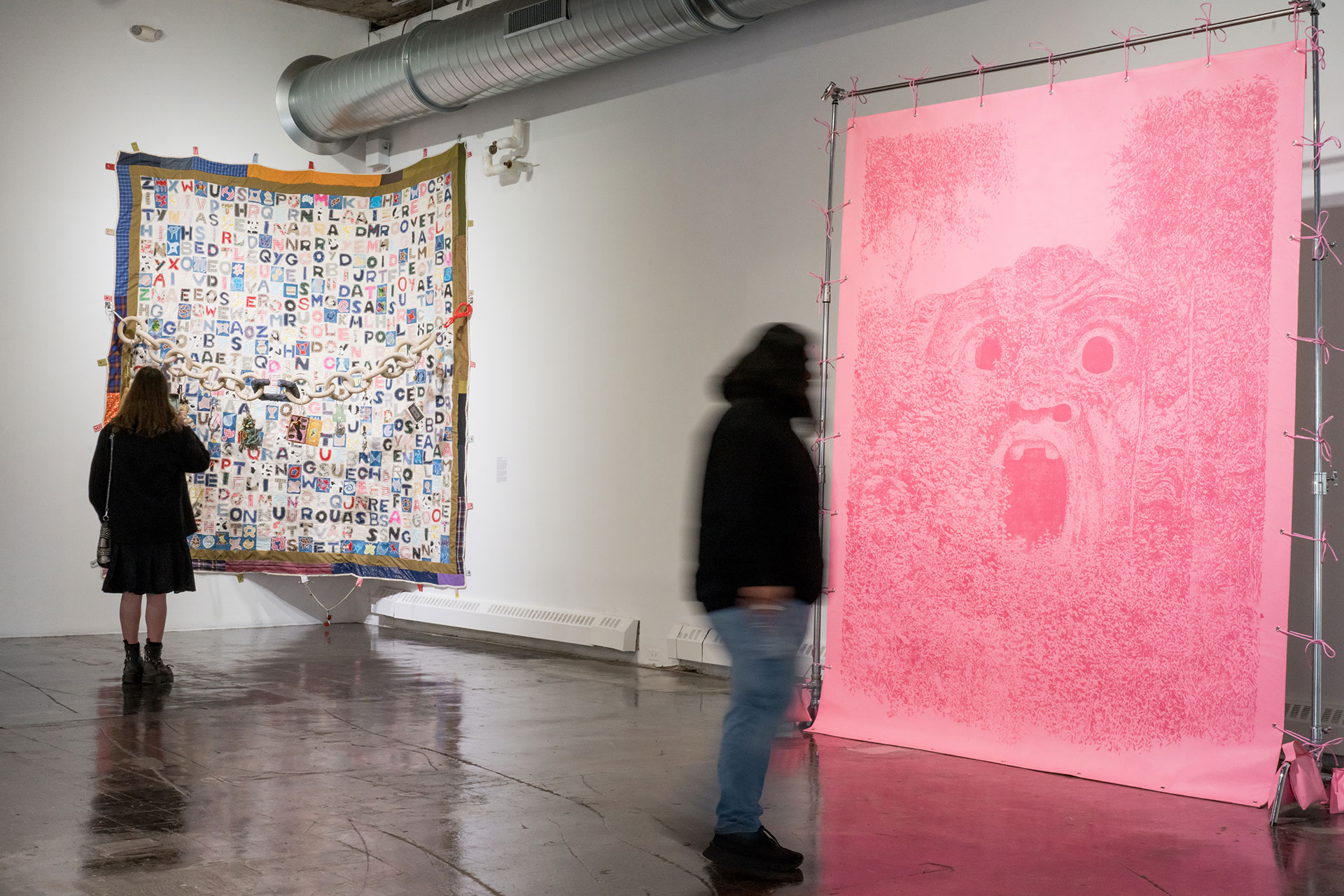
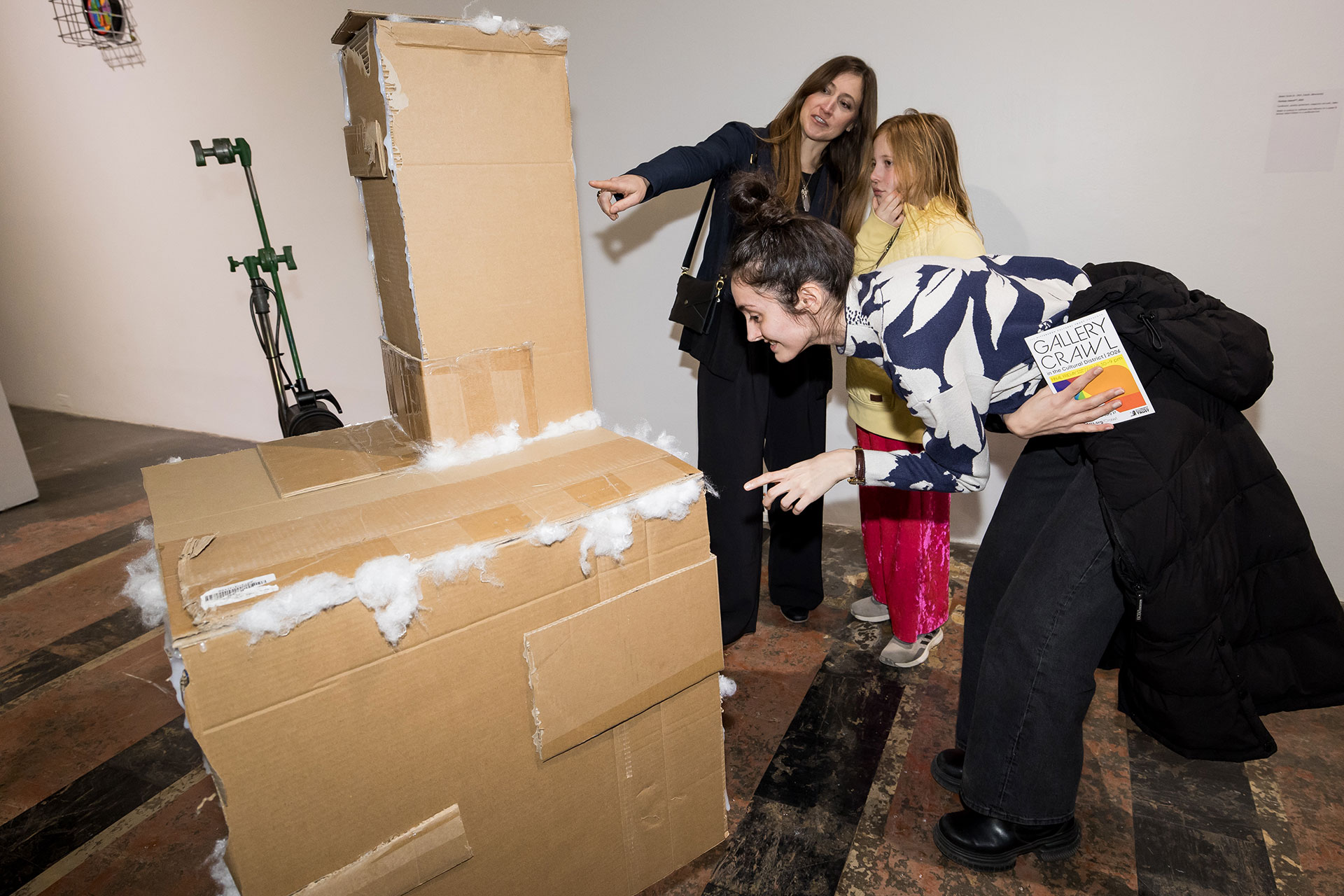
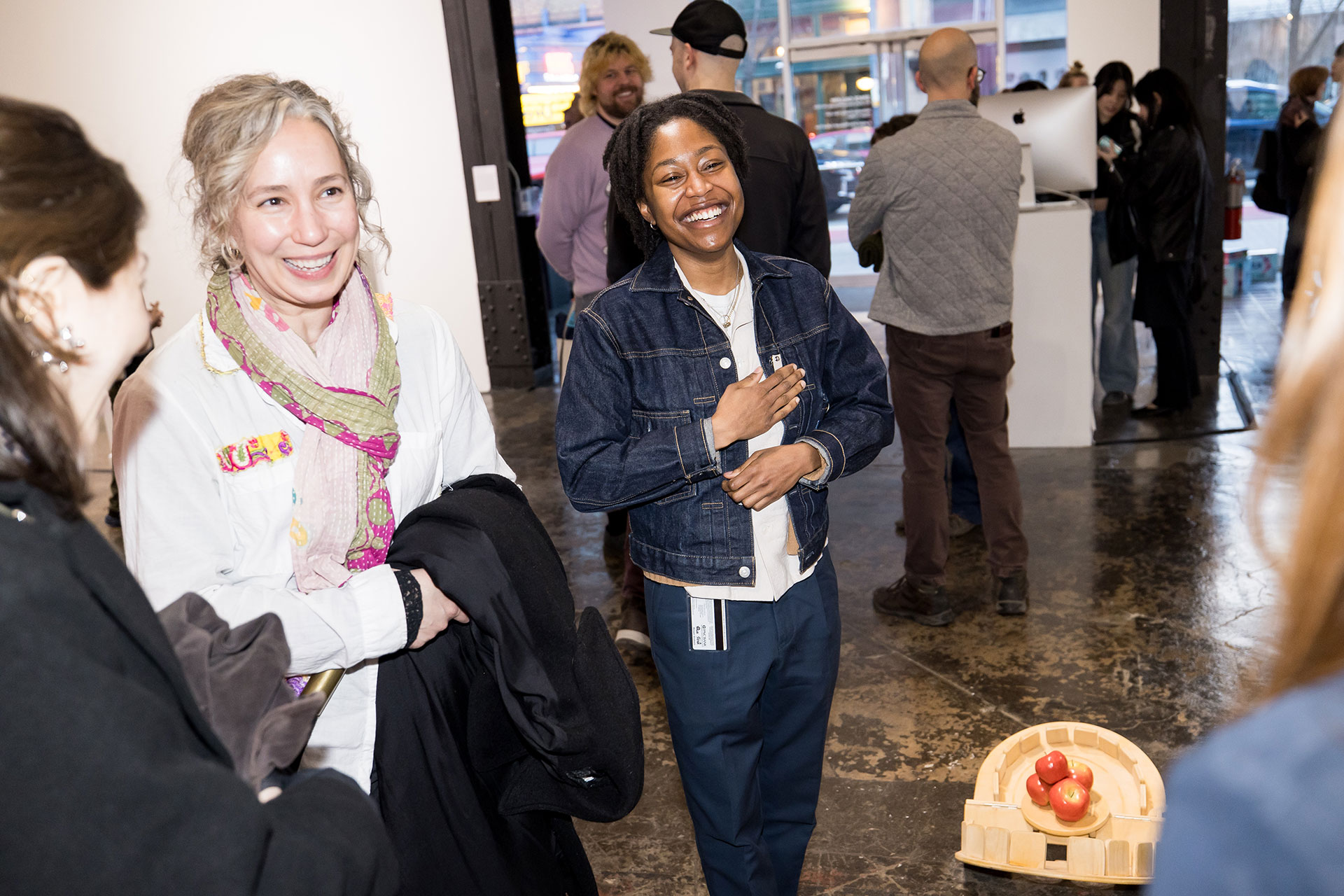
1st and 2nd Year MFA Exhibition at Space Gallery in downtown Pittsburgh
Your career will look different than you imagined.
Peter Burr (BFA ’02)
“There’s a prevailing cultural notion of going to college in order to get a job that doesn’t apply to art school, because there’s not necessarily a clear career path… Take your four years of art school as an opportunity to begin to model what a generative life, a life well lived, could mean for you.”
Robyn Tong Gray (BCSA ’11)
“For people who want to create art for any of our games, I want to know that you understand technical considerations like low poly vs high poly art… Mostly, when I talk to you, I want to see that you understand what it takes to get your super awesome looking thing into a game engine and rendering properly.”
Max Hawkins (BSCA ’13)
“One thing that I really struggled with after I left CMU was the lack of critique. Outside of art school, it’s very difficult to get honest, constructive feedback. In critique, there’s a sense of safety and even though the feedback you’re getting can be kind of rough, it’s very difficult to find outside of school.”
Doug Fritz (BFA & BS ’07)
“Contrary to your beliefs going in, most of the graduates will not be Artists with a capital A as their career, that isn’t a bad thing, art is a critical element to thinking, making, building, and having impact in our society.”
Advocating for yourself is hard, but essential.
Jen DeLuna (BFA ’21)
“I think I had my ego death early in college, and so out in the real world getting rejections and being able to work past that is really important. Push yourself and believe enough in your work to keep on making it.”
Ian Ingram (MFA ’10)
“Keep making work. And promote it! …Another important side of the equation which I was and am particularly bad at is that you have to learn how to promote your work, and do it.”
Swetha Kannan (BFA ’16)
“In an unfair workplace, my advice is to unionize. I do think that starting wages are becoming smaller and smaller based on artists working for free or for exposure. A union is a great way to protect against that. Finally, if someone tells you that they’re going to give you a job, get it in writing.”
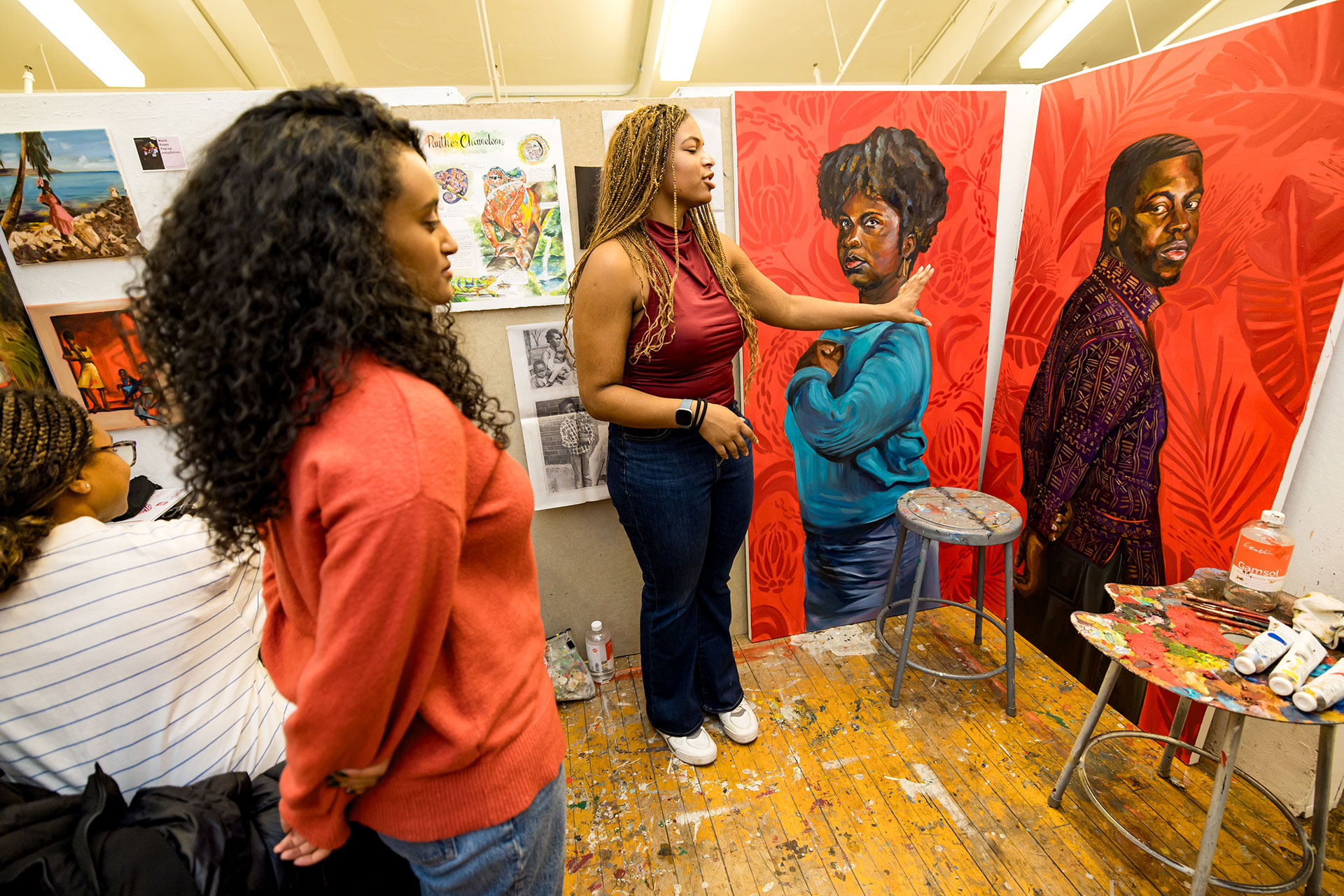
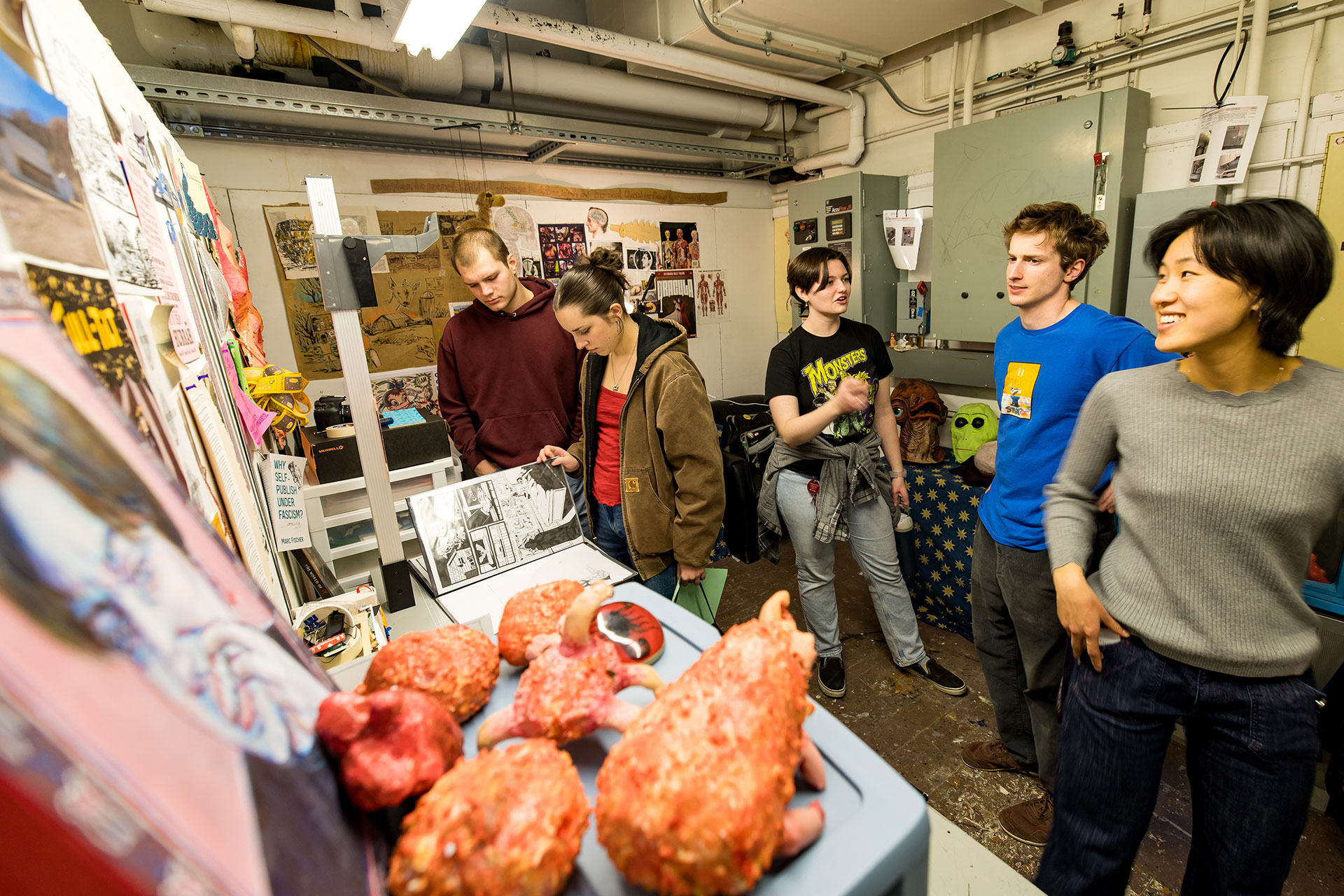
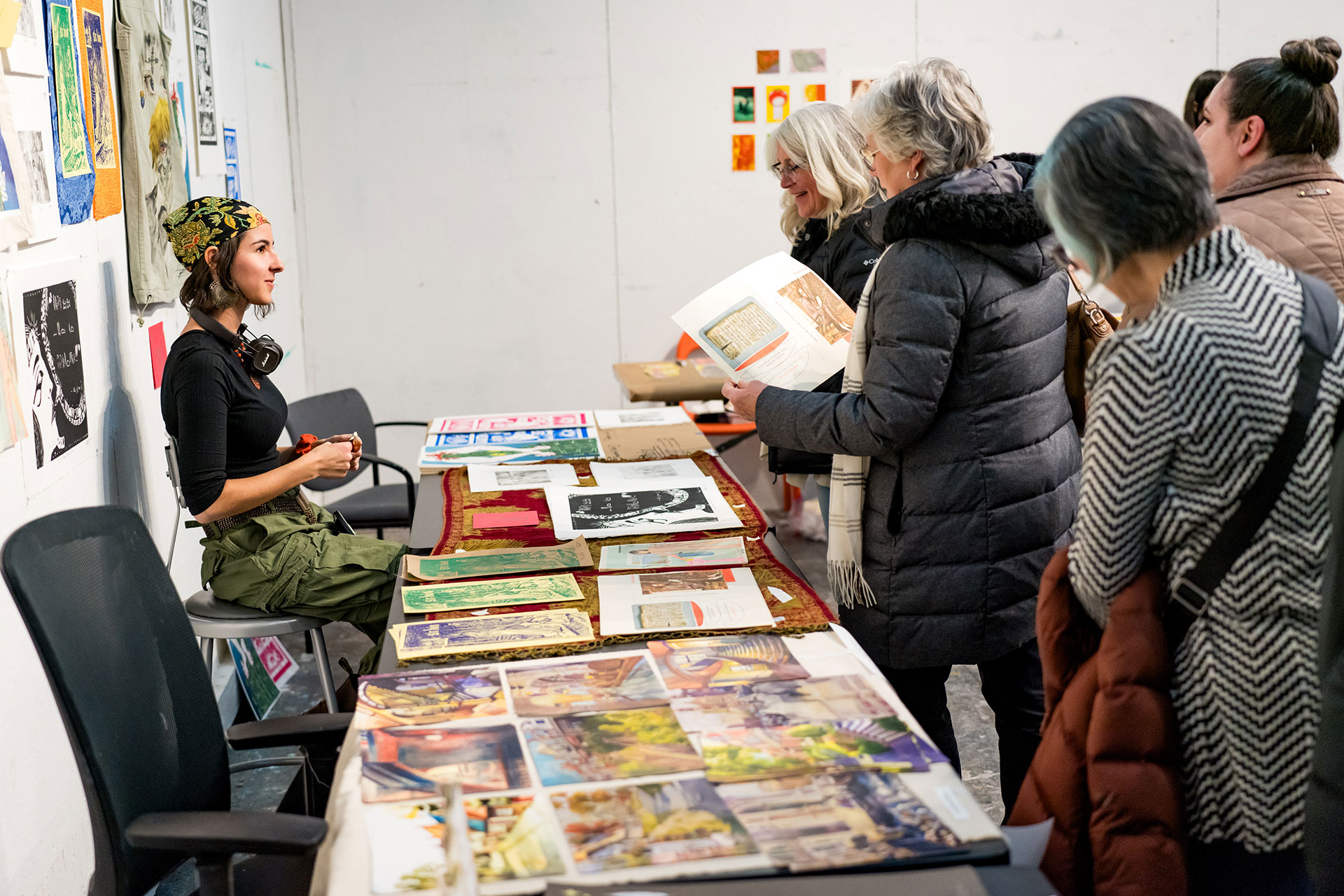
CMU School of Art’s annual Open Studios event
It’s ok to prioritize self-care.
Elizabeth Agyemang (BFA ’17)
“There will always be another drawing, another assignment to do, or another piece to make, but there will only ever be one you, so be kind to yourself and cherish the time you have to grow and create in these years as a student of CMU’s School of Art.”
Debra Rapoport (BFA ’67)
“Try to relax. Try to find joy and really honor yourself. I have a mantra, the four T’s: Go deep inside, find your Truth. It’s too easy to criticize it, so Trust it. Be Tolerant of it. Wrap the whole thing in Tenderness…”
Juliacks (BHA ’08)
“Don’t forget to play as hard as you work, but not more.”
There are no perfect conditions to make work.
Tsohil Bhatia (MFA ’20)
“Go out more and be in spaces. Art can be made anywhere. If you are a maker, an artist, a thinker, you’re going to make it happen no matter where you’re at… I’m so tired of people being like, ‘Oh, I don’t make art these days because I don’t have a studio.’ You don’t need a studio.”
J Houston (BHA ’18)
“Maybe it’s true that it’s difficult to make art and hard to make a living, but also, if you want to do something, you can just do it… When I left school, I found that there were people making things work everywhere. I would have loved to have other young working artists just say, ‘you’ll figure it out.'”
Keith Lafuente (BFA ’14)
“Just go for it. There will always be excuses: it’s not perfect, I don’t have the proper skills or resources, it’s not the right time… But life is short, and the best way to grow is to try. Embrace failure!”
Remember why you fell in love with making art.
Miranda Miller (BFA ’20)
“Pay attention to the things that you’re doing just because they bring you joy. I feel like there were so many projects and classes that it was easy to get bogged down. But the things that have really guided where I am today are the things that I look back and I realize I did just because I wanted to.”
Dr. Elizabeth Hlavek (BFA ’04)
“In adulthood, it’s really hard to have time or space to devote specifically to art, so I encourage students to truly appreciate this time and enjoy making art because that’s why you’re there!”