


“5 Questions” is an ongoing series with School of Art alumni who are transforming art, culture, and technology, exploring their creative practices, career milestones, and Carnegie Mellon memories.
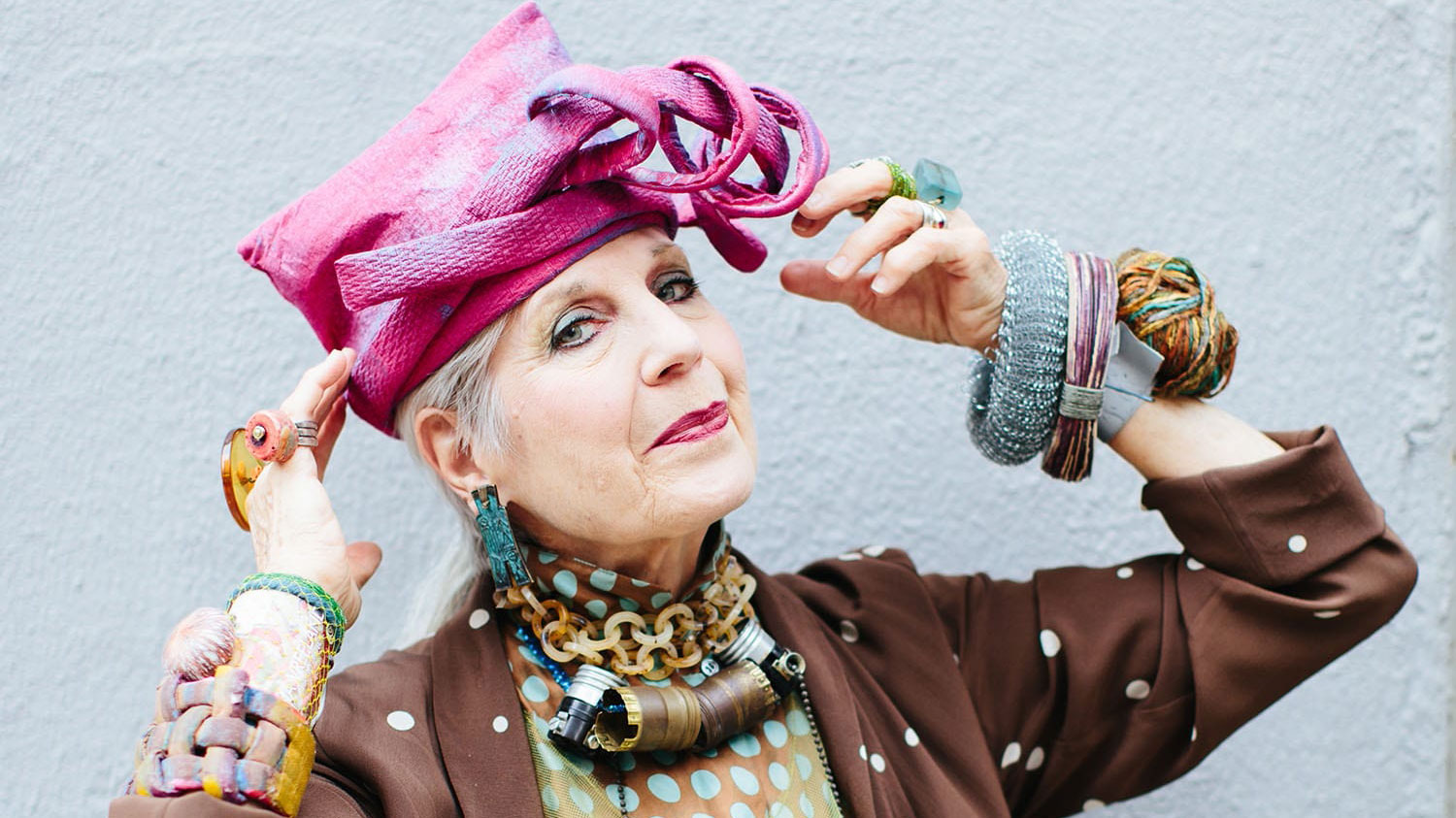
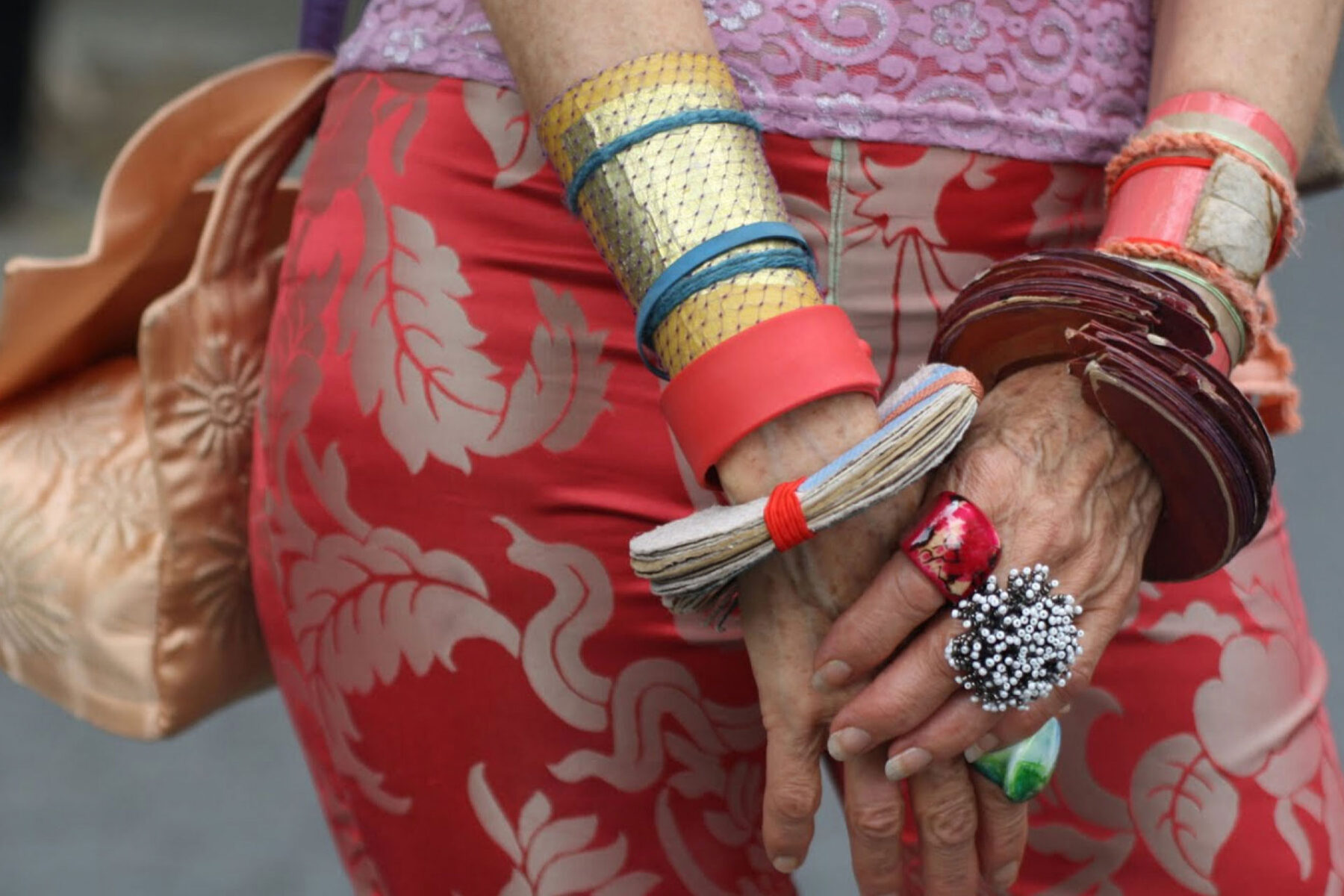
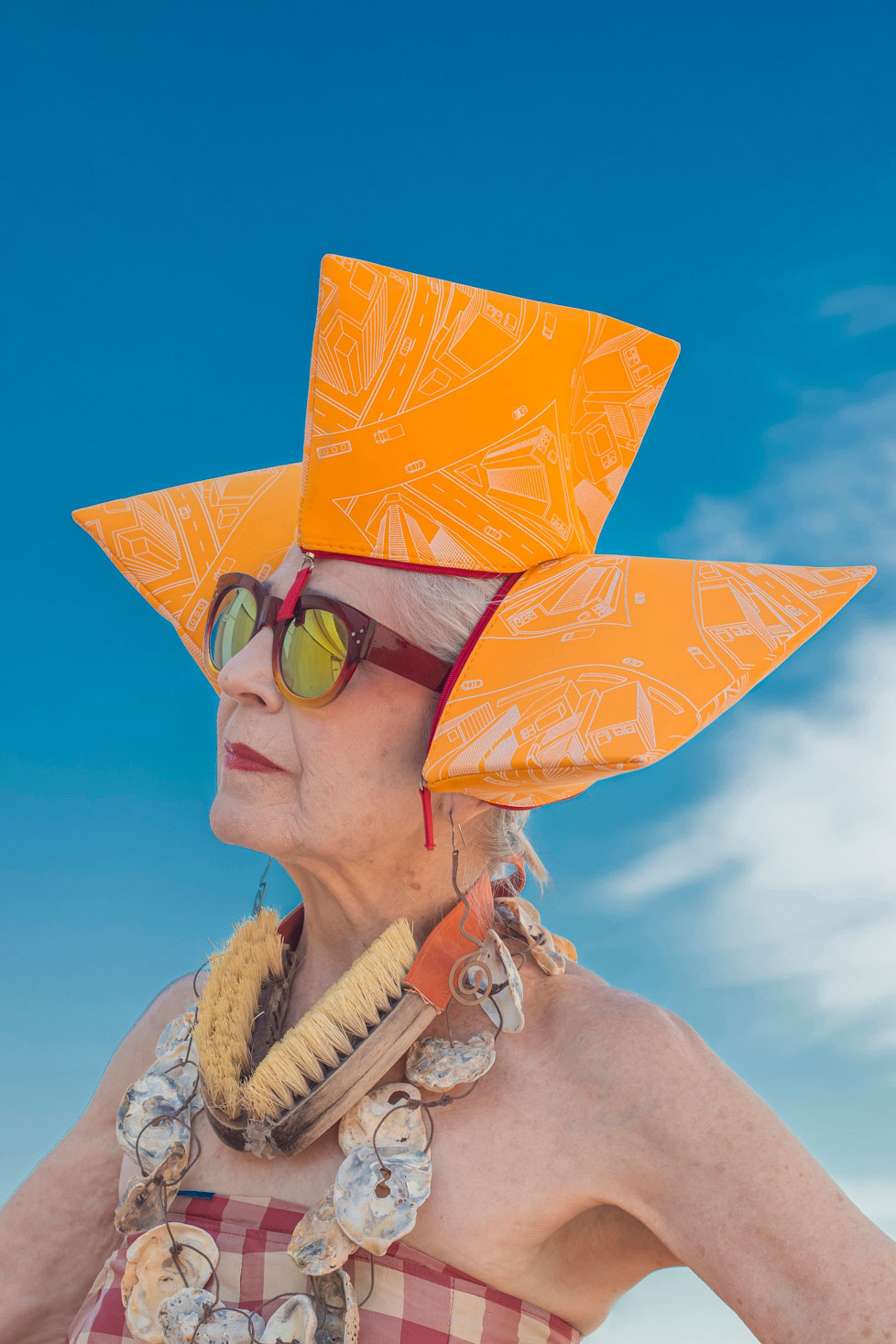
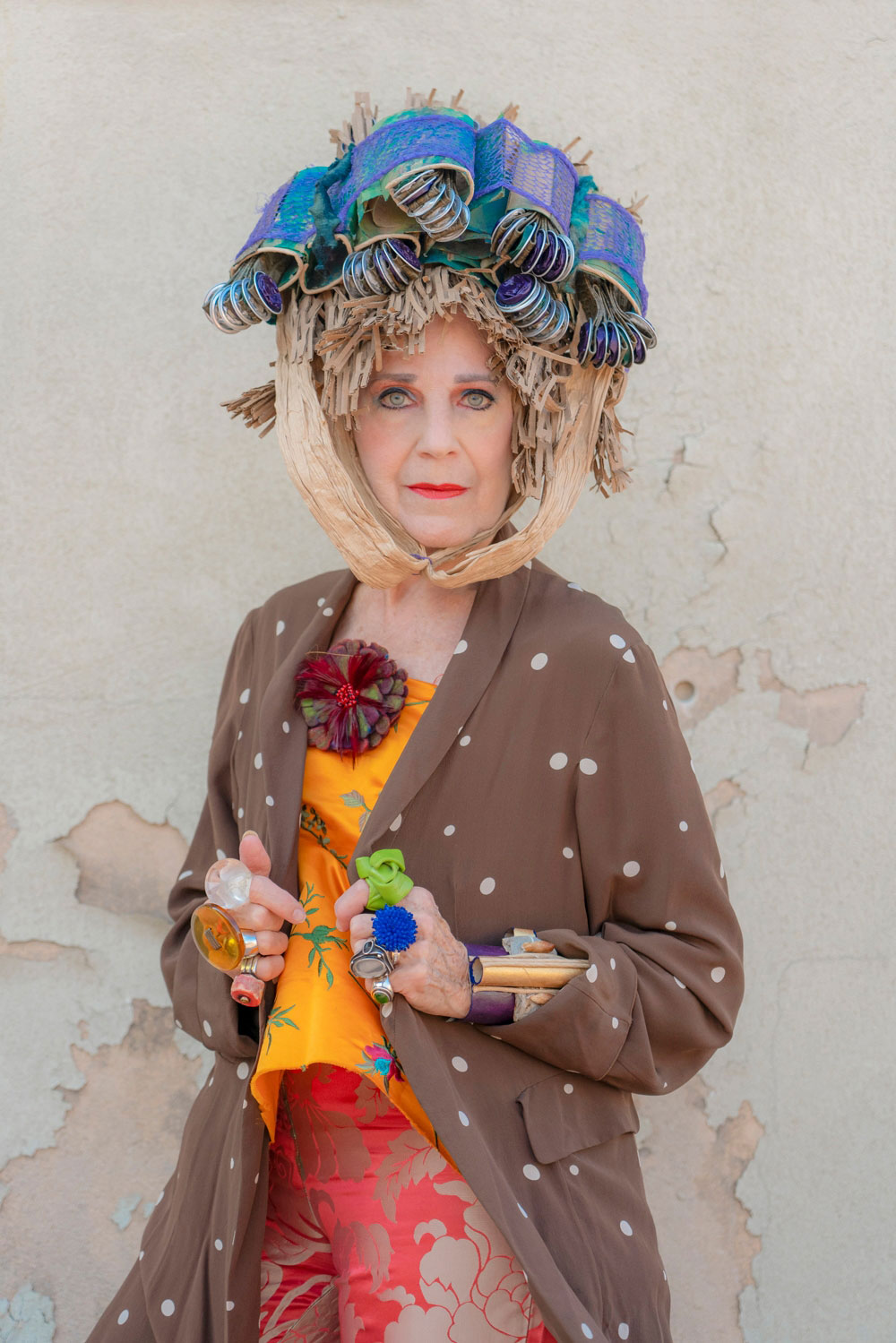
Debra Rapoport (BFA 1967) makes art you can live in: sculptural hats, textiles, and jewelry fashioned from repurposed materials like street metal, toilet paper rolls, and plastic bags. Her work is in the permanent collections of the Metropolitan Museum of Art, the Smithsonian, and the Hermitage Museum, among many others. But it was Rapoport’s chance meeting with photographer Ari Seth Cohen at the New Museum in 2009 that made her instantly recognizable in the digital age. Rapoport is a muse for Cohen’s Advanced Style project, which spans three books, a documentary film, a TEDx talk, and a viral Instagram account.
After graduating from the Carnegie Institute of Technology, Rapoport studied under fiber-arts pioneer Ed Rossbach at UC Berkeley, and, today, her career has criss-crossed artmaking, academia, floral design, vegetarian catering, and healing practices, all while remaining committed to a wabi-sabi philosophy: finding beauty in the imperfect and the incomplete. Ahead of a March 2026 exhibition in Munich, Germany, featuring her jewelry, Rapoport talks with us about why creativity remains a vital tool at every age.
1
Take us back to Pittsburgh in the 1960s. Which classes shaped your outlook most?
When I came to CIT, as it was called then — Carnegie Institute of Technology stood for “Christ, I’m tired” — they worked us really hard. There were a couple of students who would take over the painting room like it was their private studio, and me as a 17-year-old walking in, of course I was intimidated. I went into design instead of painting, because I knew I wasn’t going to be a painter. I met Elke Kuhn, my textile teacher. She’s still alive and we’ve been friends for the past 60-odd years. Once I got into textiles, I felt more confident and comfortable, because I’m a hands-on person. That changed everything for me.
After CIT, I went to graduate school to study with Ed Rossbach. I can’t talk about Ed Rossbach without getting verklempt, because he was just amazing. That’s when I started to build environmental garments that I would call fibrous raiments out of things I would knit or crochet with videotape, or use strawberry baskets to build a headpiece. Everything works, everything is great. I think we have to get back to the sandbox — get our hands dirty, have some fun. In the state of the world, if we don’t start playing, especially as we’re aging, I think it’s all over.

2
You’ve long practiced responsible consumption in your artmaking. Where are your favorite places to hunt for materials, and has a material ever truly stumped you?
Just on the street or at swap meets. I have a necklace I made out of ten fake alligator eyeglass cases. Those are the kinds of things that really turn me on, anything in multiples. We have a flea market in our building where I live at Westbeth, which is the oldest, largest artist residence in the country. My husband has been here 52 years. So I get materials there: leftover yarn, corks, bottle caps, feathers, AstroTurf… I’m just looking around the room.
A few years ago I did a project for the Ilias Lalaounis Jewelry Museum. They were doing a show at the Greek consulate in New York because it was the 200th anniversary of the Greek Revolution. The piece had to be revolutionary in some way. I thought, what materials can I put together that I haven’t used before? Leather doesn’t really appeal to me, so that was the challenge. I altered them, added paint, used some found rusty metal, and some plastic packing material. The combination of leather, metal, paint, and plastic was revolutionary to me.


3
How do you define “wearable art”?
I think we all have our own personal style. I’m talking about creativity. We all have it, whether it’s expressed as cooking, gardening, taking care of a puppy, bringing up a child, painting, dressing, sewing, interior design. That all comes from our spirit. I just think people have to find their own truth. You don’t have to wear hats and you don’t have to wear a lot of color if you don’t like it. Where there’s creativity, there are no rules. Where there are no rules, there is no fear. That’s how I try to live my life. I try to do good deeds and be kind — and I do put smiles on people’s faces. Creativity, to me, saves our lives, because we can go inside and find that inner strength and feel that I have a reason, I’m here for a purpose.
4
What was your style like early on?
I’ve been dressing any way I wanted since I’m three. My mother didn’t think it was ridiculous, because she saw this creativity. It wasn’t about shopping or being a conspicuous consumer. It was just about dealing with textures and colors and exuberant energy. My sister and I’d dance around the house, play the piano, dress the dog. My mother was like a third sister, very creative. We’d go antiquing or to the museums. Color was always important, because all we did was eat color — we grew up as vegetarians in the late ’40s, and nobody could even spell the word back then. We knew that was valuable and important.
5
What advice do you have now for students just beginning their artistic journey?
Try to relax. Try to find joy and really honor yourself. I have a mantra, the four T’s: Go deep inside, find your Truth. It’s too easy to criticize it, so Trust it. Be Tolerant of it. Wrap the whole thing in Tenderness and put it out there in the world, then give everybody else the space to have their four T’s.
More from Debra Rapoport | @debrarapoport
Photographs by Denton Taylor, Christopher Scalzi, and Natalia Rudychev