

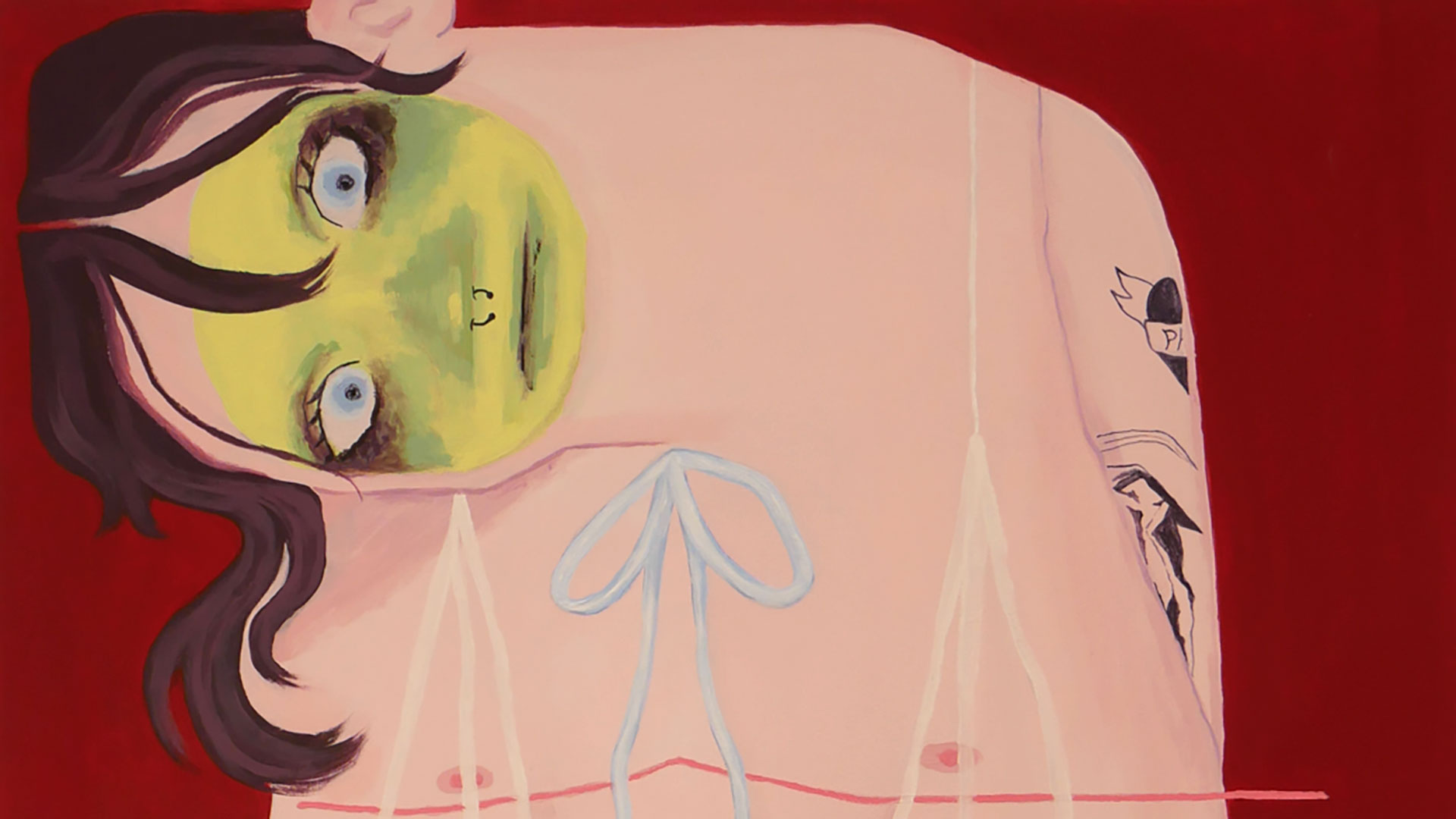
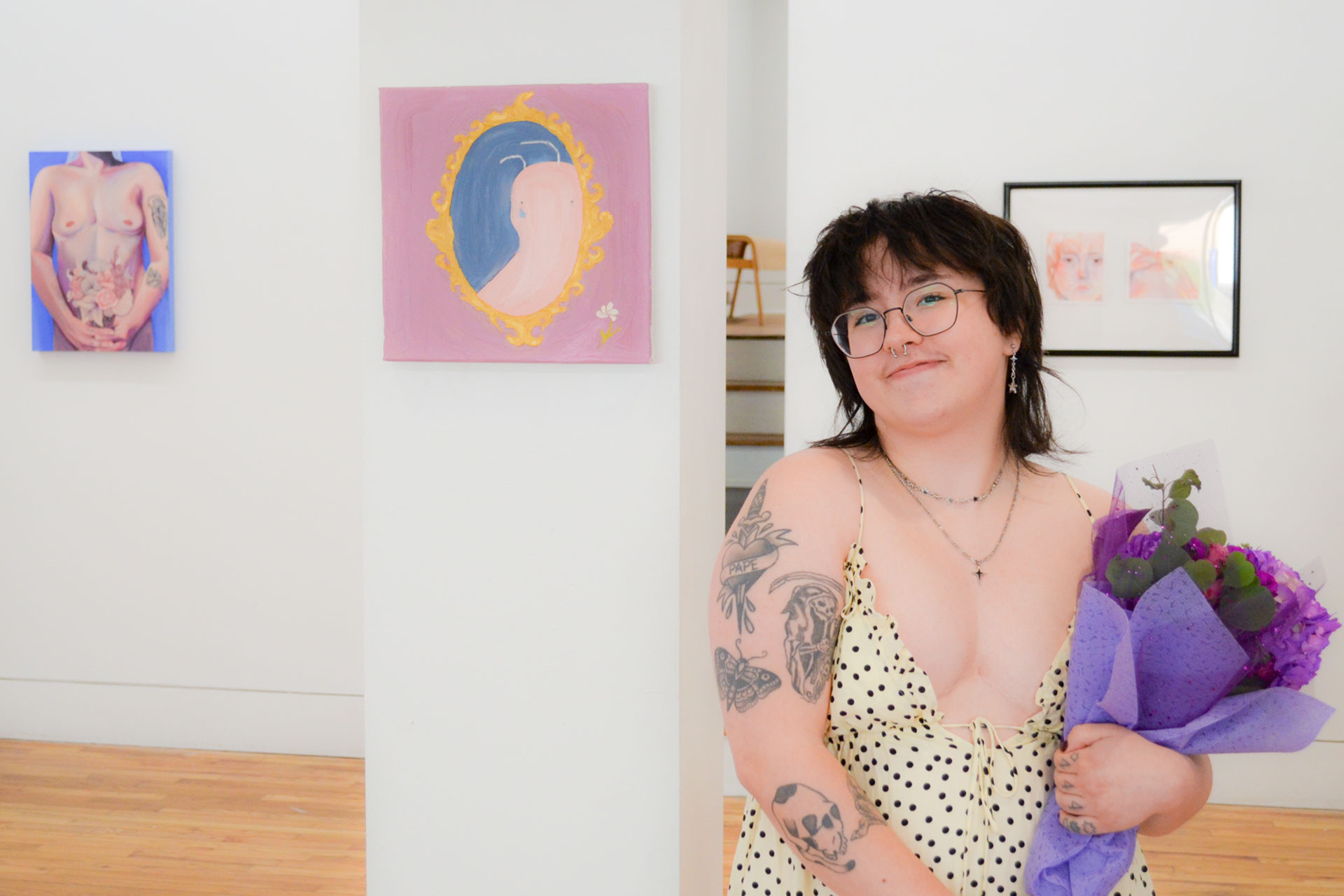
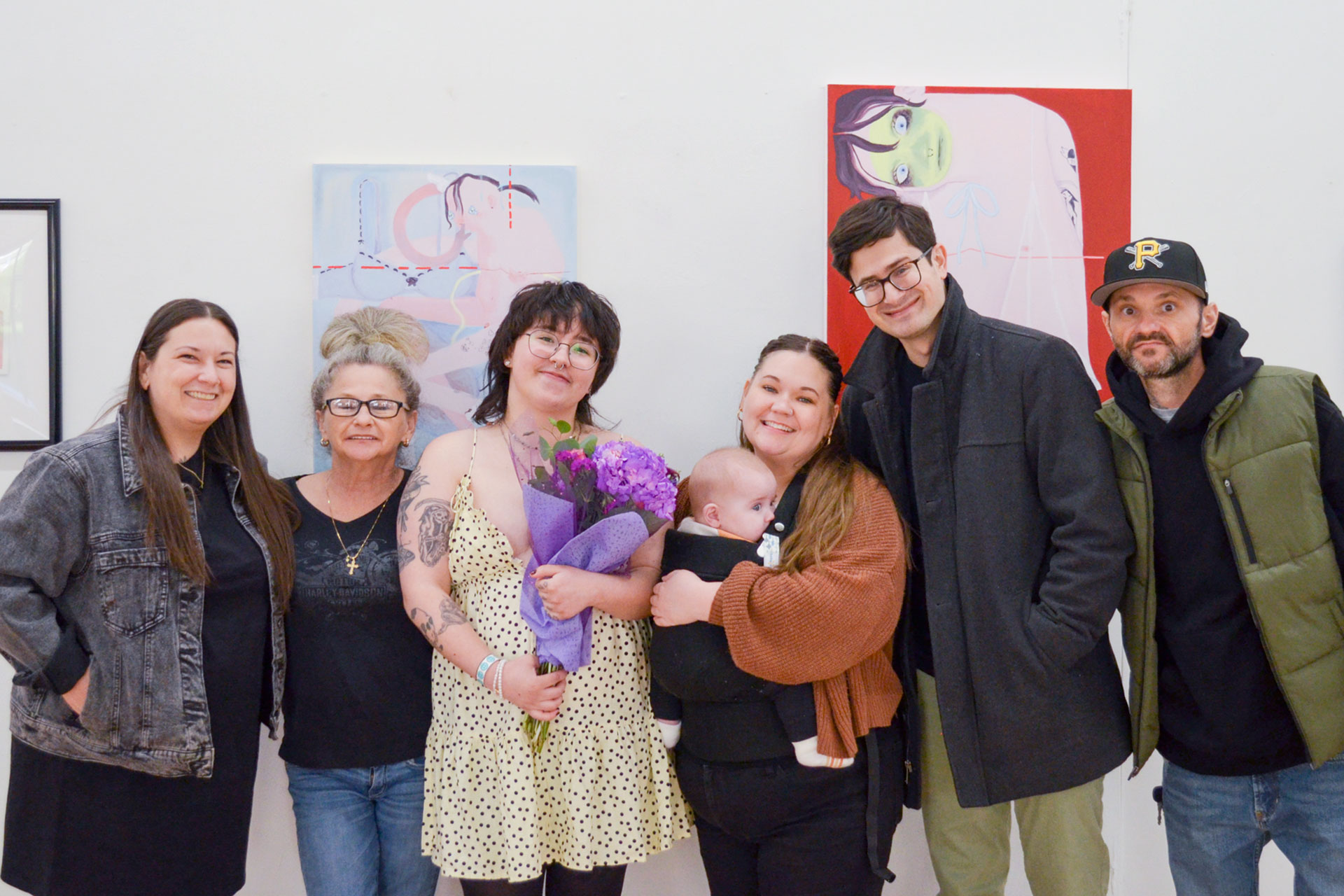
On March 28, senior Nev Reich opened their solo exhibition “Nobody Wants to Talk about Transgender Bug Sex” at The Frame Gallery, exploring the relationship between the body and queer identity through vibrant, vulnerable self-portraits.

By Shienka Martinez
First of all, I loved the show. Could you tell me about the inspiration behind your work and what the show is about?
My work has always been really autobiographical in the sense that I’m painting self-portraits. I’ve always loved painting self-portraits, even before high school, as a way of expressing myself. In high school, I was already making work about my gender dysphoria and the trans experience, and that has remained a throughline in everything I make.
This show is really a combination of what I believe to be the best work I’ve made throughout all four years of undergrad. There’s a sculpture from my freshman year, paintings from sophomore year, and more recent work that’s moving in a very different direction than before. It feels like a full range of how my practice has developed.
The title of the show is really striking. Where did it come from?
The title came from a conversation I was having with a friend about making these really vulnerable, personal paintings that can feel explicit and raw at times. I kept having the experience of people being kind of scared or nervous to talk about the work or critique it because the subject matter felt taboo.
I remember feeling really frustrated and saying, “Nobody wants to talk about transgender bug sex,” and that just stuck. That became the title. I also did a BXA talk about it, about what that phrase means to me, and how it connects to my work and the discomfort people have engaging with it.
Tell me more about the idea of the “bug” in your work.
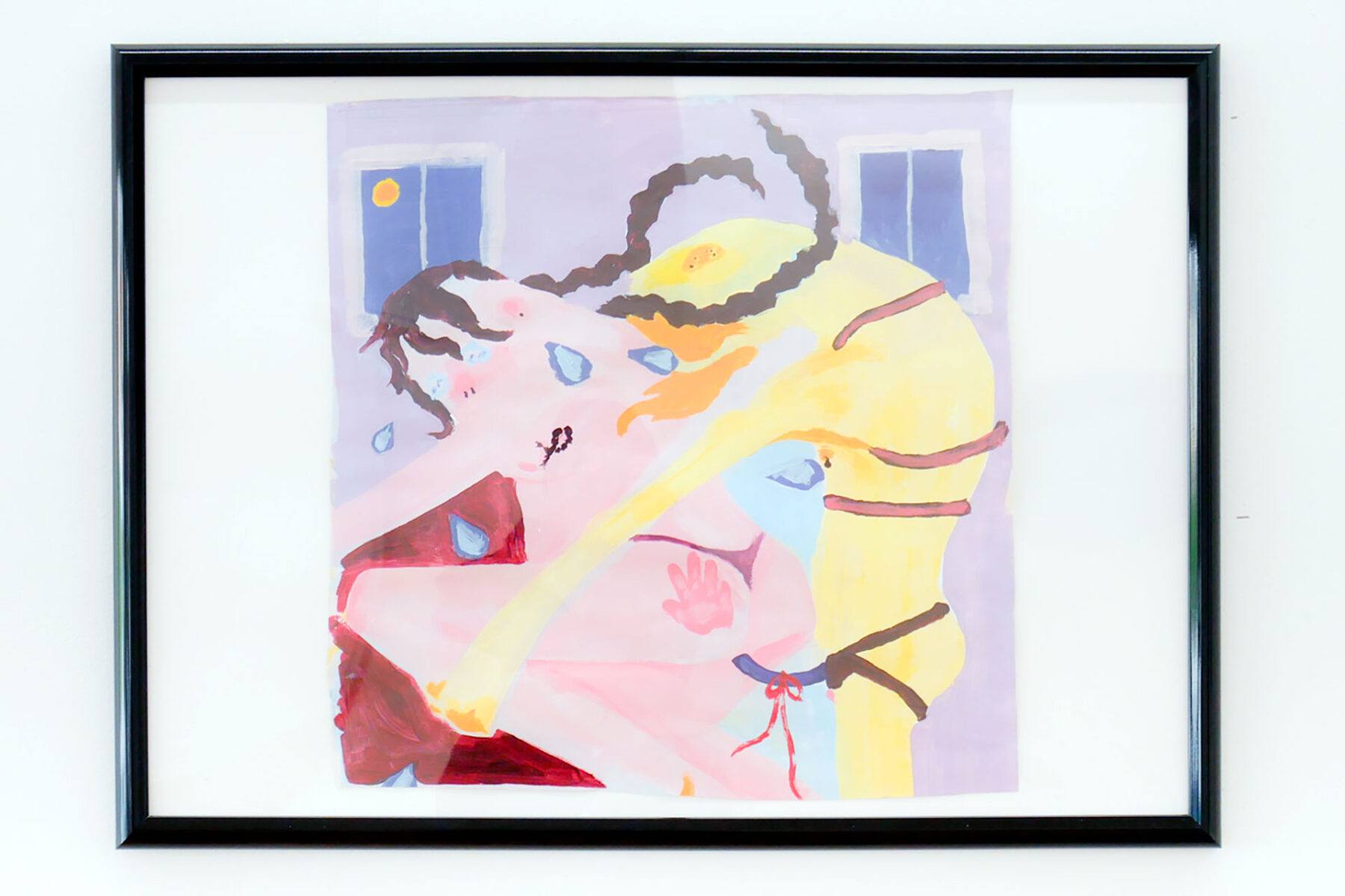
The bug is the “other” — this alien, unfamiliar thing. For me, feeling like a bug is about feeling outside of what’s considered normal or understood.
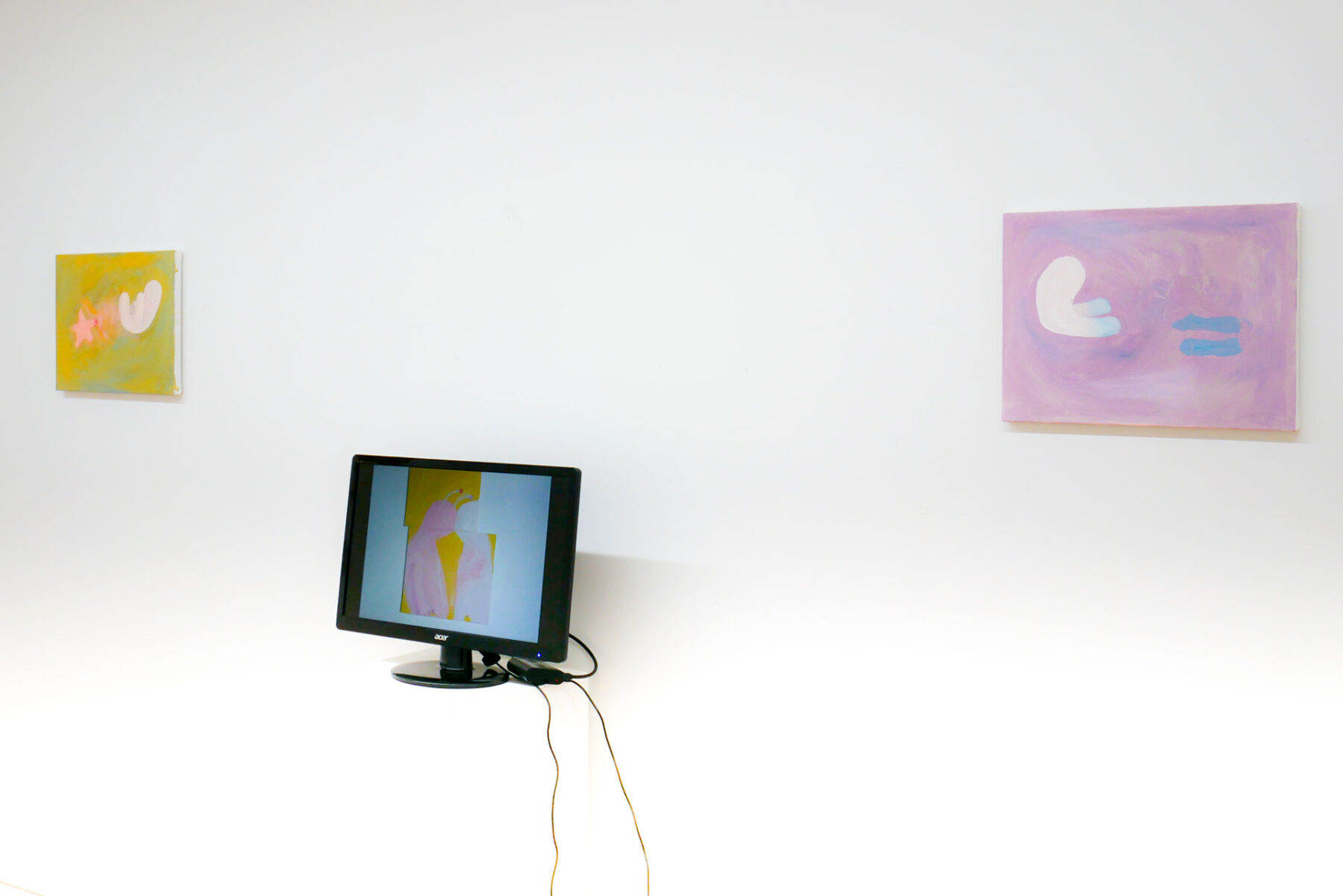
By creating these abstracted bug figures, it feels like I’m making portraits that are, in some ways, even truer than the more literal, physical representations of myself. Some of the paintings are based on mirrors or photos and look very much like my body as it exists now. But the pink figures and the white figures; those are also me, and they say more than just the body alone can. In some ways, they feel like the truer portraits.
I also think about sex as a way of exploring identity. That can be with other people or with myself, but it’s also about the body and anatomy: the idea of being transsexual. So everything comes back to the body, but it also extends beyond it into something more internal and abstract.
To me, your animation feels soft and tender, but also a bit aggressive or angsty. Was that intentional?
Yeah, there’s something about the small scale and the way the figures are presented that makes it feel very precious, even though it’s dealing with heavier emotions. It’s about some of the more negative aspects of exploring identity, experiences that aren’t always positive. But I think those moments are just as important. You learn just as much from them, and they’re just as meaningful and necessary.
Has this theme been consistent since your first year, or has it evolved?
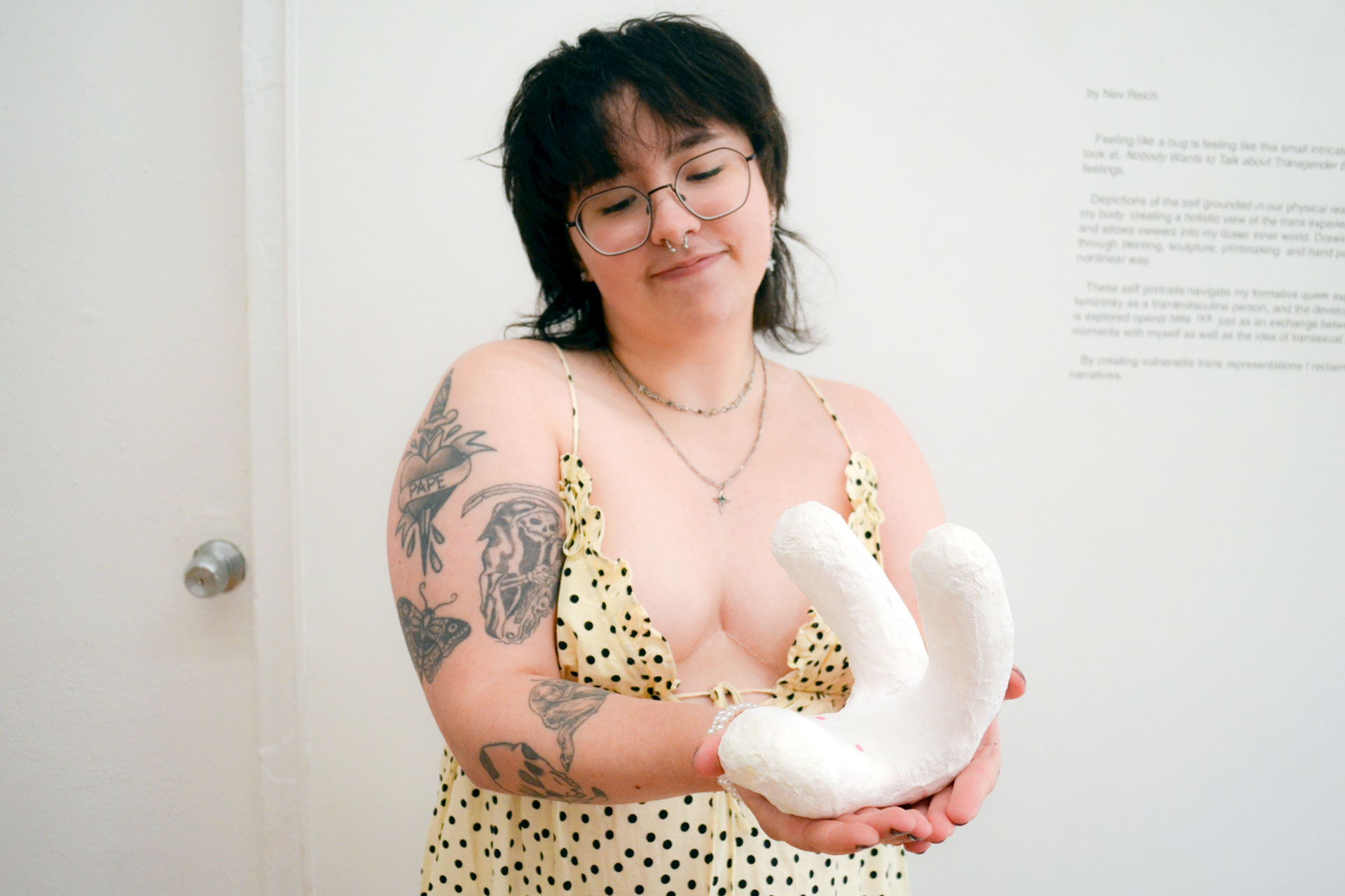
Conceptually, I’ve always been using painting to figure myself out and sort things out internally, and that hasn’t changed. But the way I approach that has definitely evolved. In my freshman year, I was really focused on rendering things realistically. The sculpture in the show actually came out of a class “Risk, Agency, Failure,” and at the time, I thought it was just a one-off experiment. After that, I went back to making more representational work.
Last spring, I finished a series based on photo references of myself, but it started to feel really limiting. I remember thinking, “What else can I even do with this?” It felt like there was so much more in me that couldn’t come through just by working from photos.
So I went back to that sculpture and started making small paintings of it, putting the figure in different positions and situations, almost like it was going through different experiences. That shift felt really freeing. I wasn’t worried about whether the proportions were correct or if it looked exactly like me anymore. Letting go of that opened up space for me to expand my personal set of symbols and to use metaphor and abstraction in a way that I couldn’t before.
Is there a particular piece in the show that stands out to you?
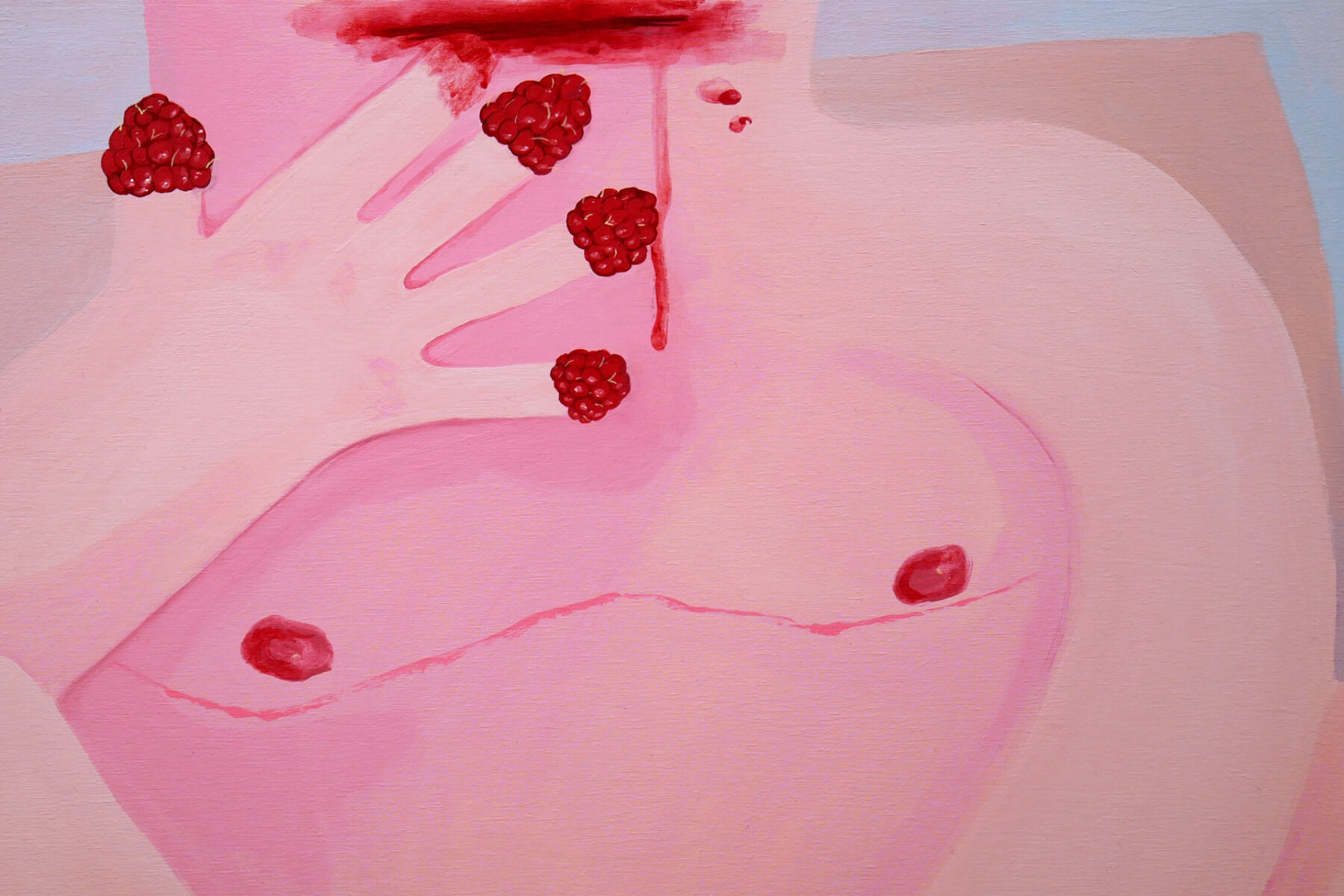
I don’t think the amount of time I spend on something necessarily makes it more important, especially with the newer works, but I would say the painting with the raspberries really defines the show. If someone asked what the show is about and could only look at one piece, that’s the one I would point to.
What do you really want people to understand about your work?
When you see the abstract works alongside the more realistic ones, they work together to create a more complete picture of me, my inner world, and my physical self. Seeing them all installed together in the space makes it feel like this is me.

More from Nev Reich | @nevreich
Shienka Martinez is a junior pursuing a BFA in the School of Art.
Photos by Amelia De Leon