


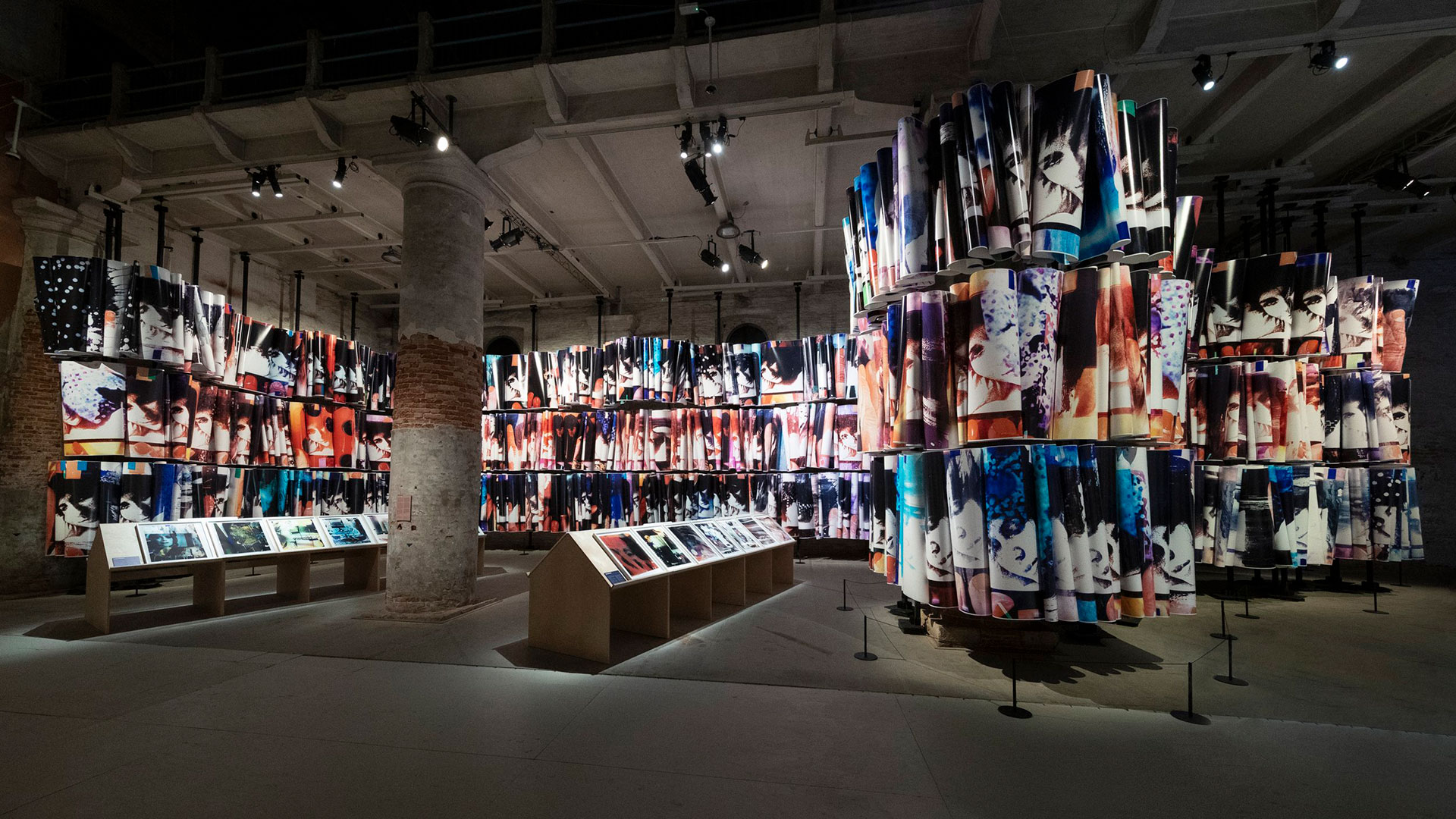
Debuted at the 61st Venice Biennale, “In Minor Keys,” curated by Koyo Kouoh, Schneider’s installation transforms a fleeting cinematic moment into an immersive act of memory.
By Sarah Lookofsky
Carrie Schneider uses analogue photographic methods to investigate media formats and the often gendered representations they produce and hold. Employing a room-size camera that she built, she exposes film sequences frame by frame from her phone onto photographic paper, and layers sources from the image-intensive present — from snapshots and surveillance footage to social media, art history and her own work archive — through multiple exposures.
First Living Woman (2026) is produced from a factory “jumbo roll” of chromogenic paper, resulting in a one-kilometer-long photographic continuum. It is devoted to an eight-second segment from Chris Marker’s La Jetée (1962) – that film’s only moving-image moment, which inscribes an enduring memory of a woman’s face, played by Hélène Châtelain, stirring between slumber and wakefulness. Works in the series Deep Like (2020-2021) cite references that include Sigmar Polke, Imogen Cunningham, Chantal Akerman, or another charged cinematic close-up, featuring Romy Schneider, in Andrzej Żuławski’s film L’important c’est d’aimer (1975).
Starting from images of cinematic rupture, Carrie methodically creates a loophole to these instants of the past, spending weeks with these women once again, frame by frame. Through her process, cinema with a capital C meets a present with ominous overtones, absentmindedly scrolled. Against the disappearance of both the volume of the quotidian and history writ large, Schneider’s work unfolds as a monumental act of chromogenic recall.
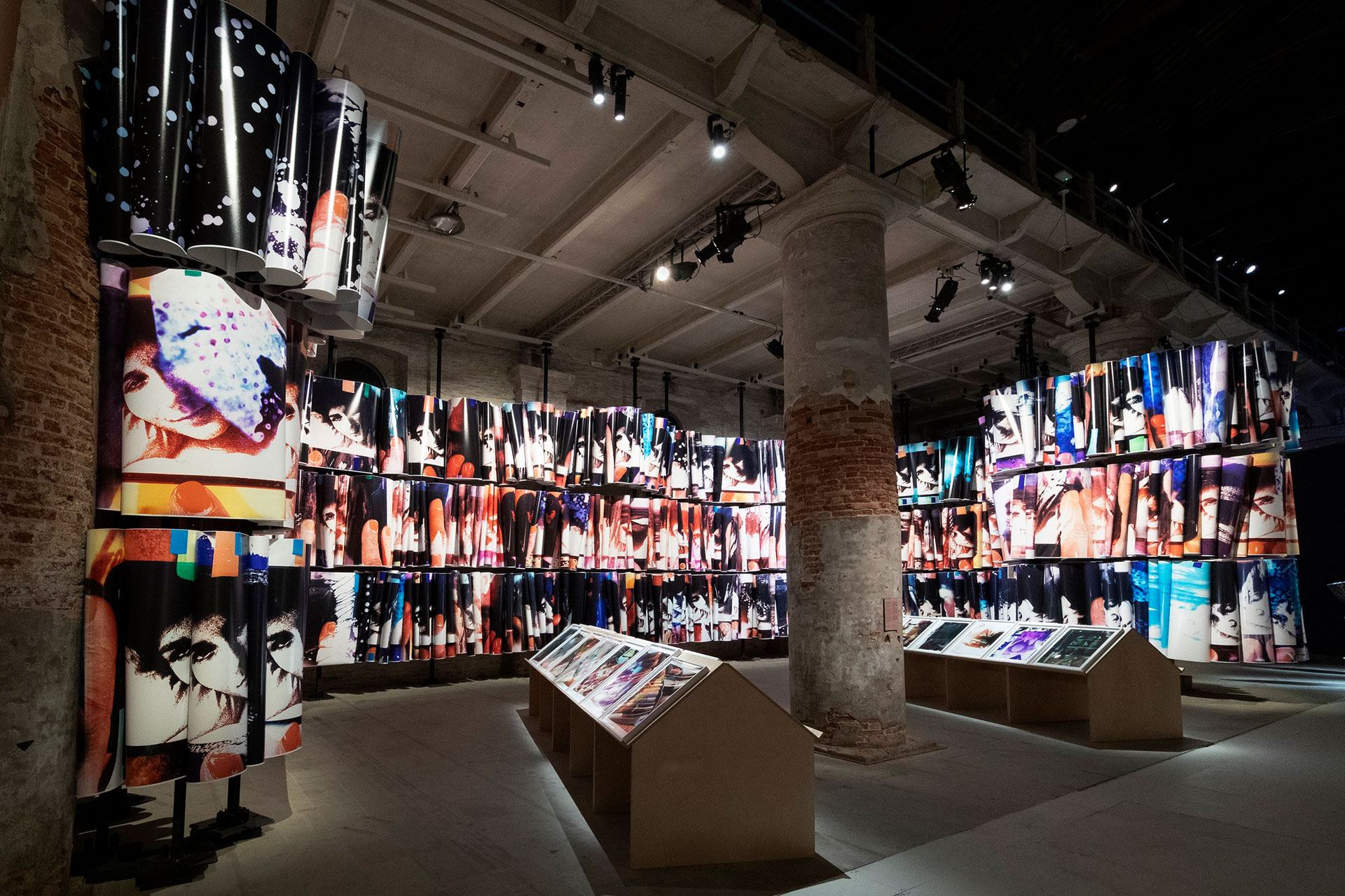
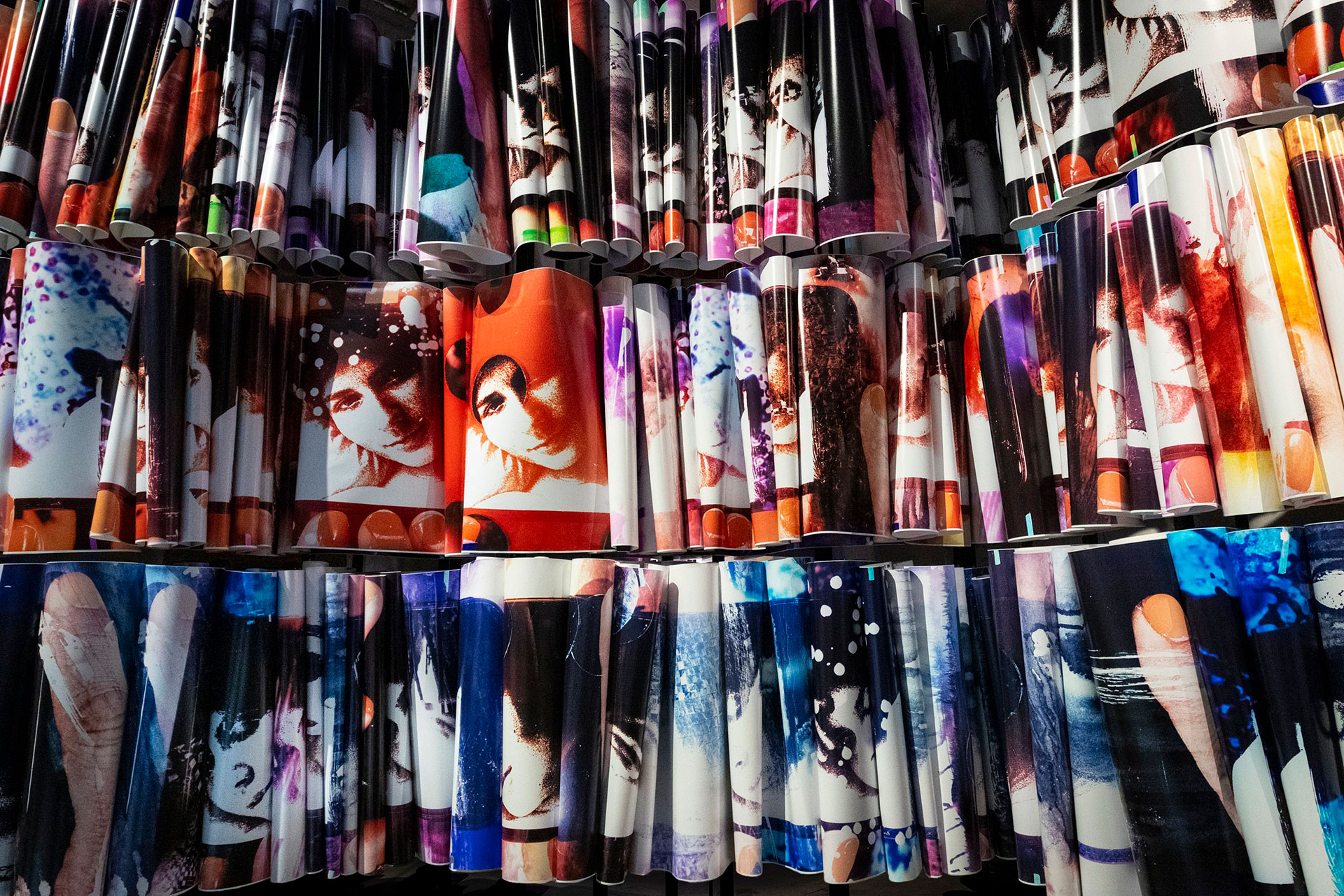
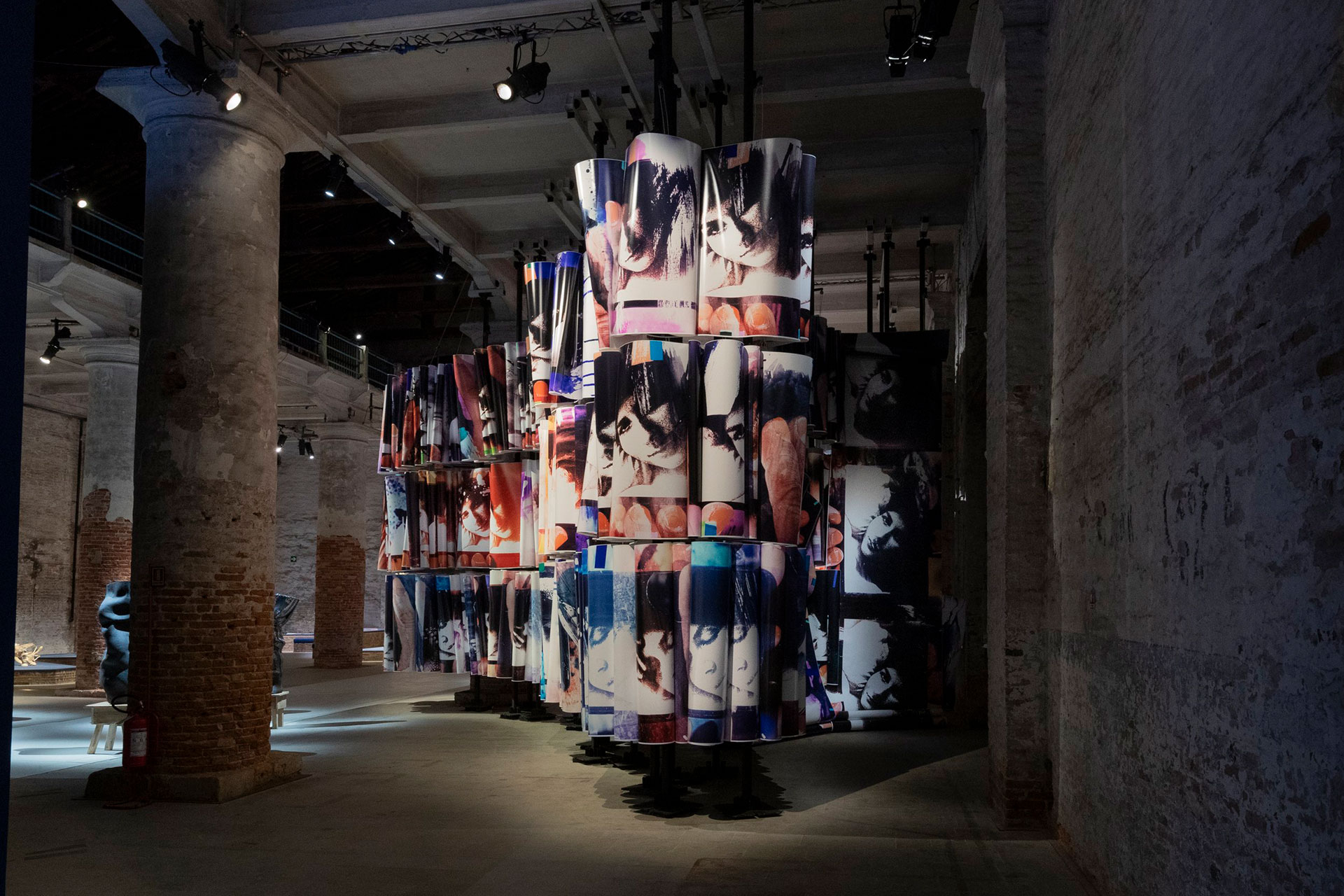
Images: Courtesy of David Peter Francis