

In this Q&A, Bates invites us into his studio to peel back the curtain on his creative process, the affectionate satire of his subjects, and why he believes every day is an opportunity for a little bit of play-acting.
By Amelia De Leon
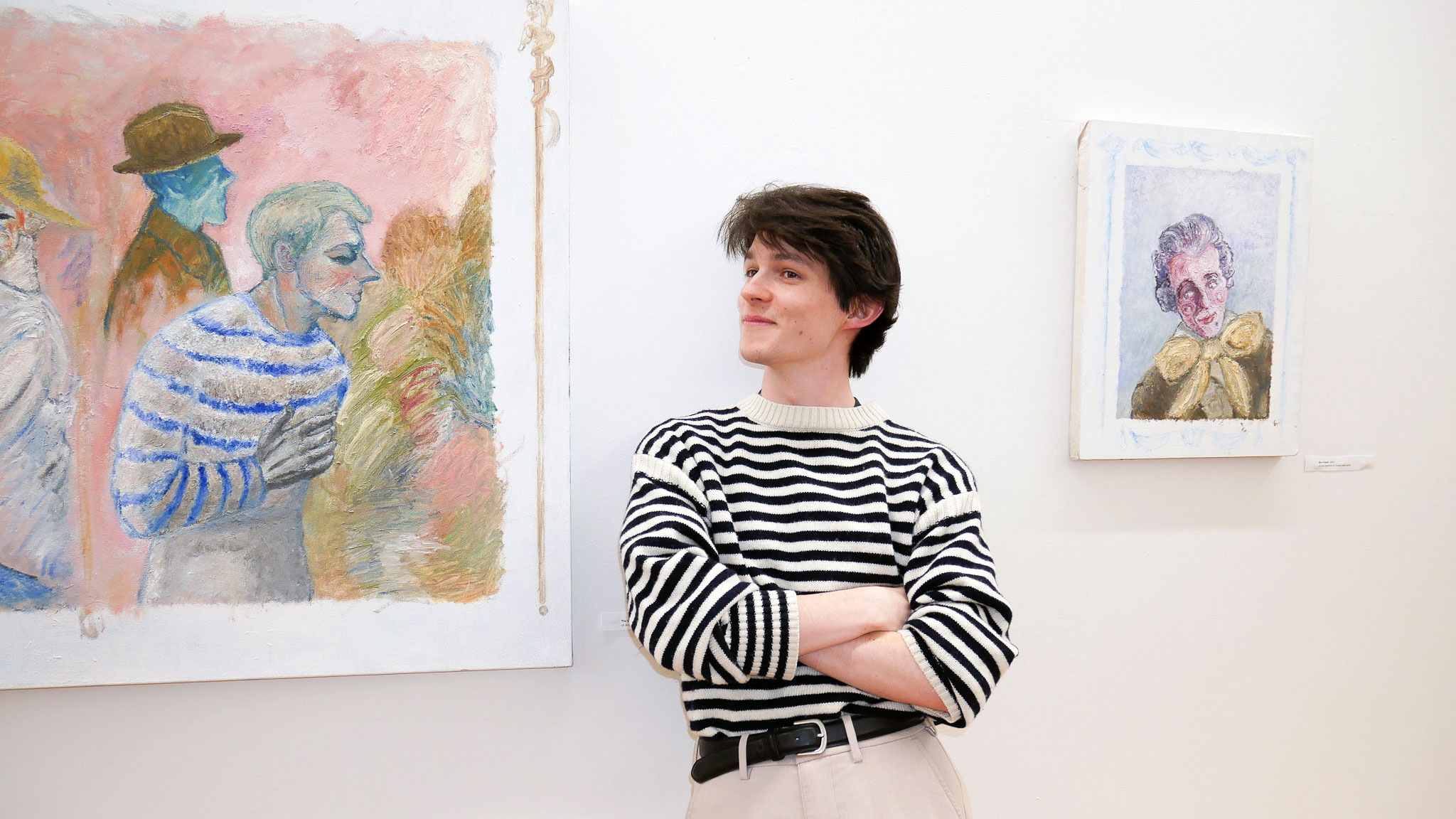
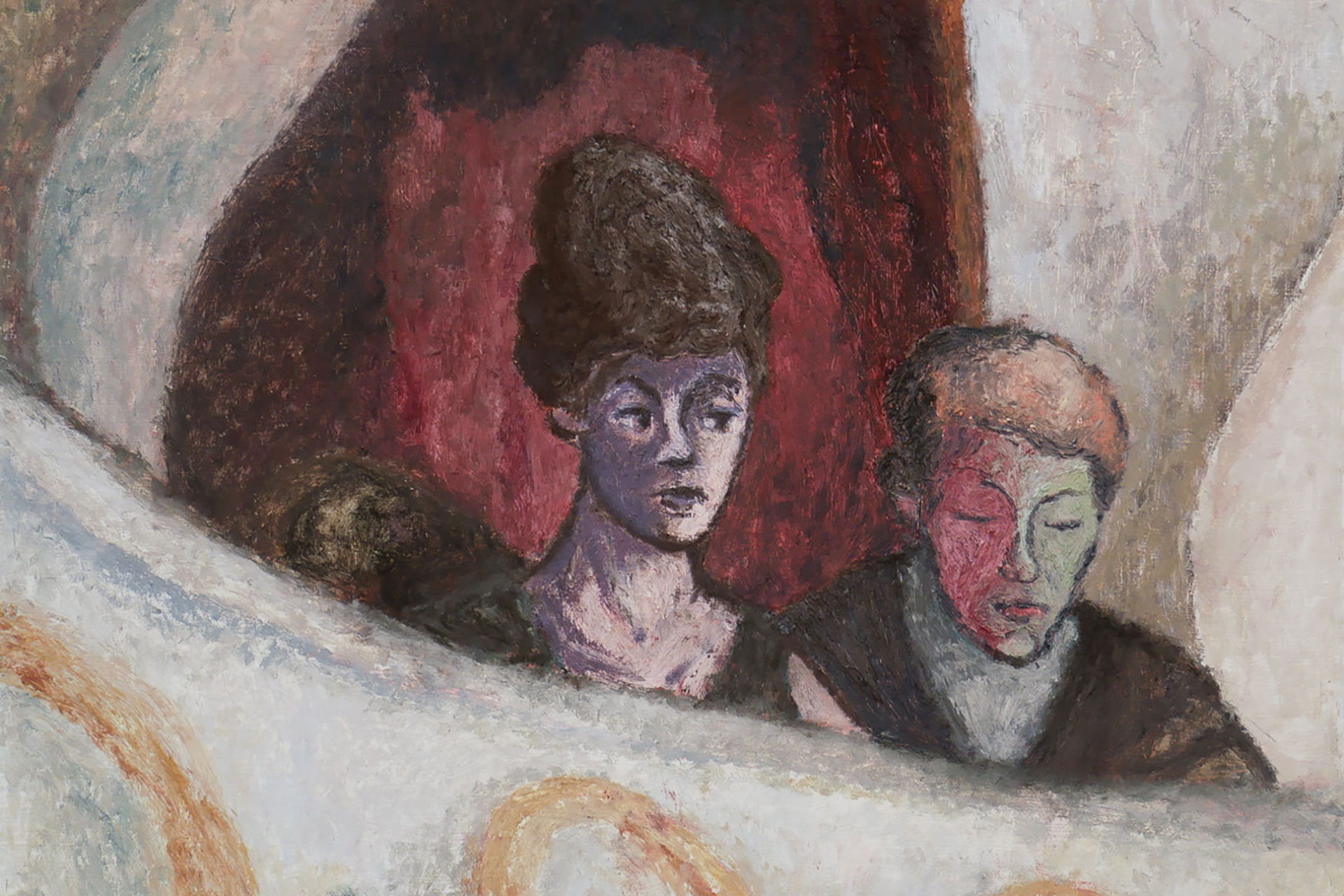
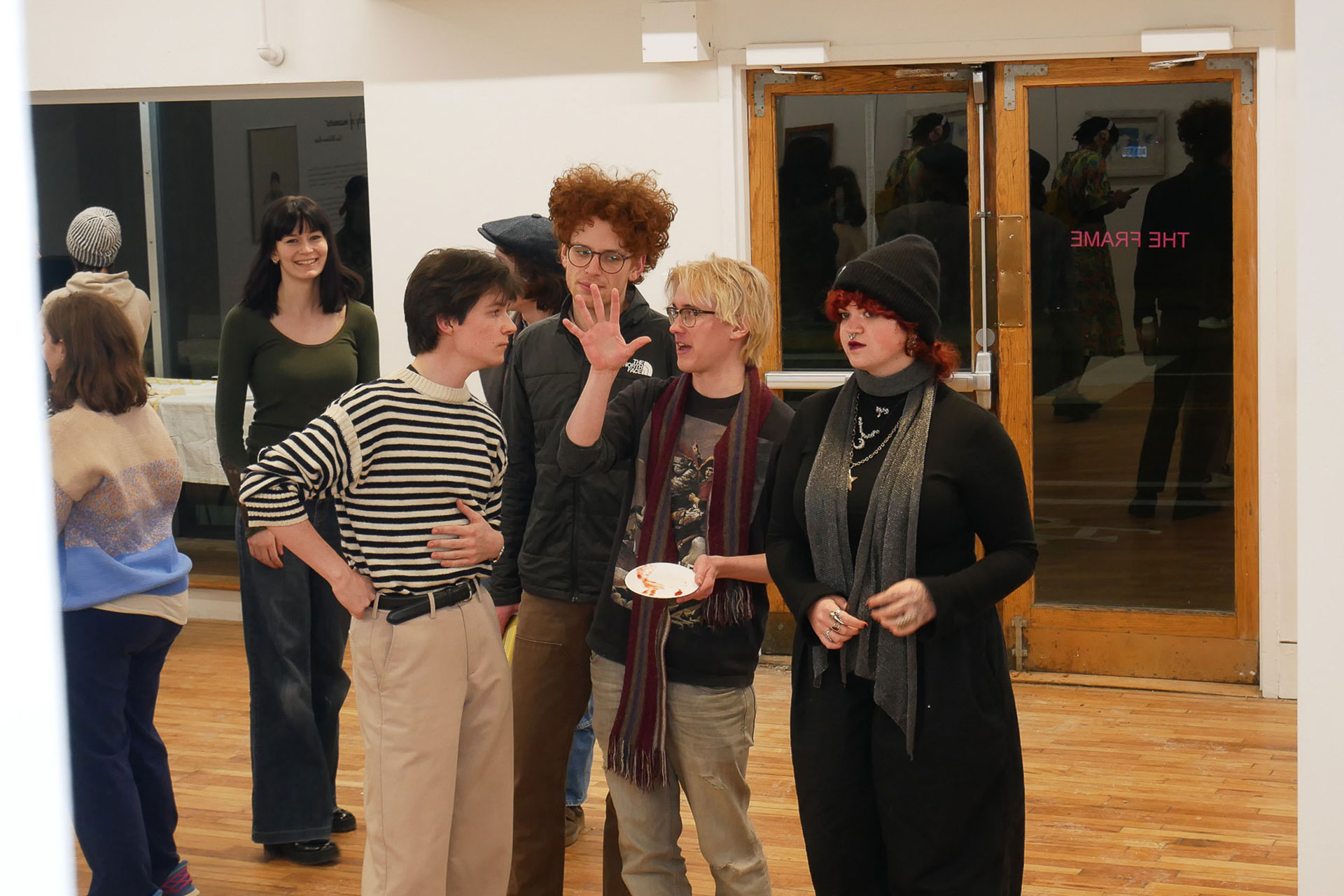
Ahead of his solo exhibition, “A Comedy of Manners,” at The Frame Gallery on January 23-25, junior Sam Whitman Bates invited us into his studio, a curated reality where the heavy gravity of the modern art world is traded for an operatic lighthearted spectacle of the Rococo and the Belle Époque. It is a world viewed through a stylized lens of pinks and blues, where mischievous cherubs break the fourth wall and modern art-goers are transformed into costumed characters from a bygone era. For Sam, frivolity is an honest documentation of how life feels when the colors are turned up and the music starts to play.

You could be described as a ‘Dandy.’ How does that function in the 21st century? Is it a costume you put on to enter the studio, or is it an inseparable part of your creative process?
On one hand, I can say ‘everything is a costume’ and yet on the other hand, I’m inclined to say all of those costumes are intrinsic. I think it’s easy to take a negative view of putting on airs. I see myself as a satirist but I’m also equally interested in celebrating that costuming. Before I was an artist, I was an actor, so for me, on stage and off stage are inseparable. I think everyone can benefit from a little bit of play acting in their day-to-day life. Walking to class and thinking to yourself, ‘Each day I am a different thing’ — that’s the driving factor in a lot of the art that I make.
Do you consider the process of your work to be the performance?
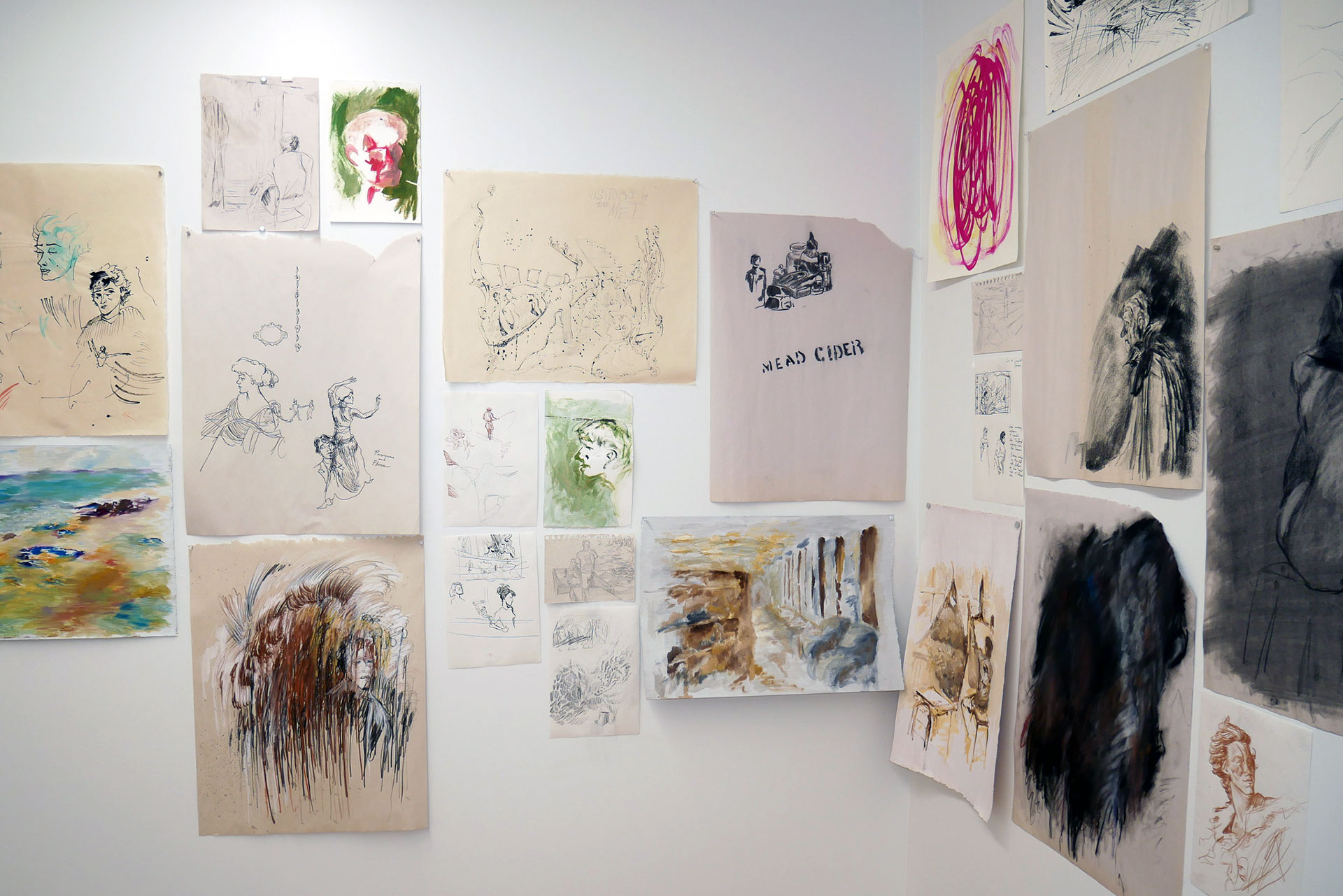
In some ways, the execution of painting itself is part of that performance quality. I make a blend of figurative paintings and abstract paintings, and when I’m painting figuratively, I’m trying to find an abstraction inside those figures. Performance and painting and abstract painting, they’re often linked — like Joan Mitchell and Jackson Pollock, who were action painters. Performance is an aspect of it. There’s the idea of a canvas being an arena to play in and all of these crazy brush strokes end up being a record of a performance. I feel more of the theater and expression in preparatory drawing before a painting. Oftentimes when I come into the studio before I make any painting, I like to warm up my hands just with a stick of charcoal. I think about it like a ballet dancer stretching and warming up before actually doing the dance that they’ve prepared.
The ‘Dandy’ is often a figure of both high style and sharp wit. How do you use your own personal style as a tool to navigate the “Comedy of Manners” you depict in your work?
I love the quality of wittisms. I’m as much influenced by painters that I love like William Hogarth or Phillip Guston, as I am by playwrights and operas. I’m as much influenced by Oscar Wilde or Moliere or David Bowie. There’s an air of a witty character in a play that takes in this nebulist area between stances that I think is interesting. It’s a very common trope in plays that you have the comedic relief character, and they can use their wit to critique or just be laying in a bed of roses wasting the day away. I want to take it all at once.

Who is being lampooned more in this exhibition: the historical figures in archaic costumes, or the modern museum-goers who come to look at them?
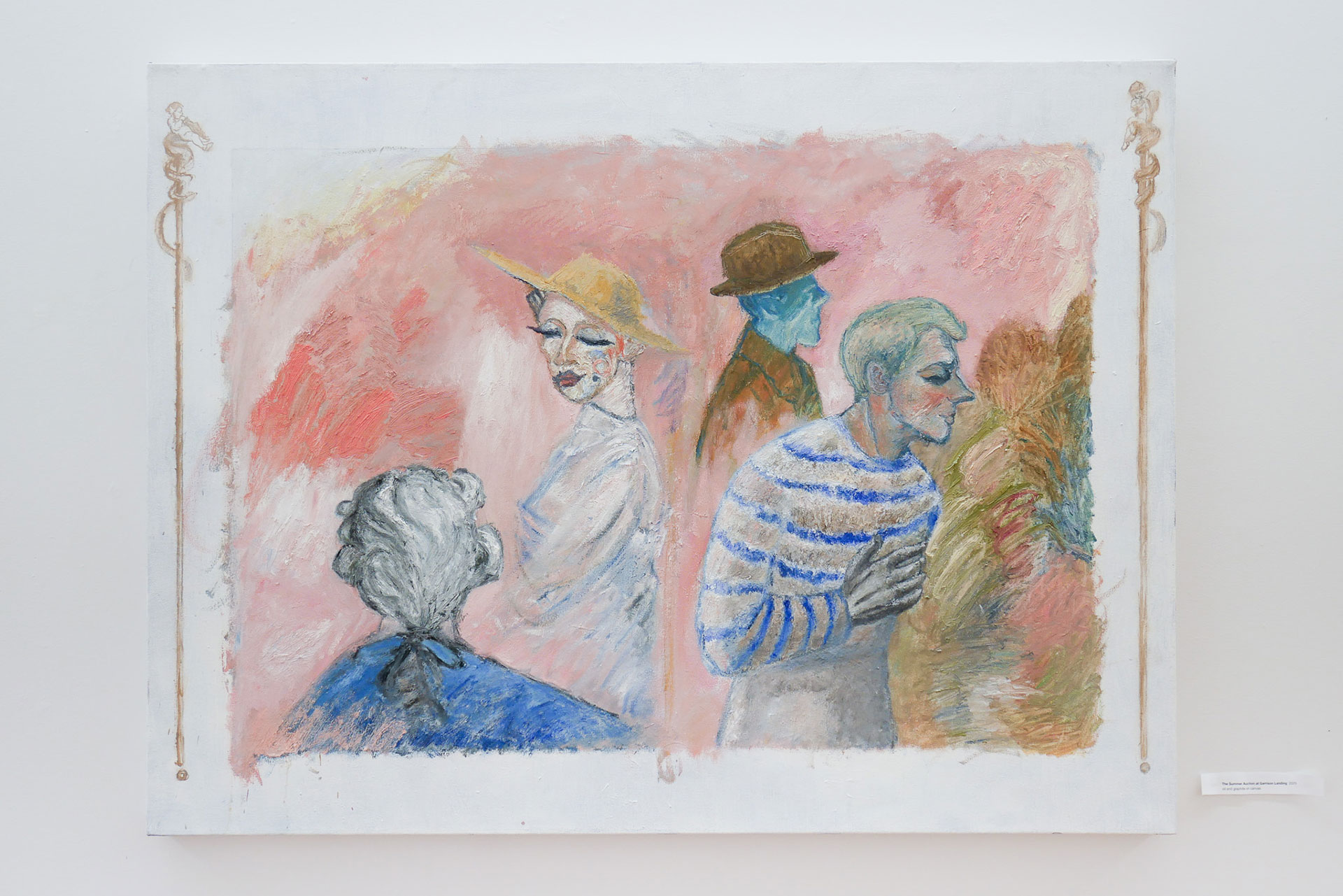
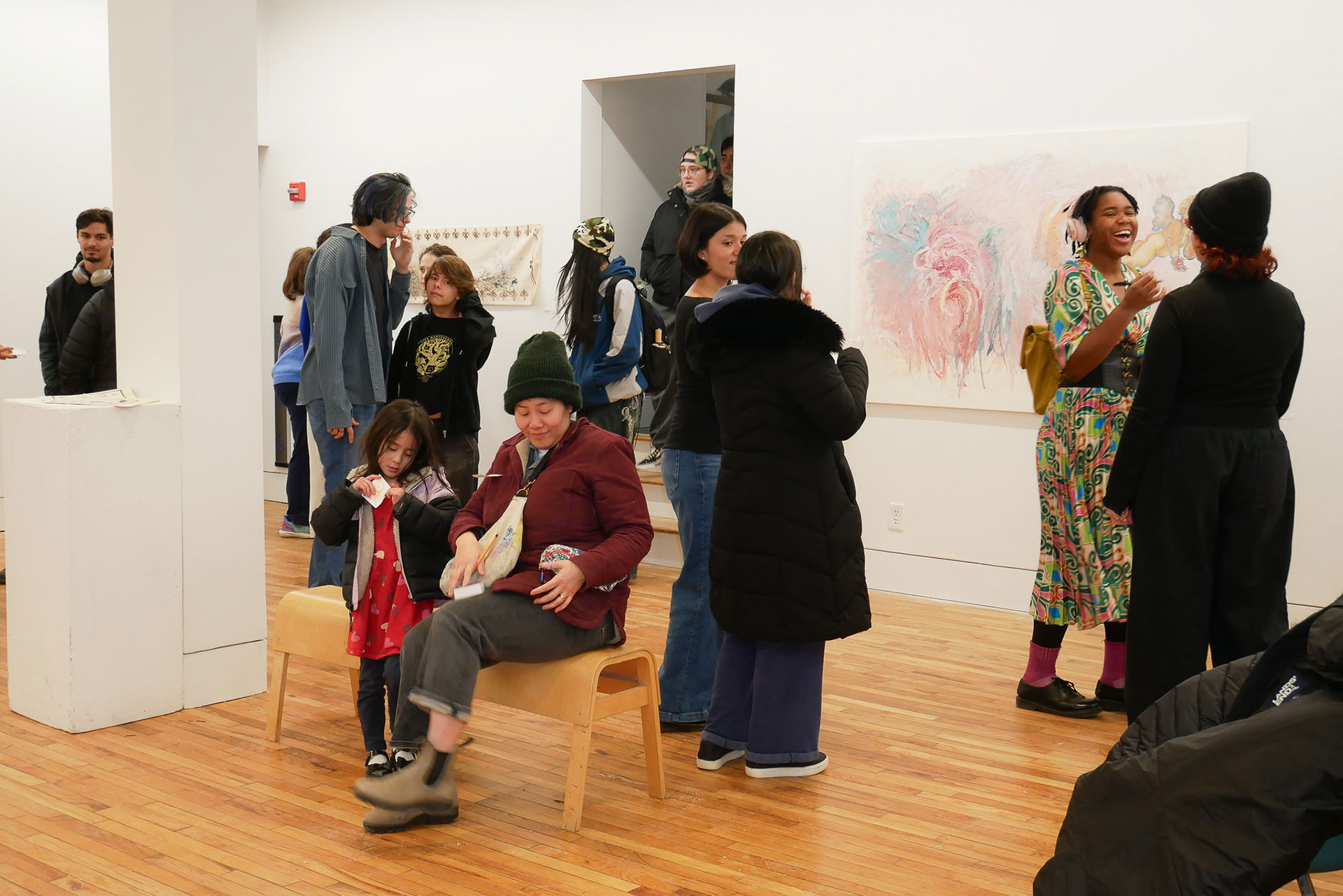
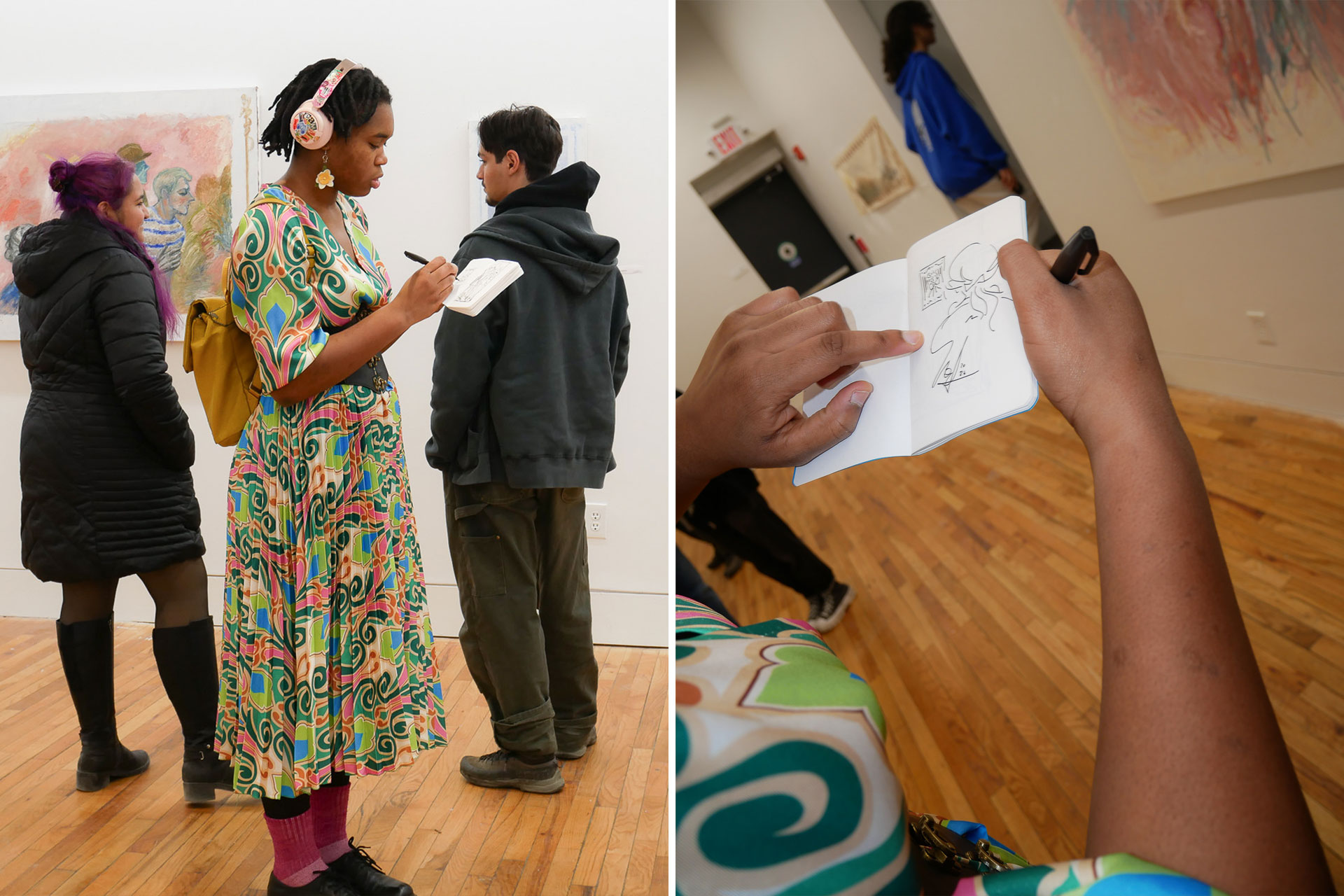
For a few years now, I’ve been going to museums and drawing the ‘art goers’ instead of the paintings on the walls. It was a sketchbook activity, but sooner or later whatever you’re doing in your sketchbook is going to seep into what you’re doing in your painting. I find these cultured people very intriguing, because there are a million eccentrics among them, and I find such a parallel between a lot of today’s society and figures of the past. Like The Summer Auction At Garrison Landing, a painting I did of an art auction, the experience of being there influenced me to paint four figures and place them all in different periods of dress. There’s an 18th century guy and there’s a 1940s looking guy, and in that way it becomes a costume. In real life there wasn’t a guy in a powdered wig. But to me it feels to me a pretty solid documentation of what the people there were like. It’s a tongue-and-cheek poking fun of these people. But a lot of it comes from a place of love. It’s an affectionate satire.
What is the power in embracing the frivolous and the decorative in a contemporary art world that often demands gravity?
I think that life is play and that’s not a bad thing. The heightened is not all artificial. People talk about musicals saying ‘it’s not realistic cause people don’t actually act up and sing.’ Although it’s not what people really do, it’s perhaps how they feel. If 99% of life is memory and in our memories everything is heightened and colors are brighter and sounds are louder, then maybe that’s what life is like. Maybe that brighter color and more pastel musical vision of the world is what life is like. You have to get past that barrier and say ‘well, I didn’t really sing about it but that is how I felt about it.’
More from Sam Whitman Bates | sambates.art
Amelia De Leon is a sophomore pursuing a BFA in the School of Art. Follow her at @ameliadeleonn.