
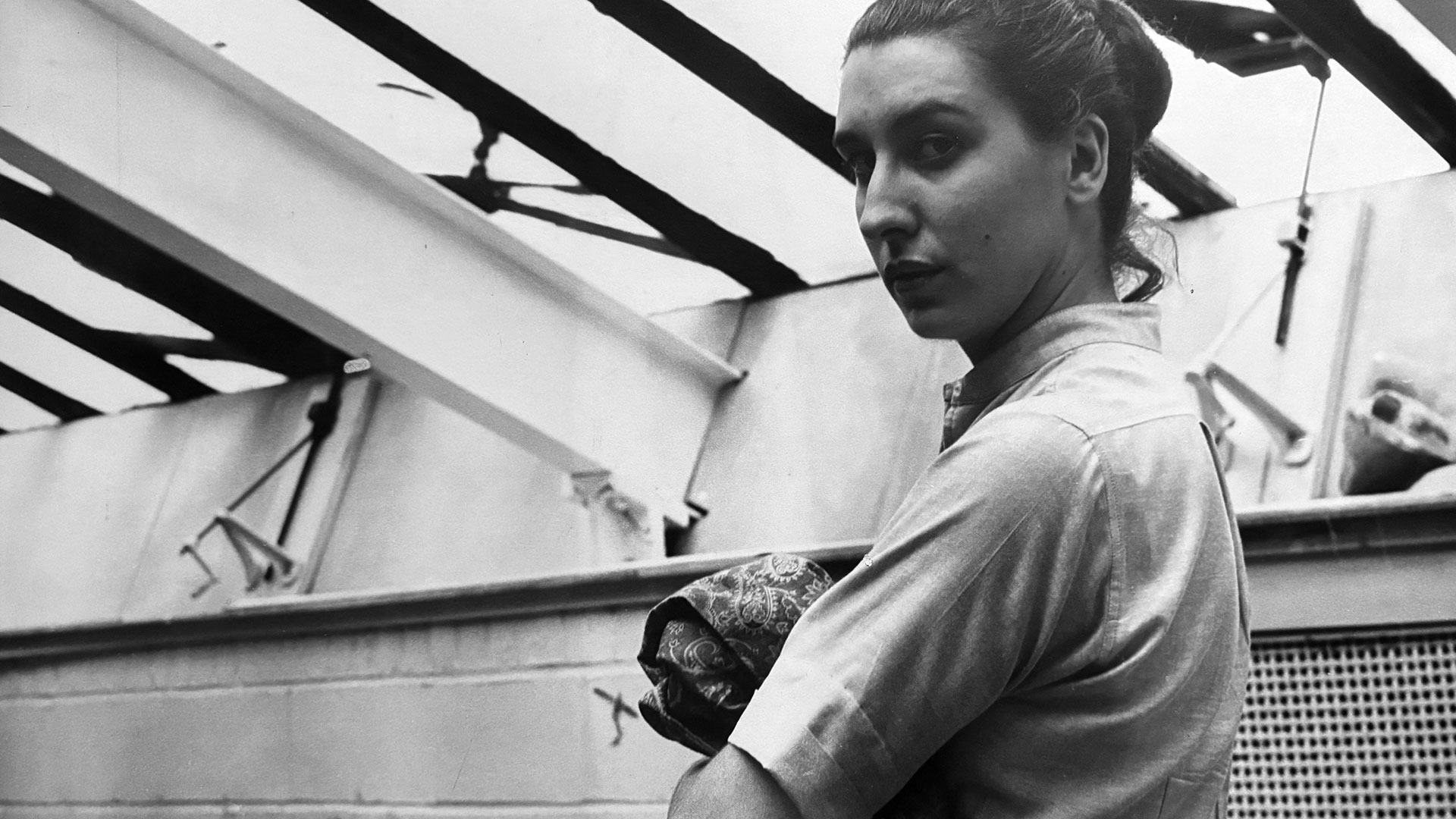
A 1958 graduate of Carnegie Tech and one of the first women to earn tenure in a studio program in western Pennsylvania, Joann Maier taught for nearly four decades at the Carnegie Mellon University School of Art, inspiring generations of artists with her independence.
It was the fall of 1989, as students returned for the start of a new year at CMU. The Hewlett Gallery on the ground floor of the College of Fine Arts — now home to the college’s coffee shop — welcomed students back with a quietly monumental retrospective. Forty-six of Professor Joann Maier’s works on paper, created between 1975 and 1983, were mounted in tiers across the skylit, high-ceilinged walls. Each piece was untitled, marked only by a number. Together, they traced the artist’s evolving language of abstraction.
Pittsburgh art critic Harry Schwalb, who was a fixture of the city’s arts community for decades, praised the exhibition in his review: “I’d love to see the whole damn thing kept intact, tucked into a half-dozen or so padded crates and sent out on the road to show a new generation of students — and artists — what painting dedicated to high abstraction can be. A nice Pittsburgh export, to add to our software, robotics, and ketchup.”


Maier belonged to a generation of artists deeply influenced by Abstract Expressionism and Minimalism, particularly for her, the work of Joan Mitchell and Grace Hartigan. Her own work moved through cycles of complexity and reduction, often drawing on nature as a symbolic reference point. “My work has no narrative, tries not to teach, contains no political message, does not incite, and has no historical information to relate,” Maier wrote in a 2001 artist statement. “The language it speaks is of the intangible. It may stimulate the senses, the spirit, and the imagination.”
Professor Emerita Elaine King, then director of the Hewlett Gallery, curated the 1989 show and wrote in the accompanying catalog about her friend and colleague, “a silent observer who is respectful of those ‘who do and get things done.’ Her painterly achievements are a testimony to this ideal and to her inventive visual performances.”
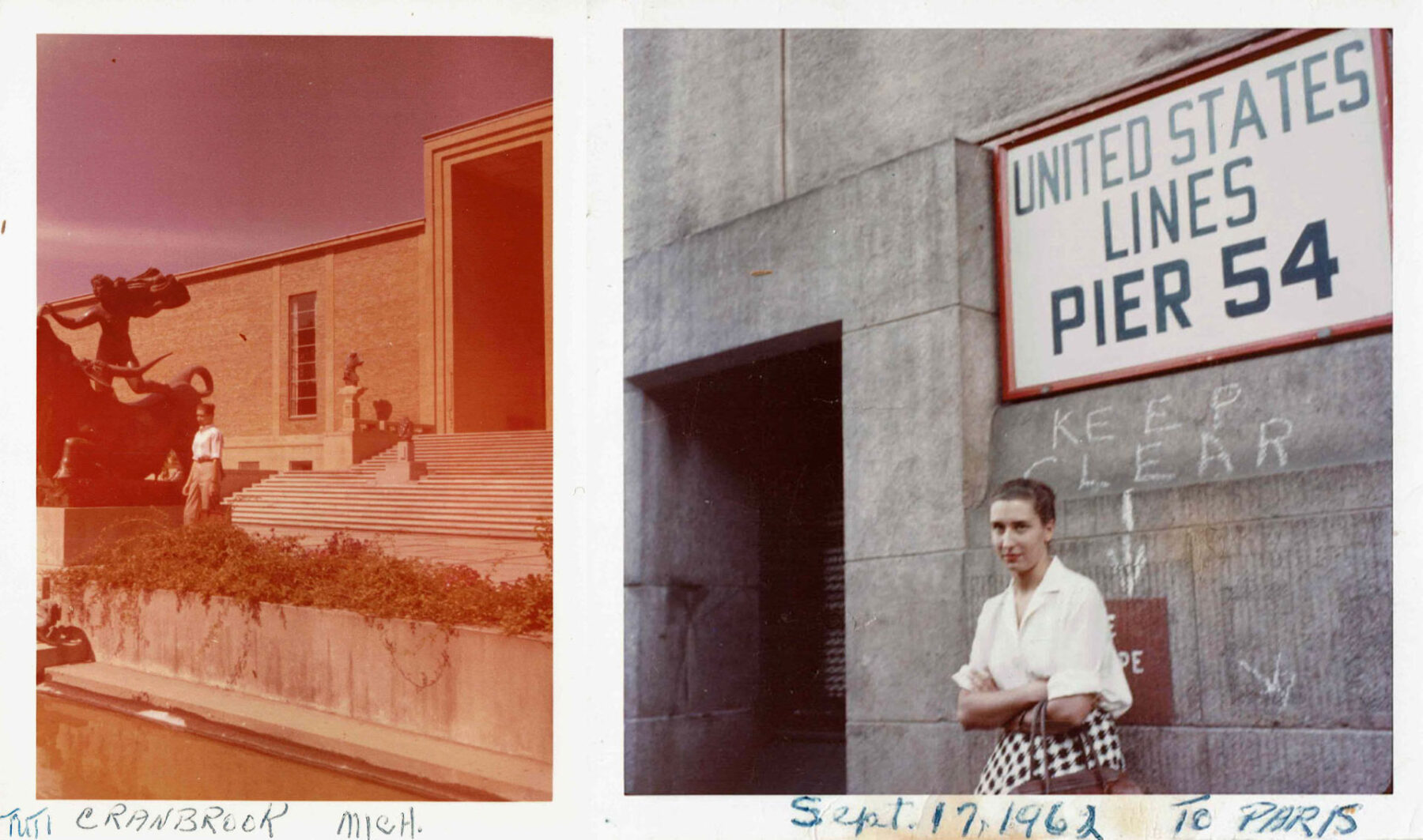

Born in Pittsburgh in 1936, Maier was the first in her family of Pennsylvania craftsmen and farmers to attend a four-year college. After graduating from Pittsburgh public schools, she earned her Bachelor of Fine Arts in Painting from the Carnegie Institute of Technology (now Carnegie Mellon University) in 1958 and her Master of Fine Arts in Painting and Metalwork from the Cranbrook Academy of Art in Michigan in 1960.
Reflecting on this period of her life, Maier told student Jennifer Boughner (BFA 1994) that the choice to immediately follow undergraduate studies with a graduate degree was unusual at the time — although she already felt her path was predetermined. The decision to become an educator was, in her own words, “the only choice” made known to women as a means of supporting themselves. Maier first taught as an Instructor of Art at Wisconsin State College-Superior from 1960 to 1962. But her return to Carnegie Tech in 1963 marked the true beginning of her career, when she joined her alma mater to teach painting, drawing, and printmaking in the Department of Art (later designated the School of Art). In 1969, Maier became one of the earliest women in western Pennsylvania to earn faculty tenure in a studio art program. She was promoted to Associate Professor in 1971 and Professor in 1989. Maier retired in 2001.
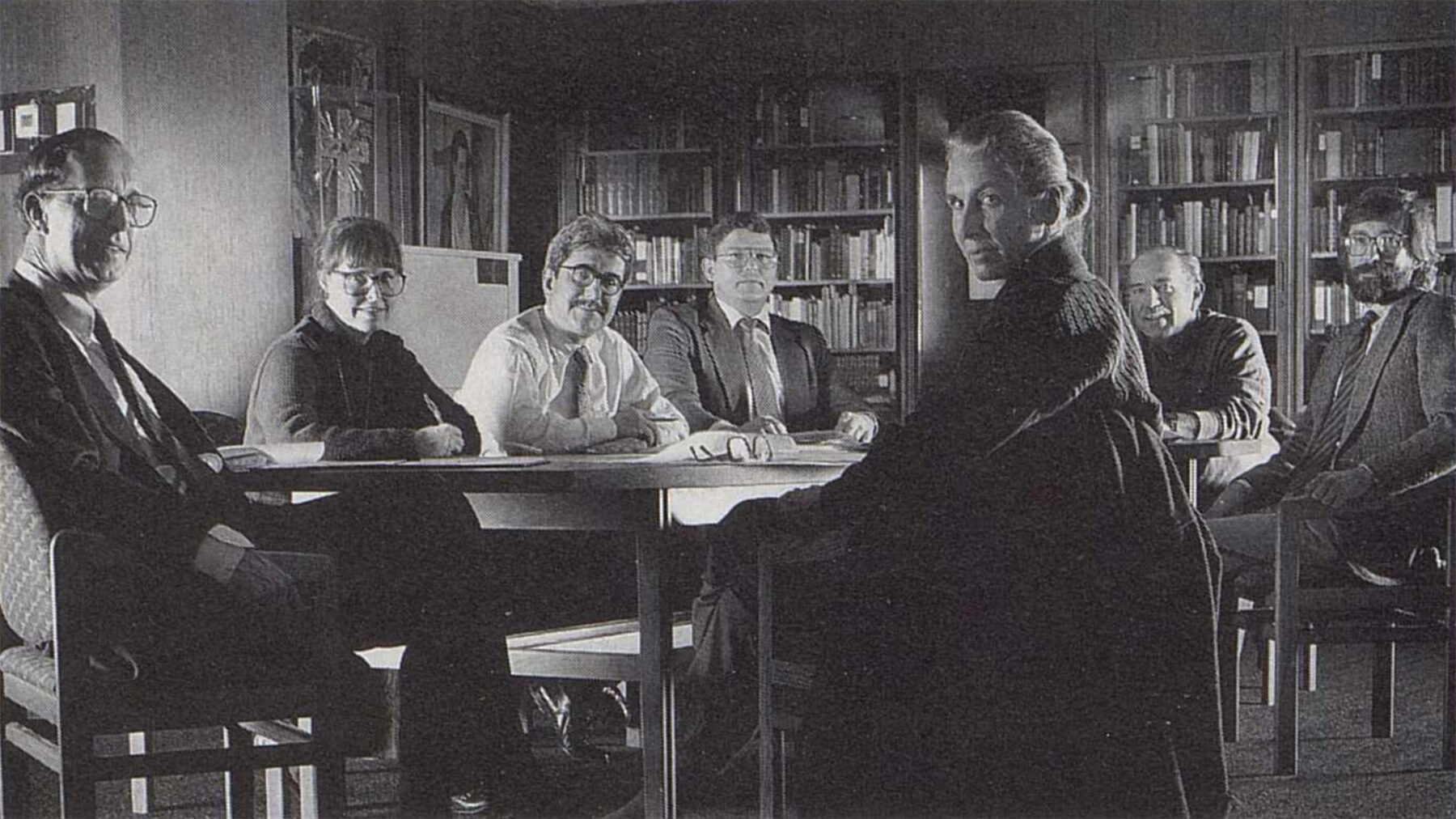
“She was very quiet, but she stood up for herself,” said colleague Mary Weidner, who would follow Maier in becoming the second woman in the School to earn tenure. “She spoke with firmness and certainty. There were lots of boisterous men in faculty meetings, all smoking and all giving their opinions. When she spoke, I listened, and others did too.”
Between her two teaching appointments, Maier spent a formative interlude in 1962–63 studying intaglio printing at S.W. Hayter’s pioneering printmaking studio in Paris, Atelier 17. Before she passed away in early 2025, Maier responded to an invitation by The Atelier 17 Project to share memories and contribute to its research. She described how her interest in the workshop began when she was still studying at CMU: “My printmaking Professor, Robert Gardner (who had studied at Atelier 17 in New York) introduced me to aquatint and burin engraving… I became especially interested in intaglio processes and fascinated with the thought of working at Atelier 17, by then relocated again to Paris. That thought became part of my to-do list and came to fruition following two years of teaching.”
While in Paris, Maier’s engraving Thais was selected by Hayter for Atelier 17’s exhibition in Tokyo and was twice reproduced in editions of his book, New Ways of Gravure. Back in Pittsburgh, Maier invited another Atelier 17 artist, Krishna Reddy, to campus for a workshop demonstration on viscosity printing, extending the lineage of experimentation she had been immersed in to her own students.
As an artist, Maier exhibited widely in solo and group shows across the United States and internationally, including Switzerland, Finland, Hungary, Turkey, Spain, Serbia, and the Czech Republic. Her work is held in the collections of the Carnegie Museum of Art, Detroit Institute of Arts, Seattle Art Museum, and the State Museum of Pennsylvania, among others. A lifelong horsewoman, athlete, gardener, and traveler, she continued to ride and row well into her eighties. Her niece, Kristen Welsh, said Maier embodied self-determination: “She was my idol when I was a kid. She was just so cool, super athletic, very independent, and fiercely intelligent. She did the things that she wanted to do and accomplished a lot.”
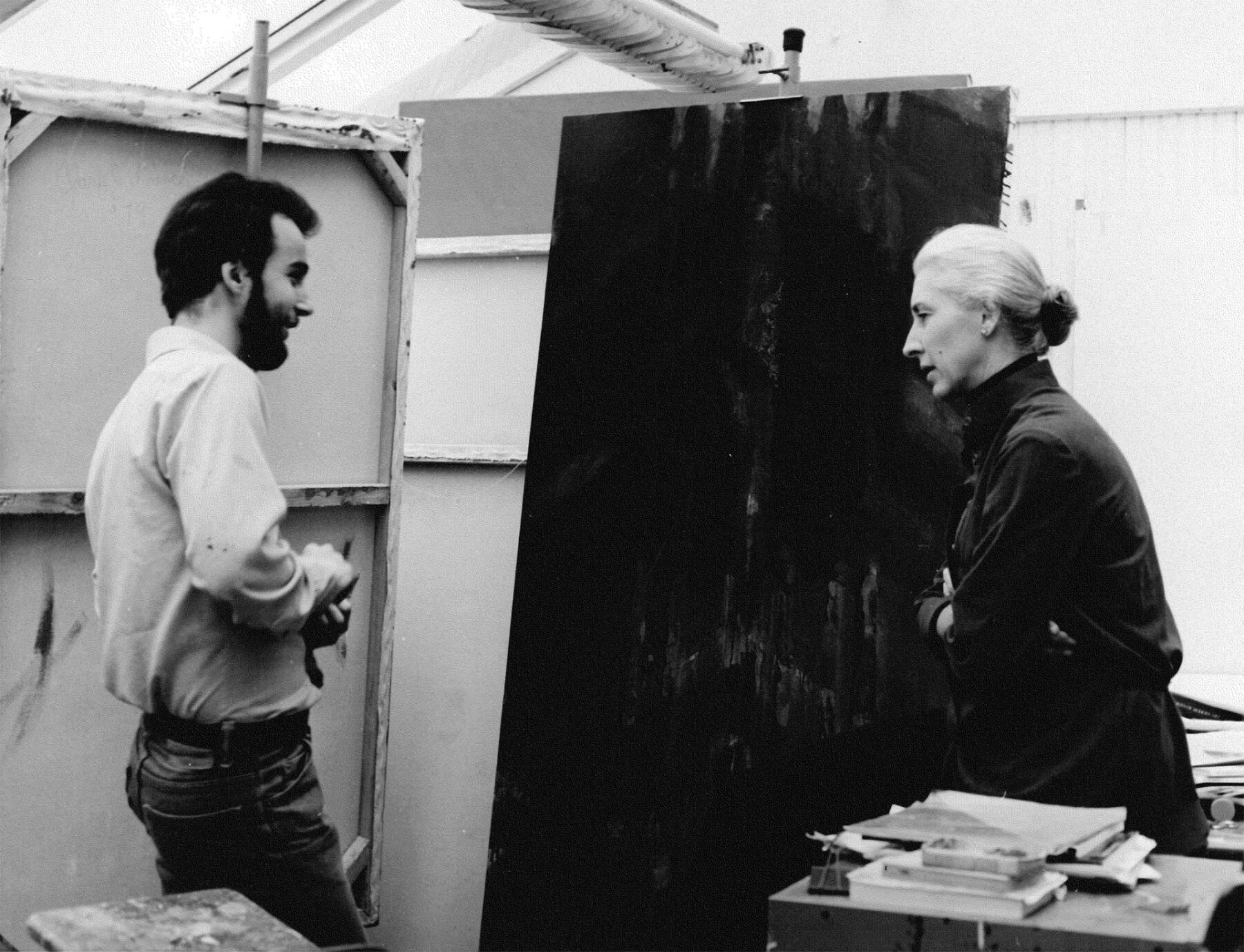
Over her 37-year tenure, Maier largely kept her private and professional lives separate, with one lasting exception. Her student Jamie Gruzska, who now teaches Photography at CMU, became a longtime friend. Gruzska described her as “a very dedicated and inspiring teacher who stressed self-awareness and engagement with the world — but on one’s own terms.”
In the years after Gruzska graduated, before heading to graduate school, “Joann arranged something called The Professional Workshop, which was essentially a way to interject artists into the student population,” Gruzska said. “She was really instrumental in giving me and the larger Pittsburgh community access to the print shop. It had a big impact on my development as an artist.”
As Director of Printmaking, she was the first faculty member to use large-format color printers, expanding the possibilities of the medium. Even after her retirement, Maier remained deeply engaged with evolving technologies and new methods. Writing for the catalog of the Third International Triennial of Graphic Arts in Prague in 2001, she reflected: “Much that I now do seems based on the recycling of the ‘just-completed’ into yet another incarnation. Partnerships with liquid-ink, paint, stop-outs, or acid baths; with more or less absorbent surfaces; with light, in photo or laser processes and now with electronic modifiers are full of surprises… Always present is the taunting discomfort that the path could be to No Where, this time. No reliable maps seem to guide from one work to the next.”
If there is a final lesson from Maier for the School of Art community she helped shape, it may be found in her own words from the 1989 Hewlett Gallery retrospective, about a watershed moment in her development as an artist: “Time was at hand to let out all the stops. There was no hope for the masterpiece; I decided to just paint!” Or, as critic Harry Schwalb put it: “The very private Ms. Maier is living, breathing, painting proof that the work is everything.”