

“5 Questions” is an ongoing series with School of Art alumni who are transforming art, culture, and technology, exploring their creative practices, career milestones, and Carnegie Mellon memories.
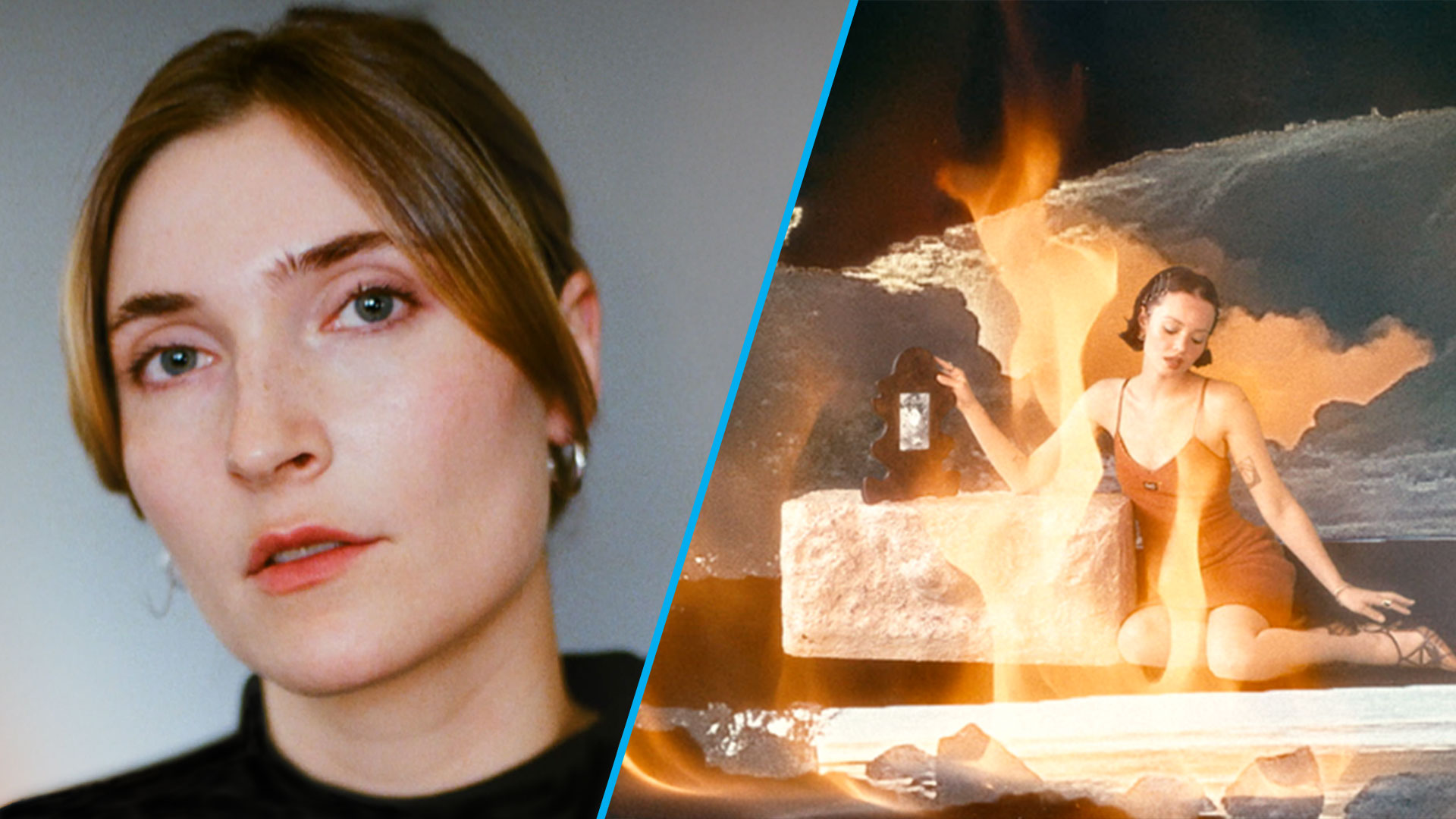
Chloé Desaulles (BHA ’19) is charting her own path through new media. With a practice that moves seamlessly between writing, film, live performance, and emerging technologies, Desaulles’ work resists any singular label. Recently, she directed films to accompany music tracks for Arlo Parks’ “Get Go” and Charlotte Rose Benjamin’s “Hangover” (which took home Programmers Choice at the 2025 Dallas International Film Festival). Before founding her own innovation studio, Touch Response, she researched and developed mixed reality tools for journalists at The New York Times R&D desk. Here, we catch up with Desaulles to discuss the drive behind her practice and why, for her, the medium is always secondary to the story.
Desaulles directed and crafted the “Hangover” music video for Charlotte Rose Benjamin’s second album, Moth Mouth.
1
How do you describe the kind of work you do?
This is something that I deal with on a day-to-day basis, where I shift the description based on who I’m speaking to, because I do a lot of different kinds of things. I think the overarching trend is that I like finding these ethereal in-between spaces between digital experience and physical, lived experience. I tend to use any technology, tool or medium that will serve the story. I do a lot of video-based work, pulling from documentary, experimental capture, and 3D reconstruction to blend different fields of journalistic visual investigation with a more artistic approach that feels a bit more textural.
2
Do you feel pressure to attach an all-encompassing label to it?
I try to keep my media arts practice and my commercial practice separate, because I think they’re difficult to speak about in the same breath. To me, they make a lot of sense together, but it’s not always obvious to everyone else. I would typically say I’m a creative director and new media artist. I also often call myself a media researcher, or a computational artist and filmmaker. In the working world, I think people have a hard time understanding if you do too many things at once. Writing articles and being a filmmaker or video artist and needing to take on commercial work don’t really always fit in the same framework. So you need to do some juggling to be able to paint an image of yourself that people can understand.
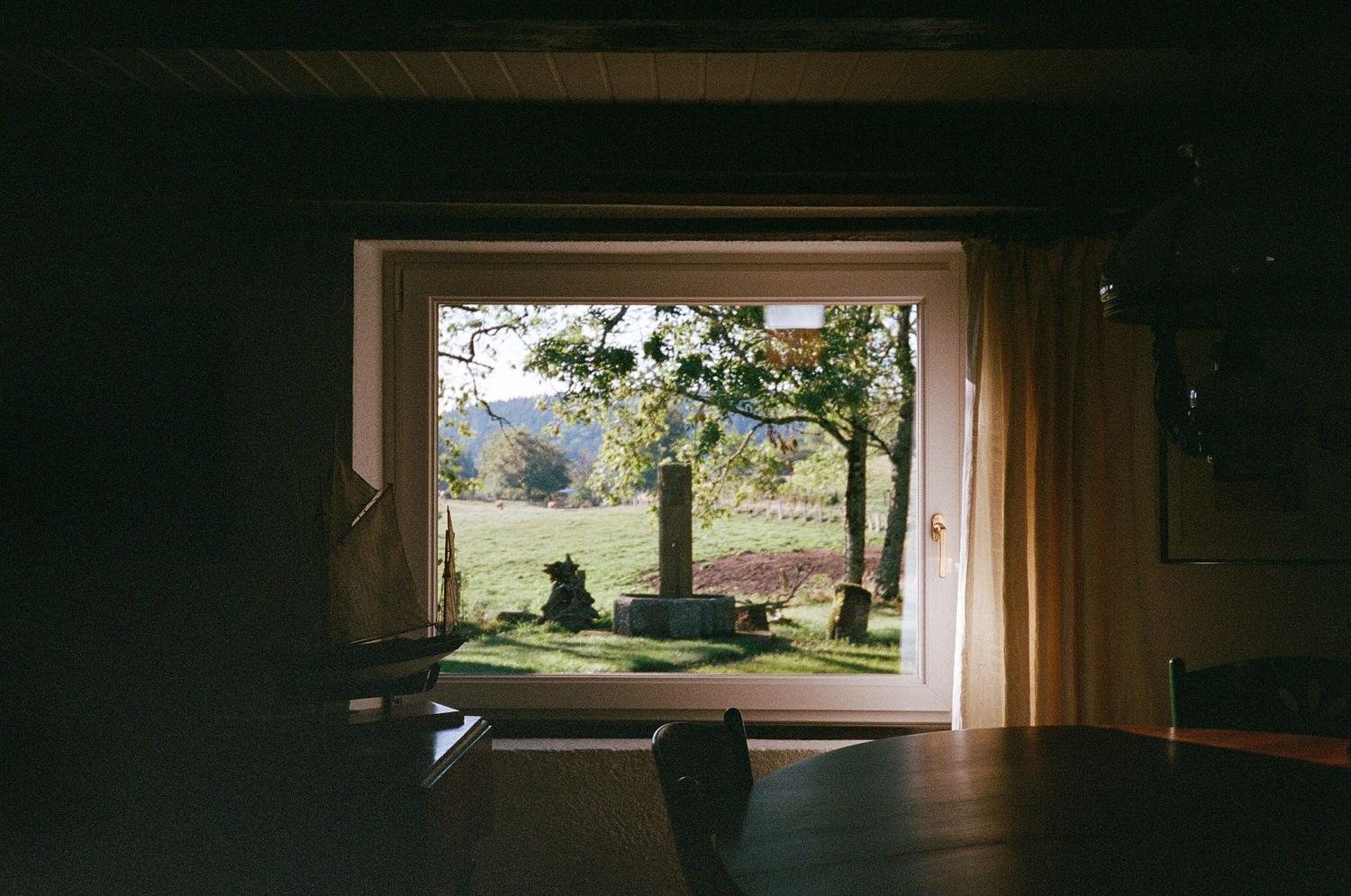
Outtake still from Desaulles’ in-progress documentary.
3
How did CMU and the BXA program shape your interdisciplinary approach?
I came to CMU specifically because of the BXA program, so there was definitely an interest in an interdisciplinary focus at the time. I came in for neuroscience and fine arts and later specialized in electronic media arts. All my friends went to med school, and I anticipated that I would become a neurosurgeon. But I was a painter and an illustrator and had been doing theater for 15 years. I always loved the arts but never really perceived it as a realistic route.
CMU really exists at these intersections. Being able to blend both analytical and creative thinking, especially in new media, made a lot of sense for me. I realized there was the ability to carve something out for yourself that wasn’t necessarily a traditional direction. One of my first required classes was a video course with Suzie Silver, and that was the first time I started thinking about my work across time and in layers. I really fell in love with the format of video. I also took an Intro to Creative Coding class with a visiting professor, Caroline Record, who had graduated from the School of Art and the HCI program. I came up in the creative coding and open-source toolkit scenes at CMU, primarily under Golan Levin. So a part of me is very focused on the ability to clearly explain process and clearly explain what it is I do. Golan’s Experimental Capture class in many ways is the nucleus of the work I do today.
4
Tell us about working in research and development at The New York Times.
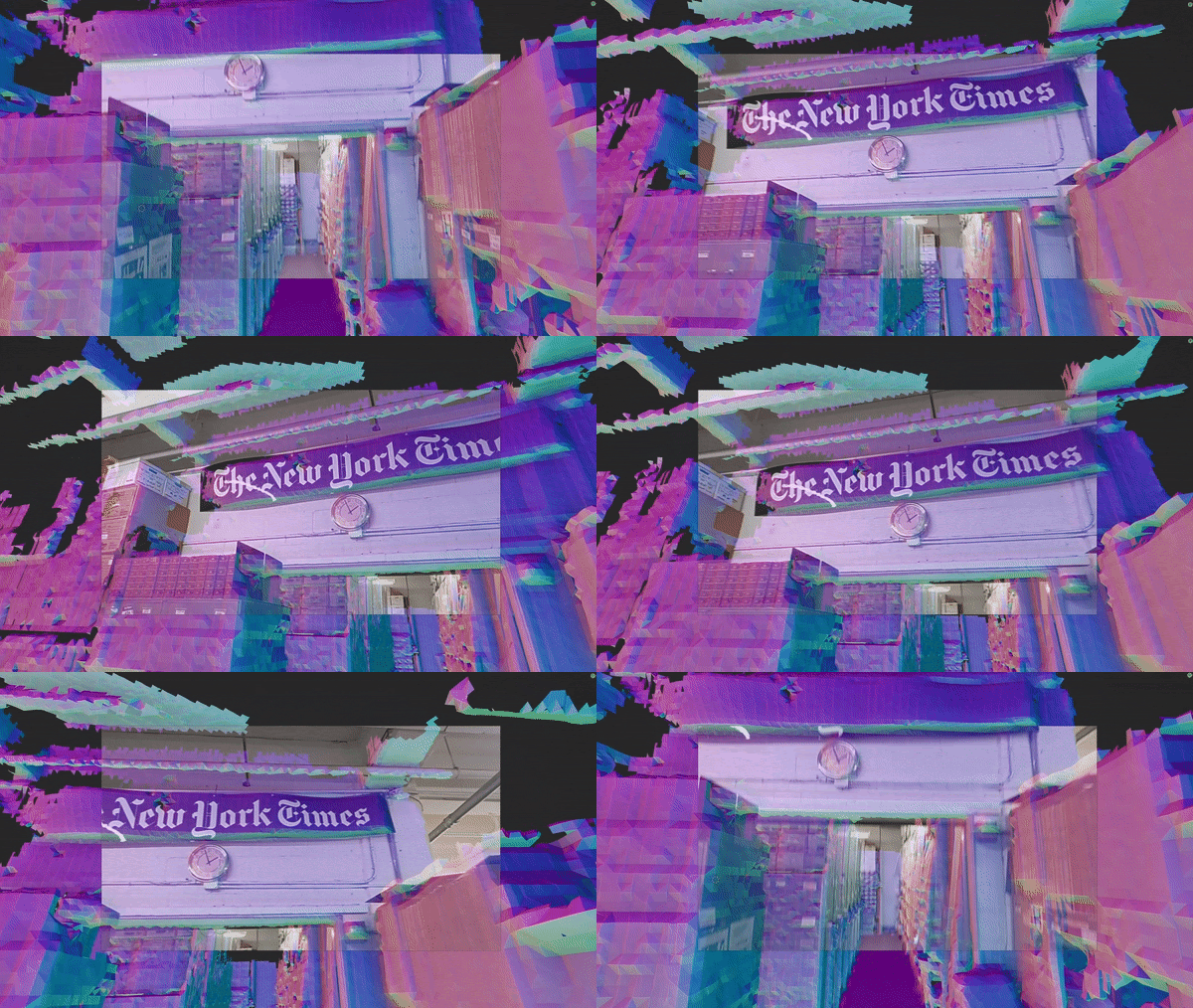
That had been a “dream team” for me since school. I made my senior film using 3D capture technologies, or 4D, if you consider time-based. I got hired at the end of 2021, and it was the first job I could conceive of that blended every single discipline I was really passionate about. There’s a concern around information and ethics and how you share that information with the public. It was work that I deeply believed in, in terms of transparency and giving people access to information in the news.
There was also the R&D aspect, which is extremely rare within the context of a professional job — the ability to spend time researching emerging technologies that arrive on the market and really figuring out the narrative focus of each of those technologies: what their strengths were and what we could use them for to tell stories. While I was there, I was on a creative team that was primarily engineering-focused. A lot of my work revolved around prototyping, but also developing structures in which we could use emerging technologies to tell the best-use-case story. I developed standards and systems with the technologies we used, essentially finding the best narrative focus for a tool.
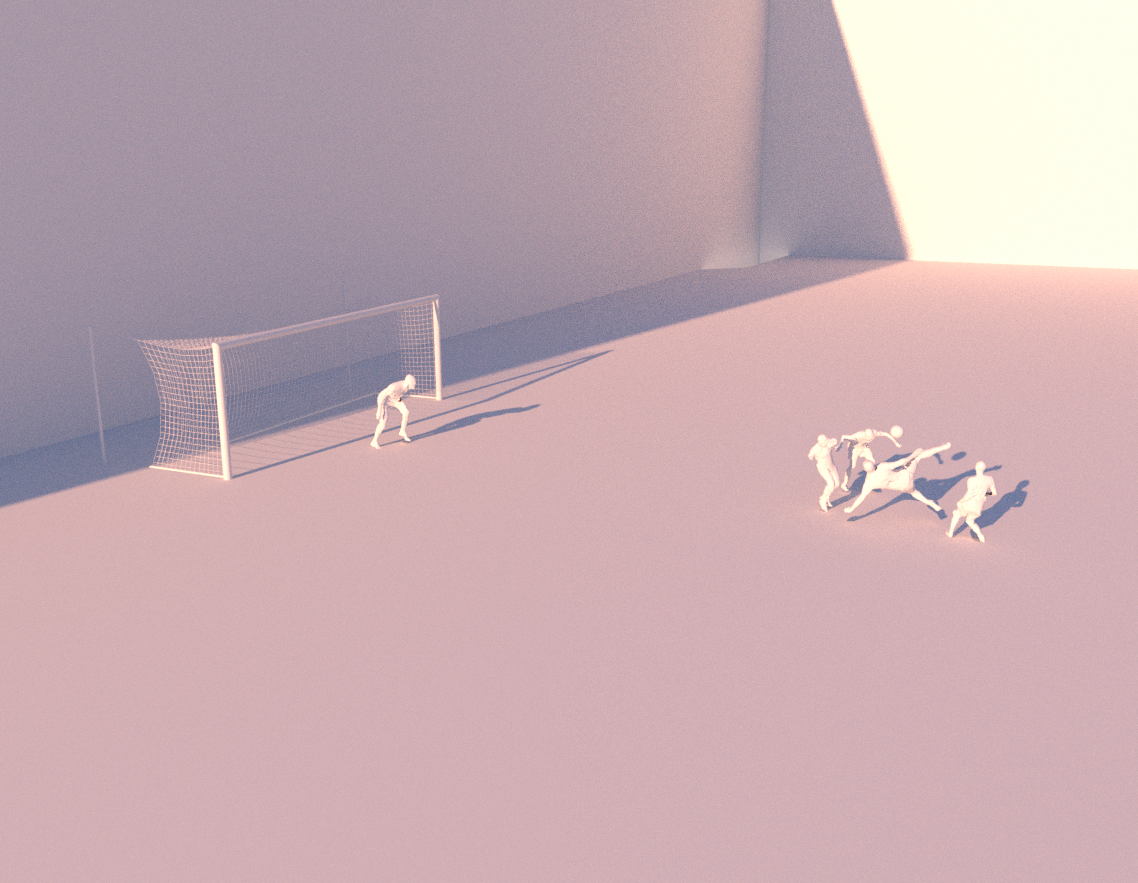
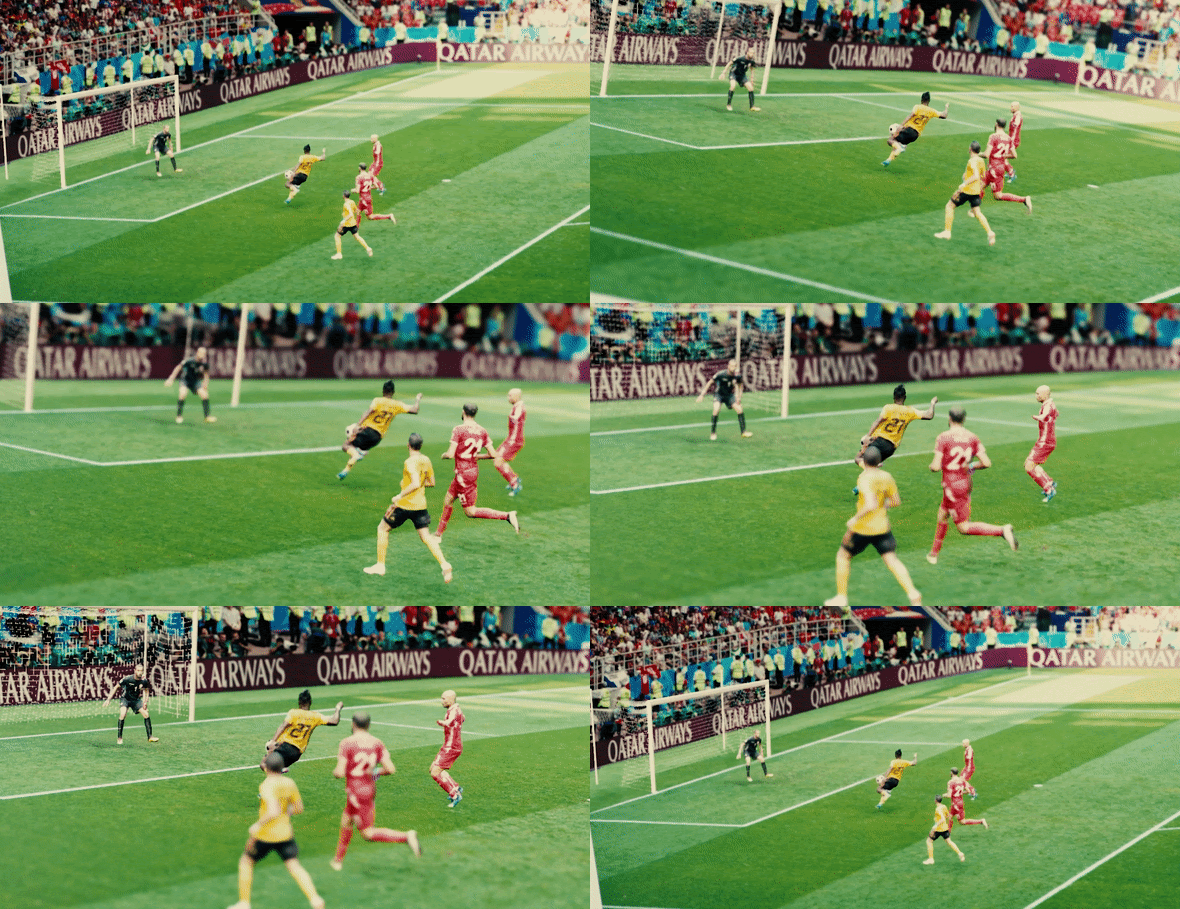
Modeling Key World Cup Moments with Machine Learning: The New York Times published a series of articles for the World Cup, in which Desaulles used experimental 3D imaging with machine learning to study specific goal positions.
5
How do you think about AI in your creative process?
I personally believe, if you subtract the fact that the tools are being developed by big companies that have clear incentives, and you just think about it as a tool, that’s all it is. The way you use it matters. By using a tool, you can dissect it and disassemble it and make it something interesting, find its individual texture or language. I came into CMU doing hyper-realistic portraiture with pencil. There was a technical ability to that, but I don’t necessarily believe it was the most interesting output you could do with pencil. I think it’s the same with AI.
Desaulles directed, edited, and created computational visuals for Arlo Parks’ “Get Go” music video.
One way I’ve been using AI, for instance, is to build sets for a music video I did recently where the backdrops were AI-generated but trained on my own imagery. I built my own datasets and then trained a model based off my own archives over the last ten years. By training these models on my images, I can also blend images, make them look blurrier or muddier, merge them together and then retrain it, and build a new language and a new set of photographs.
Working with emerging technologies, there’s a huge lack of forward visibility. You don’t really know what to expect, because most of the technologies you’ll work with next year haven’t even hit the market yet. That lack of assurance makes it difficult to get started, but there’s also a hunger for it and people are excited. Just starting is the hardest part.
More from Chloé Desaulles | chloedesaulles.com | @cdslls