


Professor Britt Ransom’s “Cabinets to Collections” class capped off its semester-long tour of Pittsburgh’s most unique collections with a visit to the Bavarian-styled world of the Bayernhof Museum. Here, we dive into the museum’s extensive collection of self-playing antique instruments and the eccentric personal touches of its founder, by the numbers.
19,000
Square feet
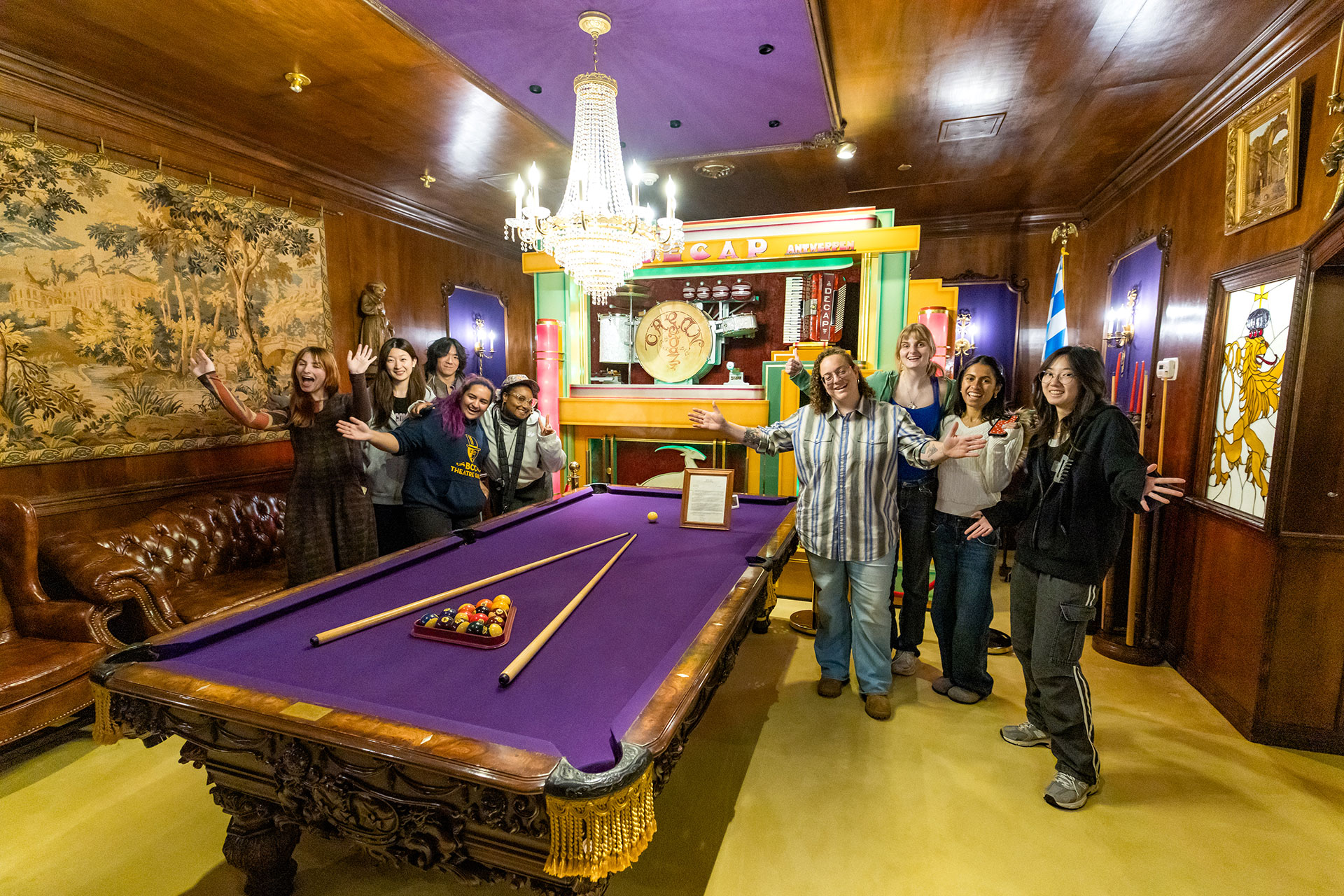
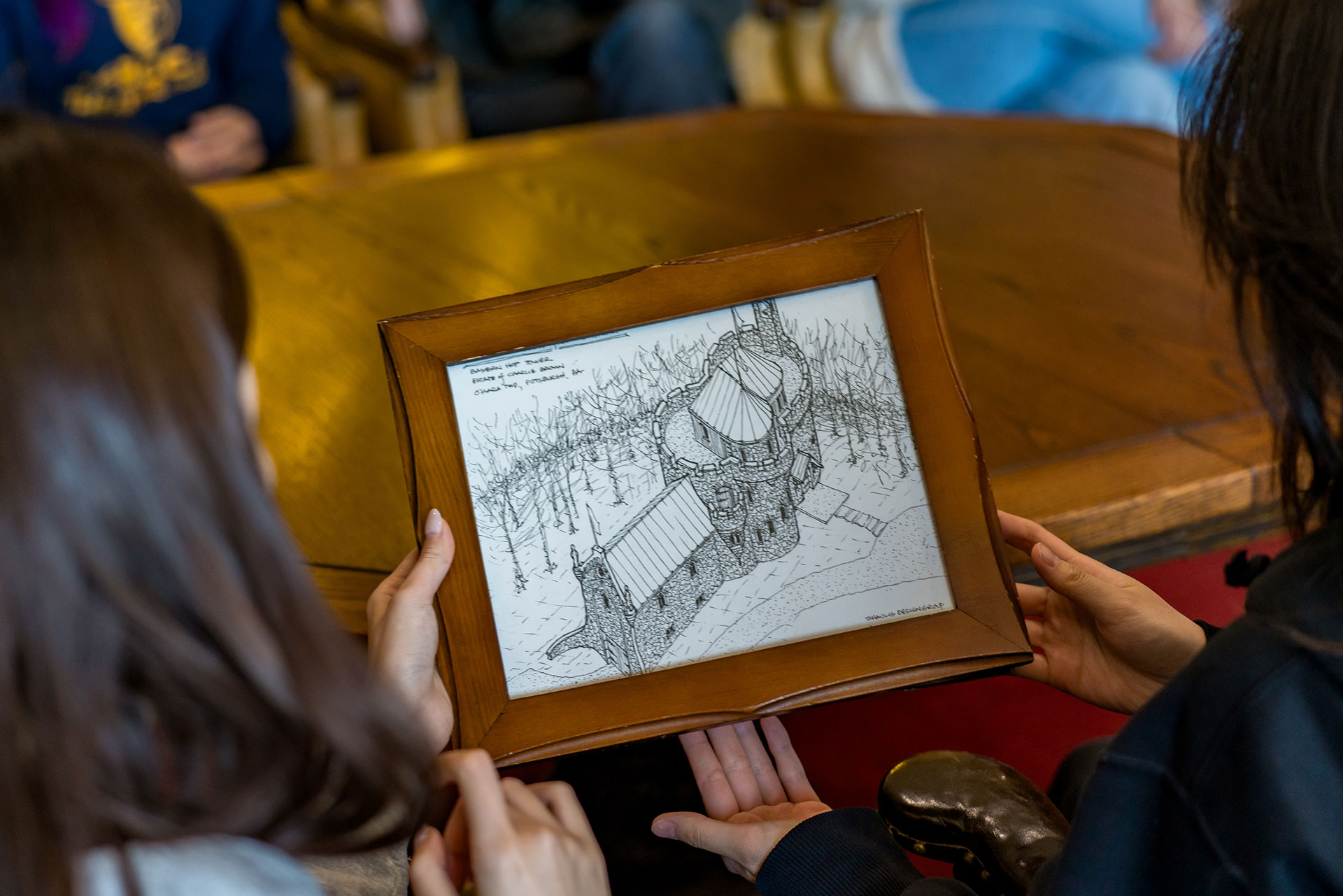
The labyrinthine Bayernhof Museum was originally a private residence for the late Charles “Chuck” B. Brown III, founder of Gas-Lite Manufacturing Co. in Lawrenceville (now a site occupied by Eleventh Hour Brewing Co.). Constructed in 1976-1982 on an 18-acre site overlooking the Allegheny River, the “castle” was built without a single blueprint, guided instead by Chuck’s personal vision and the help of then-CMU student John Hunt.



10
Secret doors
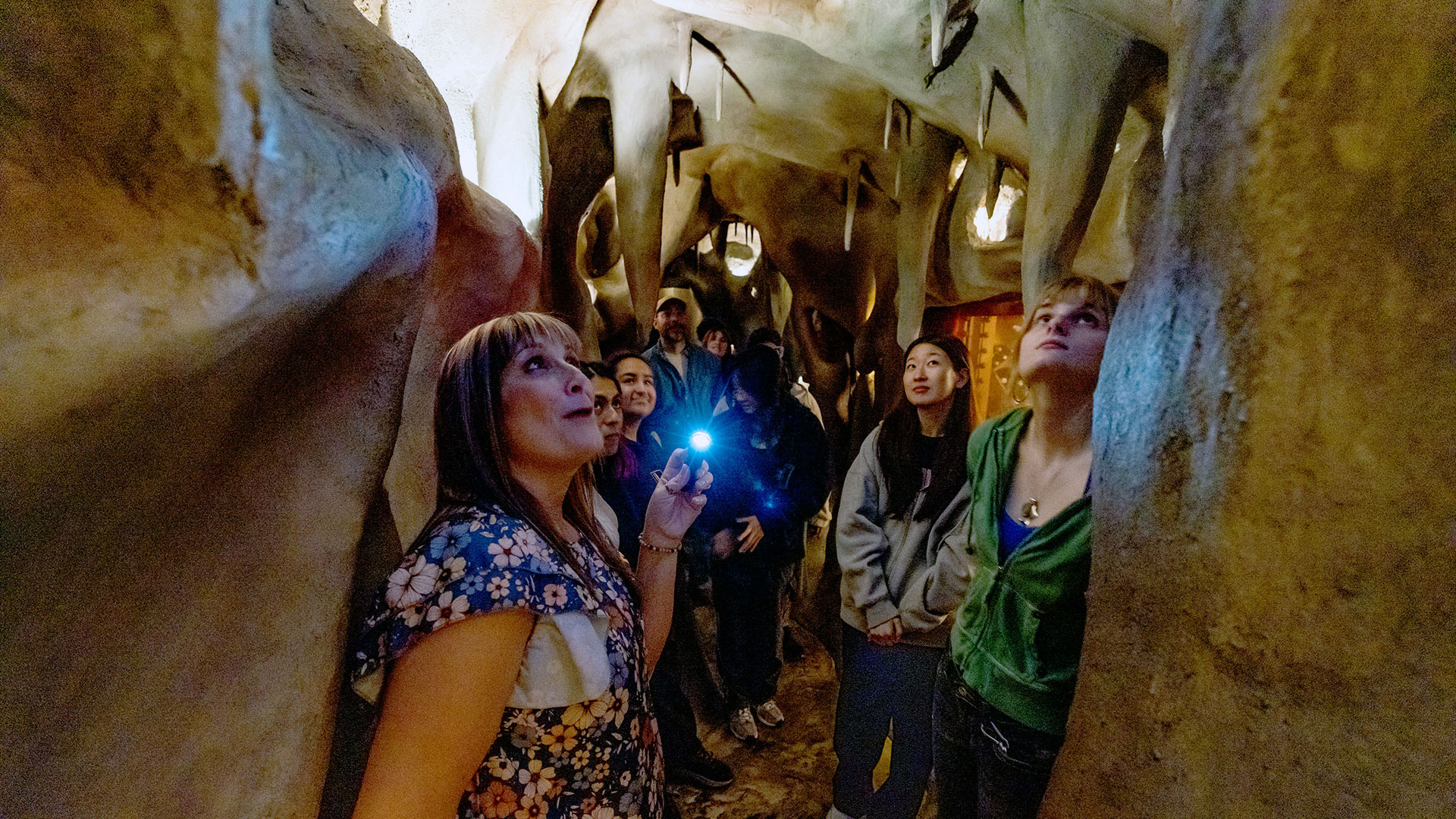
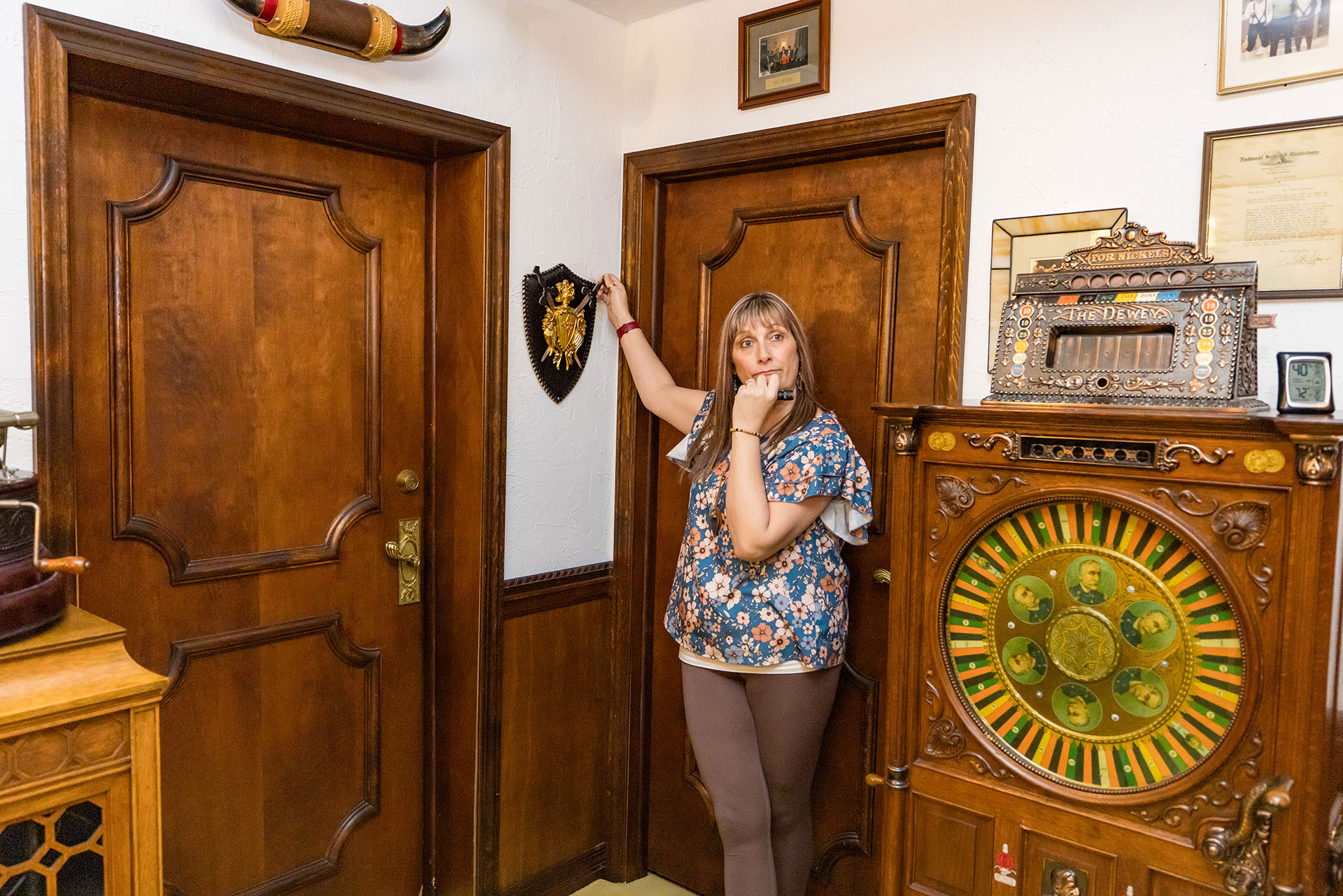
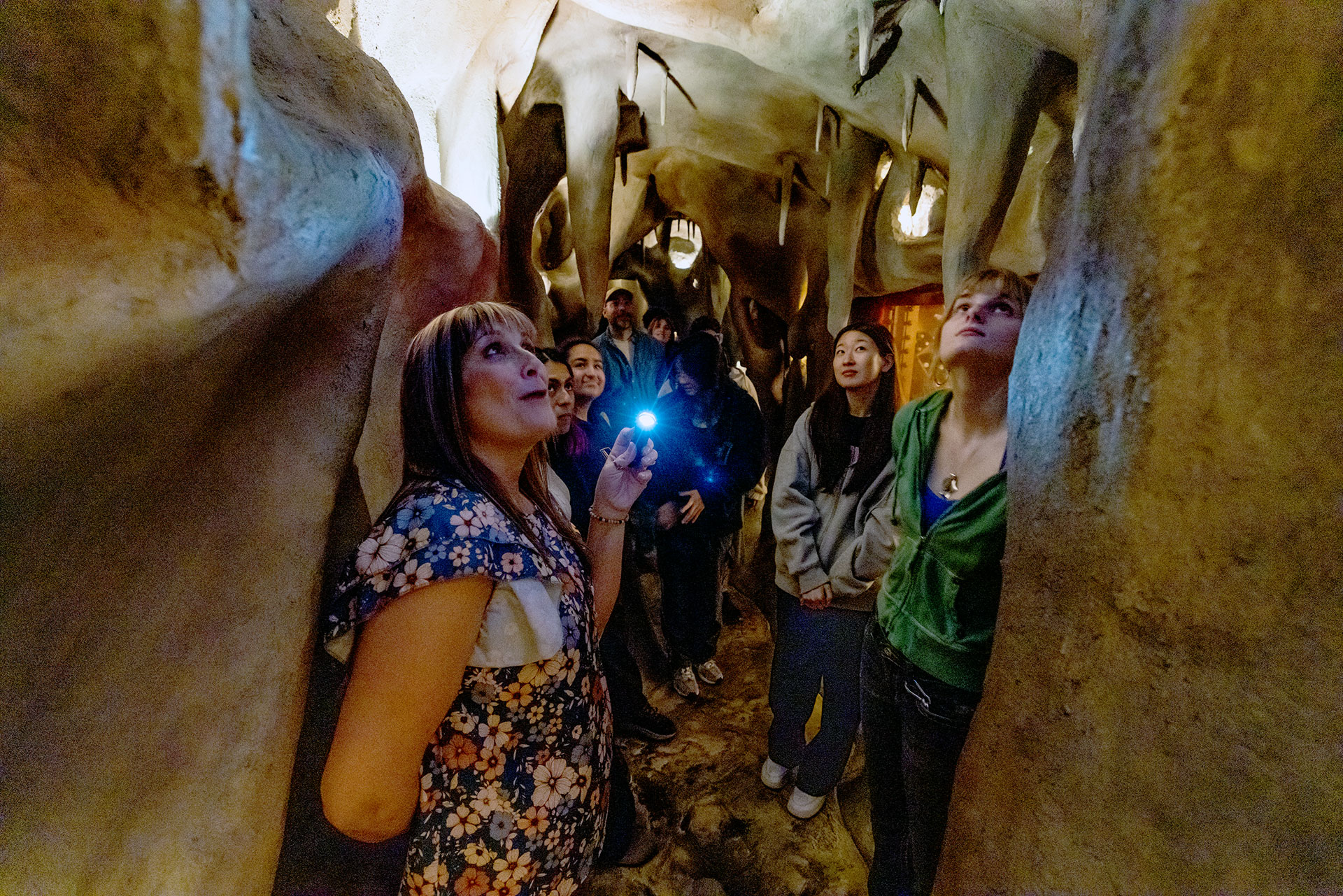
Guide Lisa Dimit led the class through the museum’s twisting corners and concealed passageways, including a secret “cave” filled with artificial stalactites and waterfalls. The museum boasts 12 wet bars, 8 soda guns, 11 fireplaces, a heated indoor swimming pool, a West Virginia moonshine still, and a solid 70-pound block of silver perched next to a computer-programmed bathtub. The details highlight the eccentric way of living that defined the museum’s founder, who was known for always wearing a blue shirt and always serving asparagus to his dinner guests.

165+
Antique music machines
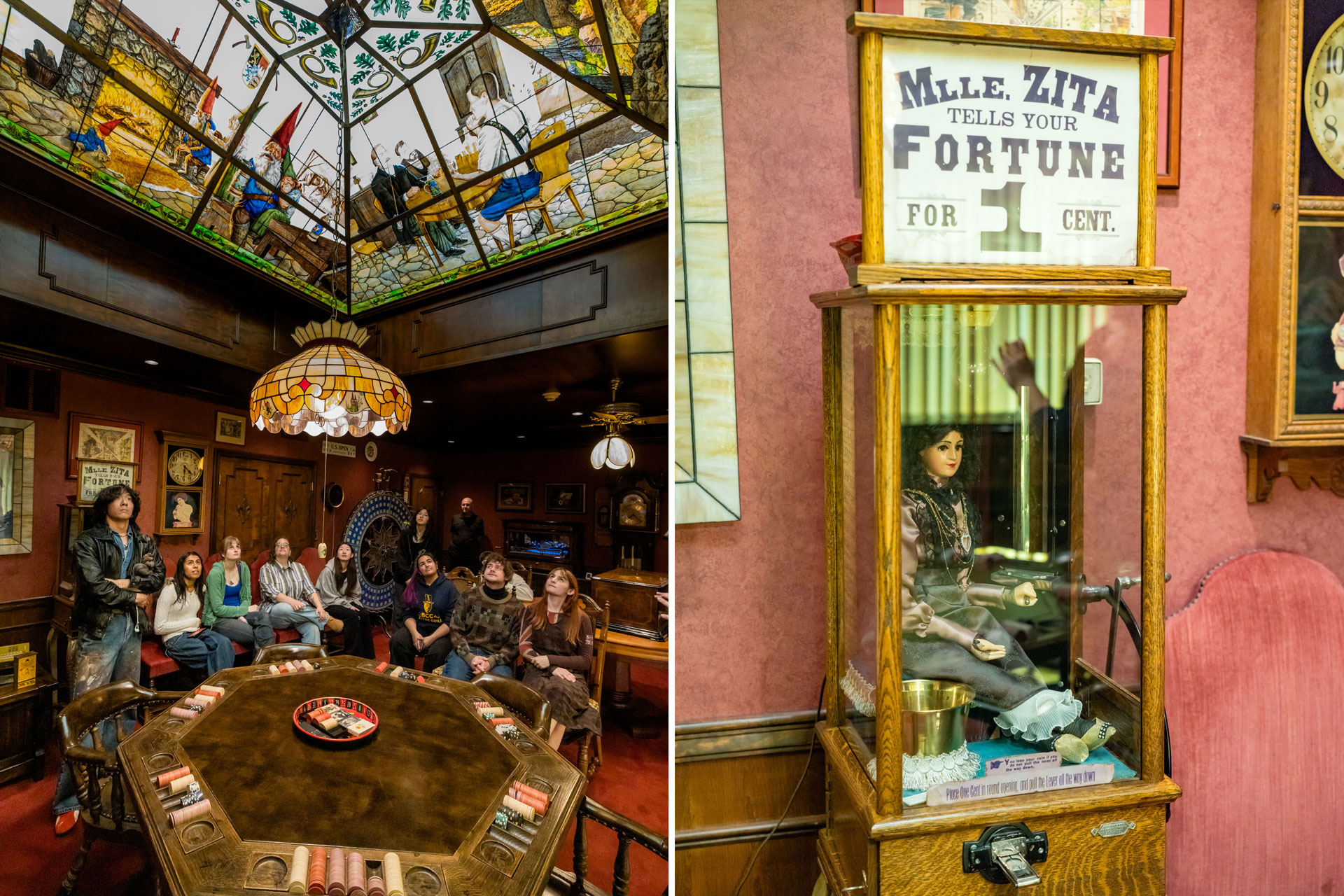
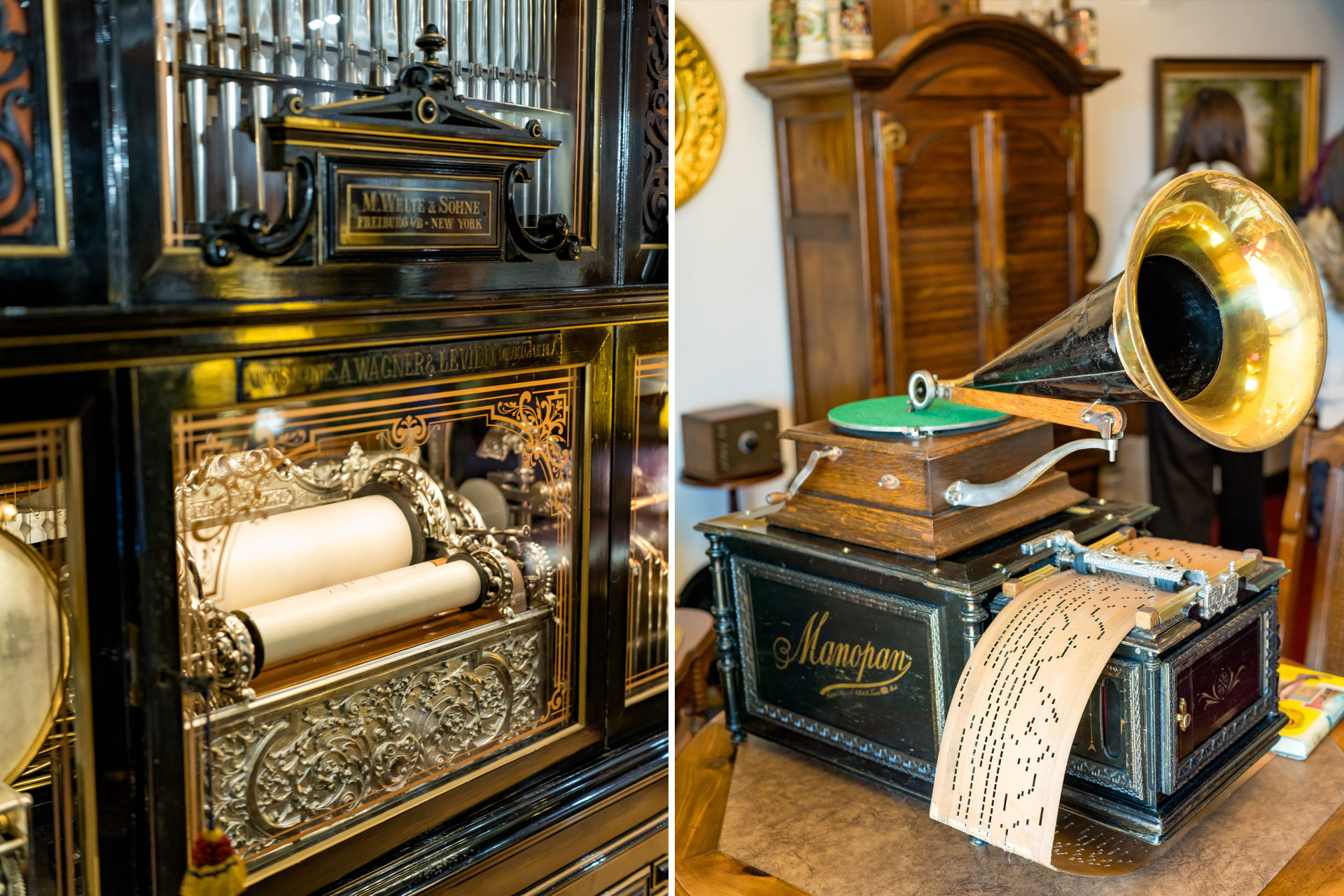
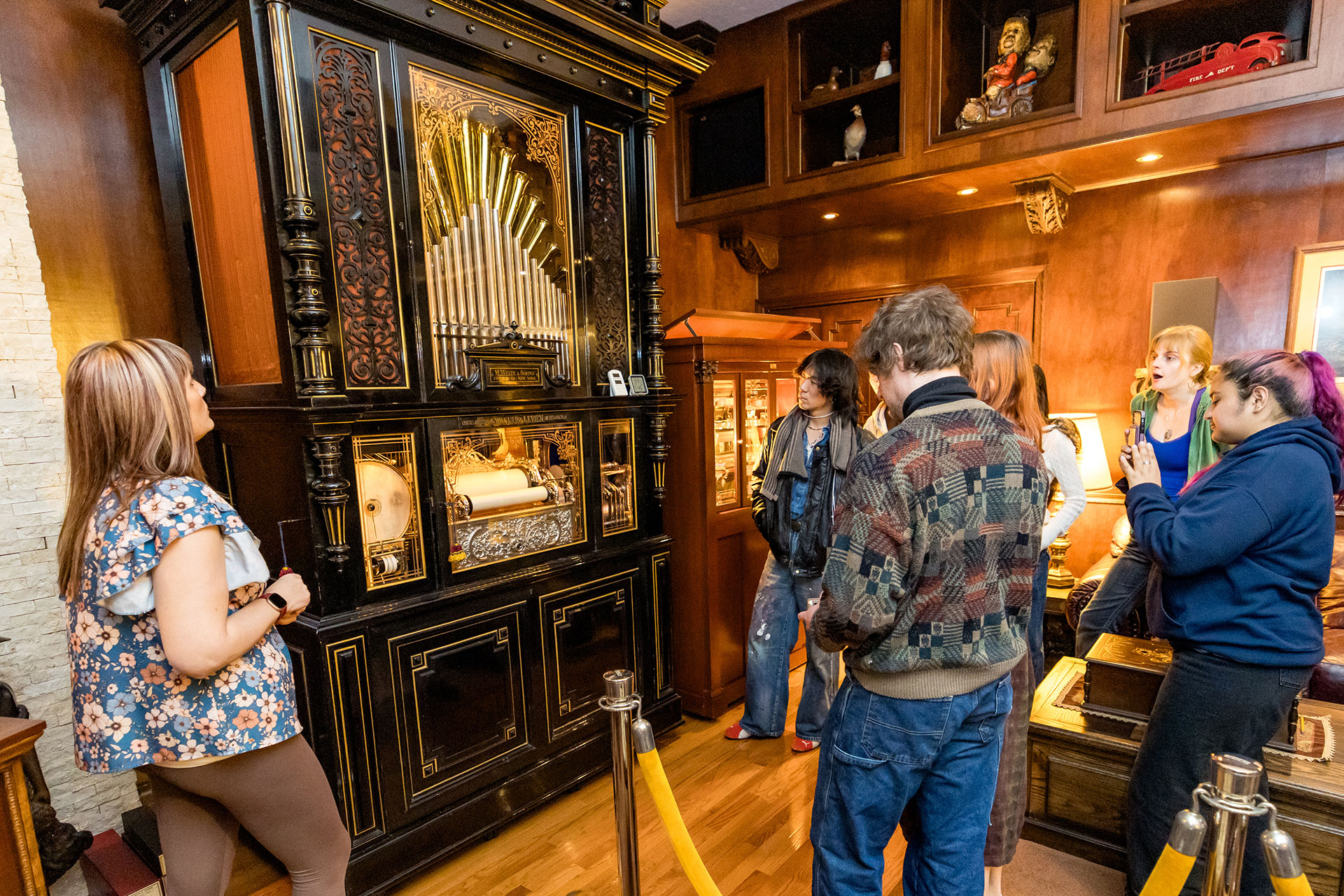
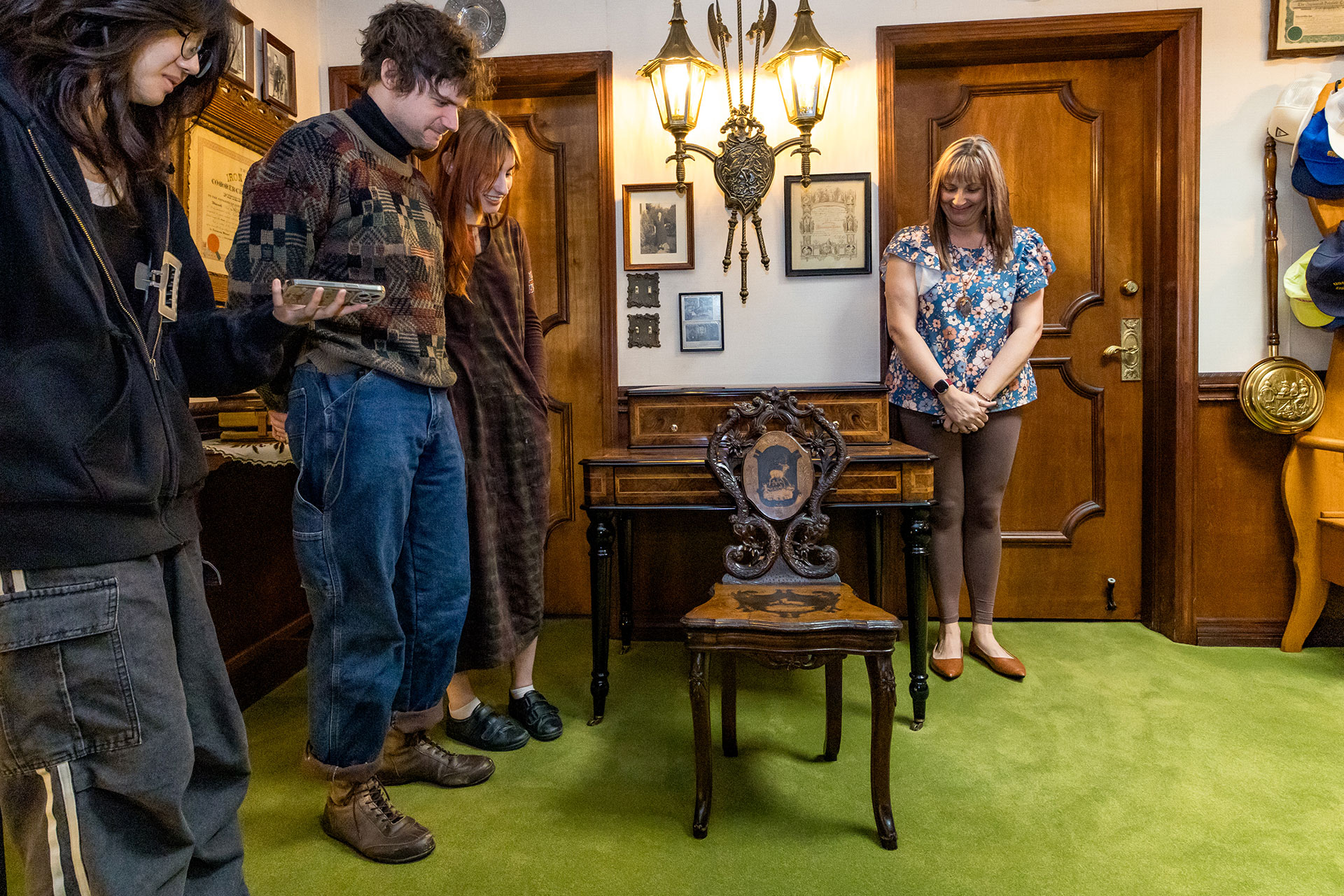
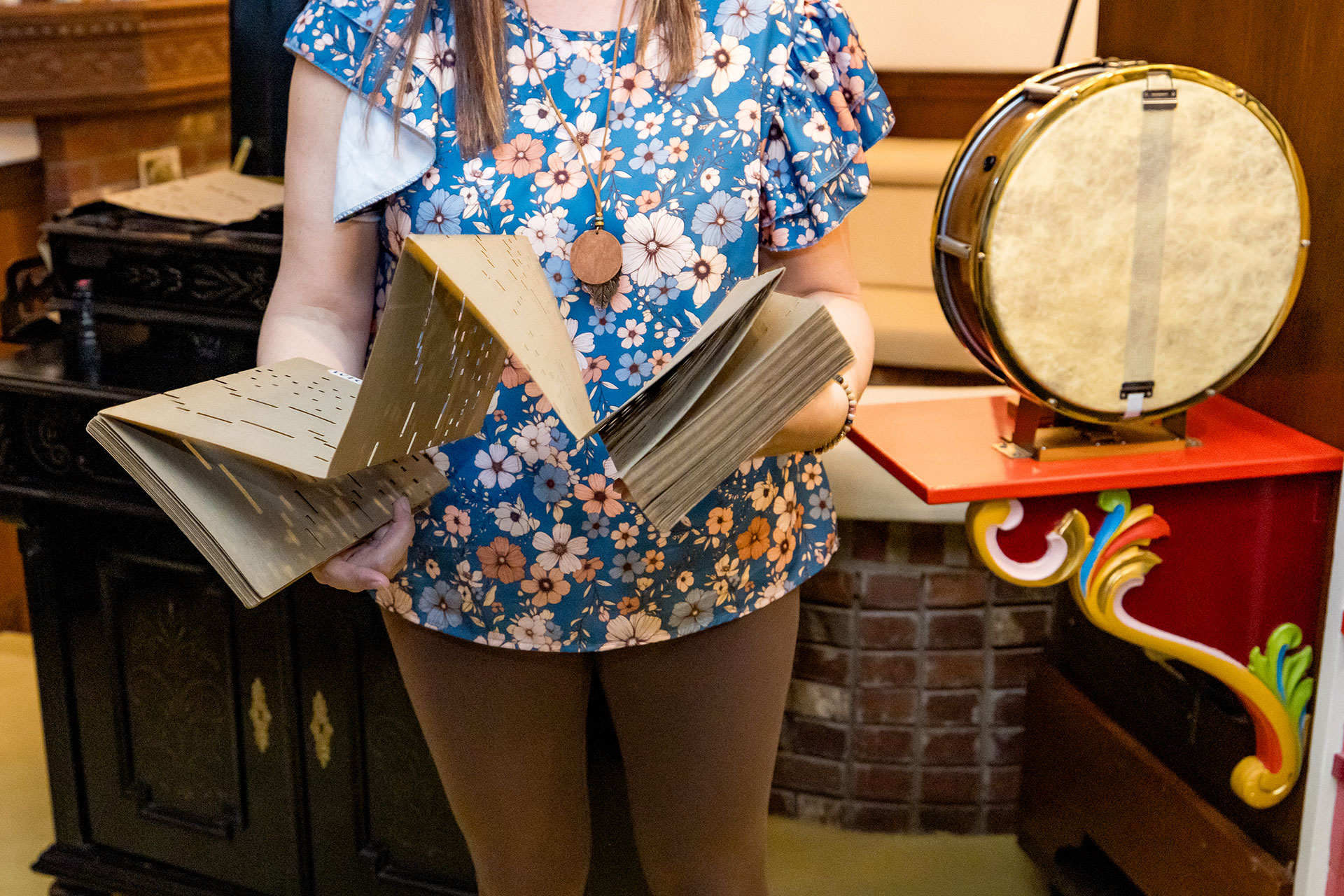
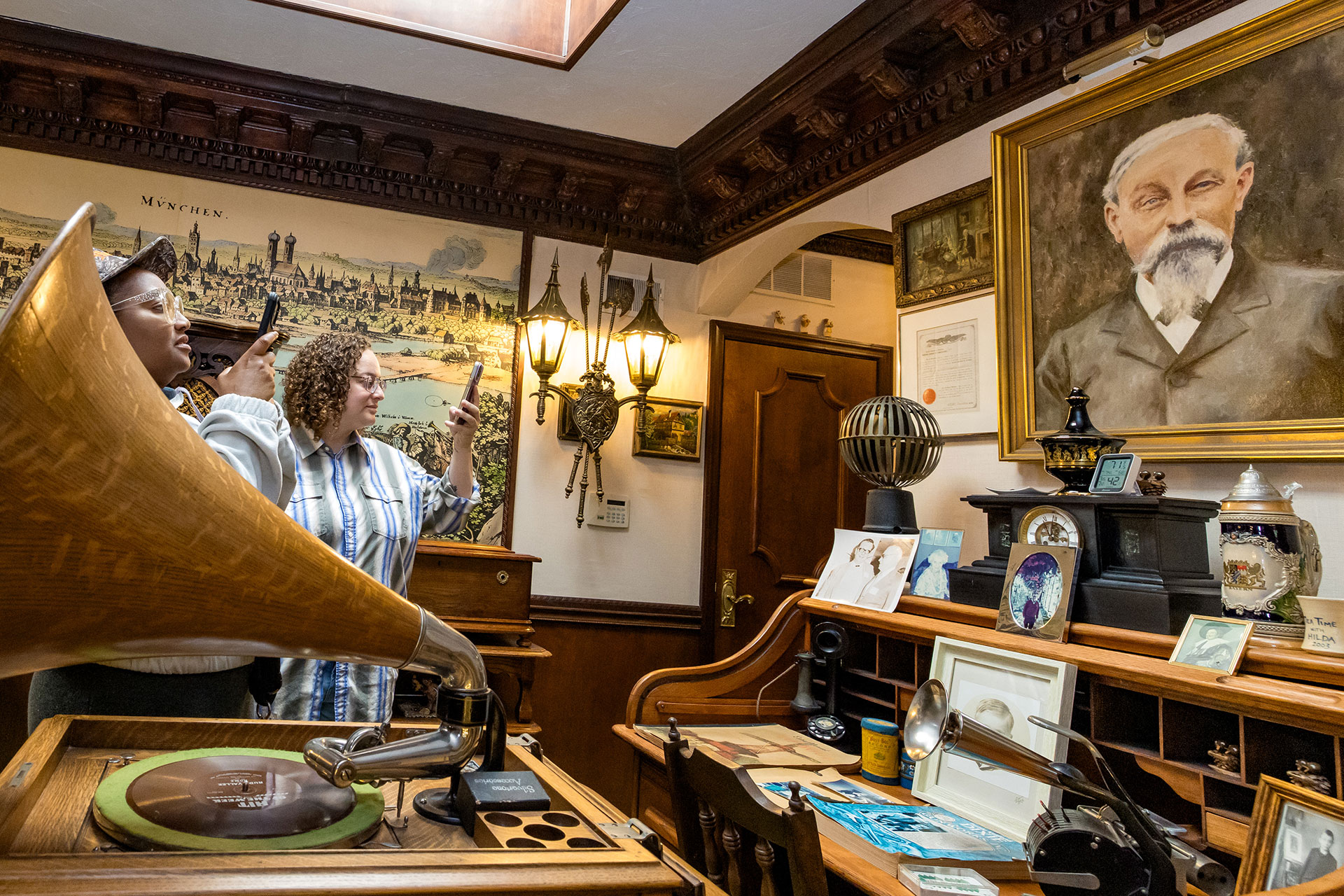
At the core of the museum’s collection are rare music boxes and automatic machines, most over 100 years old, such as a chair that begins to play music the moment a guest sits on it. An 1880 Swiss birdsong cylinder is one of only three known to exist in the world, featuring 17 tiny metal pipes and a small bellows that animate a flapping, singing bird. Because these machines are highly sensitive to humidity and mechanical wear, they require constant maintenance and restoration to remain actively used instruments.
1911
Violano-Virtuoso
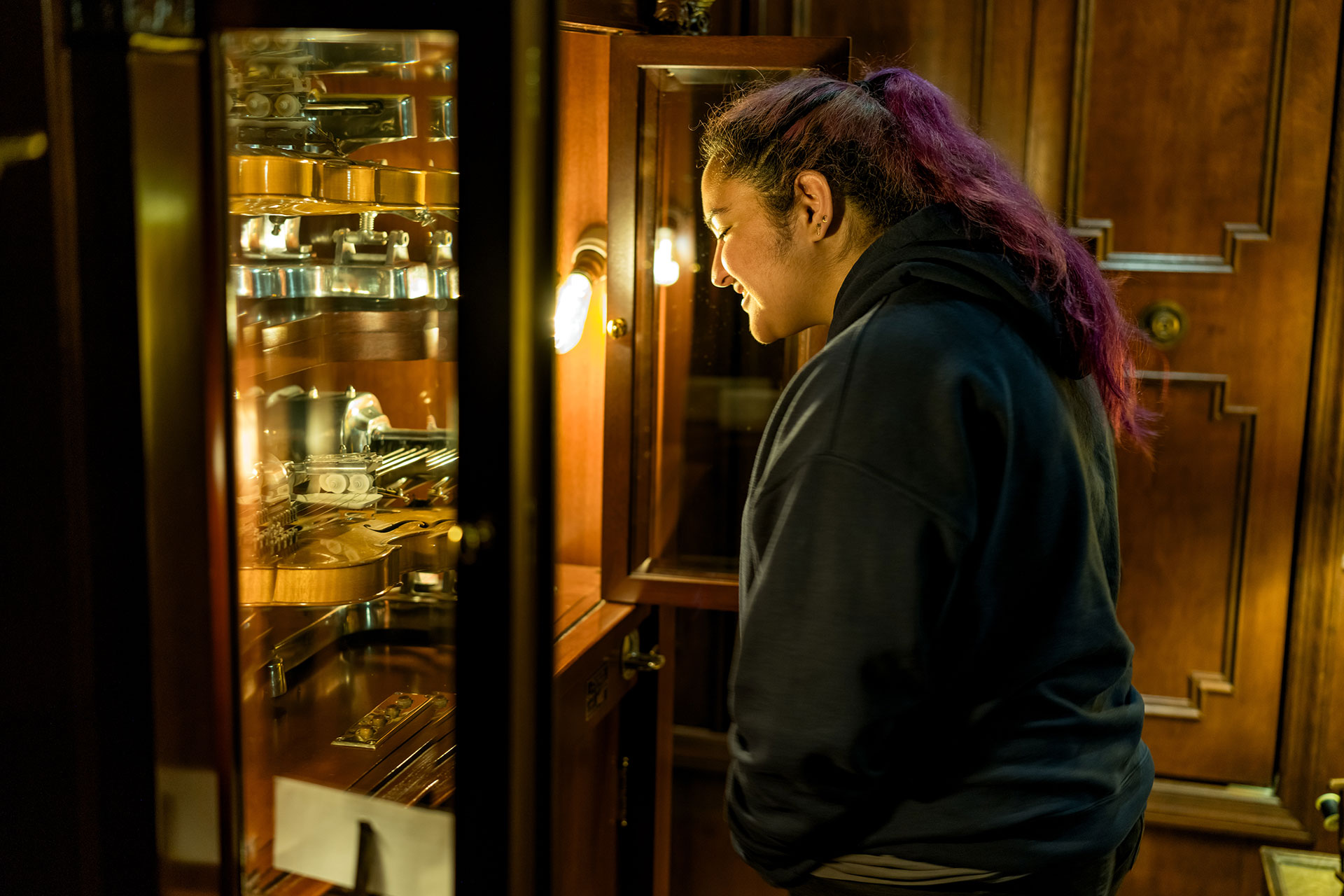
Designated as an “electric self-playing violin,” the Violano-Virtuoso was a highlight of early musical automation. Inventor Henry Konrad Sandell (a contemporary of Thomas Edison) eventually added a player piano mechanism to create a “double violin” performance that is entirely self-driven.

3
Statues of “Nipper”
The iconic RCA dog appears throughout the house, including seated at the head of the table in the Dining Room. Nipper was a real-life dog in 19th century England who belonged to the brother of painter Francis Barraud. In 1929, the trademark for Barraud’s painting of Nipper, His Master’s Voice, was acquired by the Radio Corporation of America, thus becoming the RCA’s mascot.

$2
Million Renovation
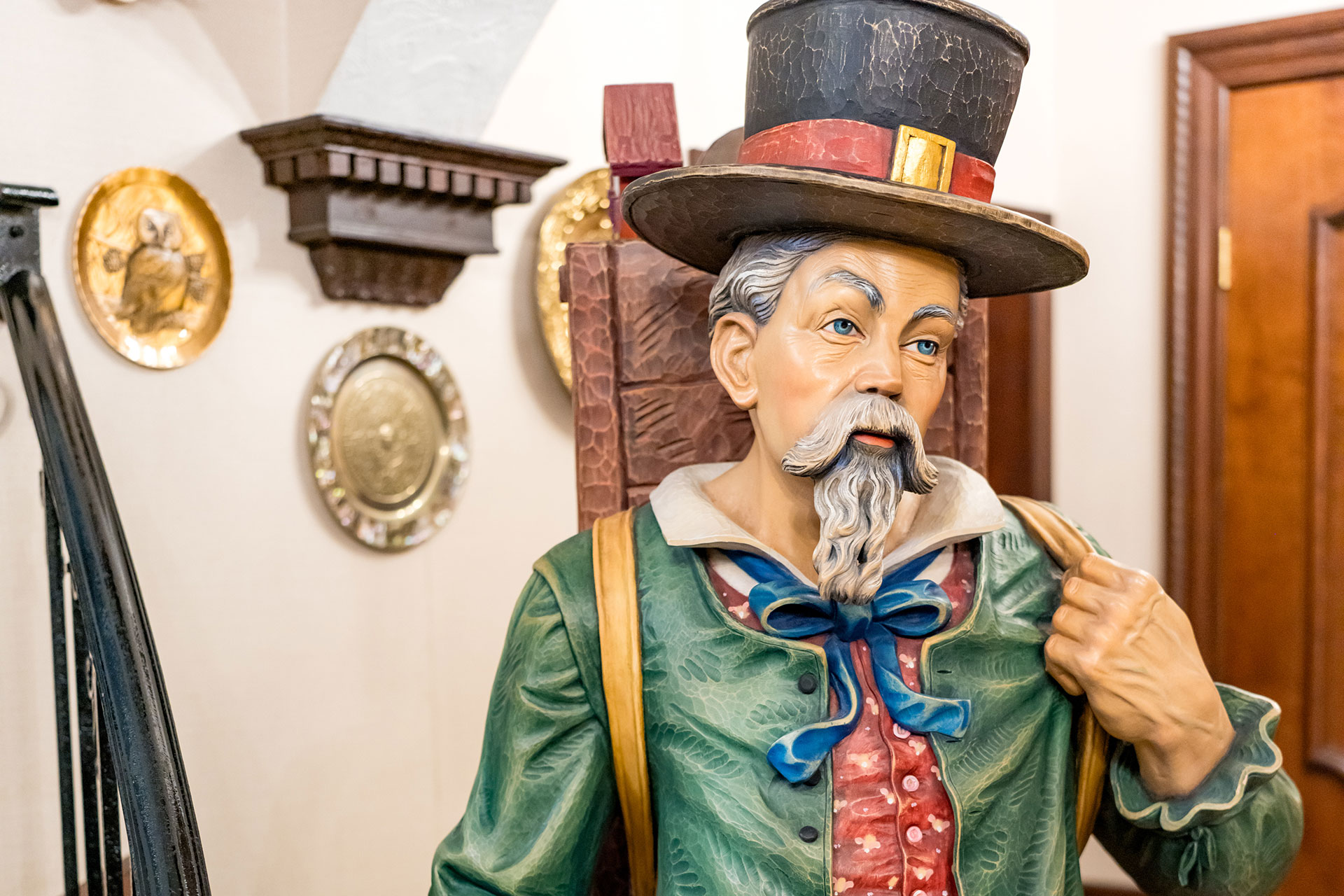
This singular world where the personal and the fantastical collide is perhaps best exemplified by a life-sized, Hummel-style wood sculpture Chuck commissioned in the likeness of his great-grandfather. Following Chuck’s passing in 1999, his private residence underwent an extensive renovation to transform it into a museum, preserving the legacy of his vision for the public to enjoy. Today, the museum remains one of Pittsburgh’s most immersive and unusual cultural landmarks.


Photography by Jorge Santiago