

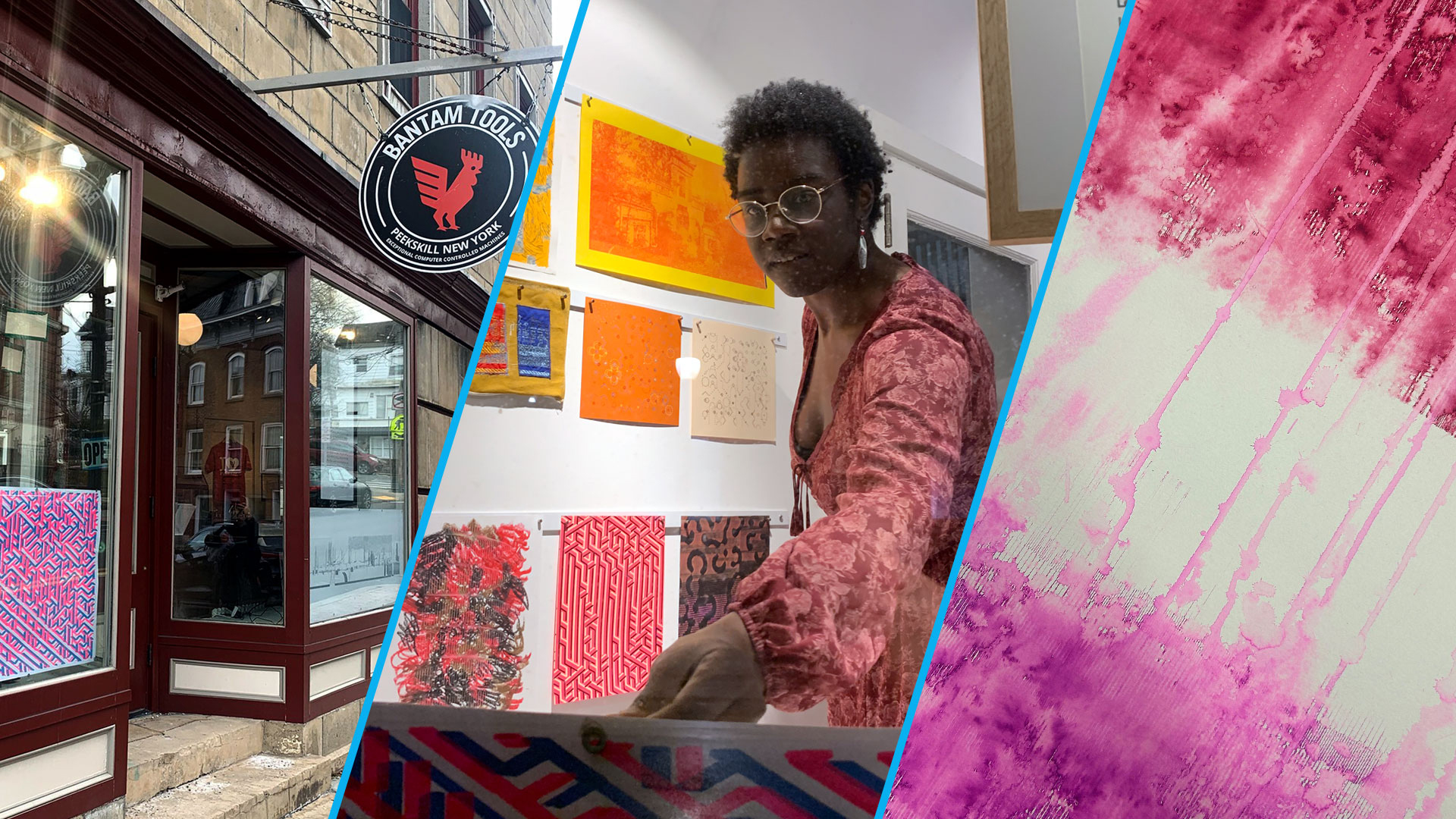
The exhibition at Bantam Tools’ Machine Arts Gallery marked a new professional milestone for the students of Professor Golan Levin’s course on computational drawing.
Art school work usually stays in art school. This time, it traveled.
From January 9–31, 2026, the Bantam Tools Machine Arts Gallery in Peekskill, New York presented work by 20 students in Professor Golan Levin’s Fall 2025 course, “Drawing with Machines.” The exhibition marked a major moment for the class, as students sold their machine-assisted drawings in a gallery dedicated to the intersection of computation and physical tools.
Six members of the class road-tripped to New York for the opening, and in addition to the works on the walls, students also produced more than 1,300 tiny, plotter-made artworks for sale in the gallery’s sticker vending machines — an expansion of a long-running class tradition that quickly proved popular with gallery visitors.
“We all knew this was a commercial gallery, but I think the students and I were a little surprised by how quickly work was flying off the wall,” Professor Levin said. For many students, it was their first sale. “I was really proud that they were able to step into that opportunity,” Levin said, “and experience the feeling of placing their work in the hands of someone who genuinely wanted it.”
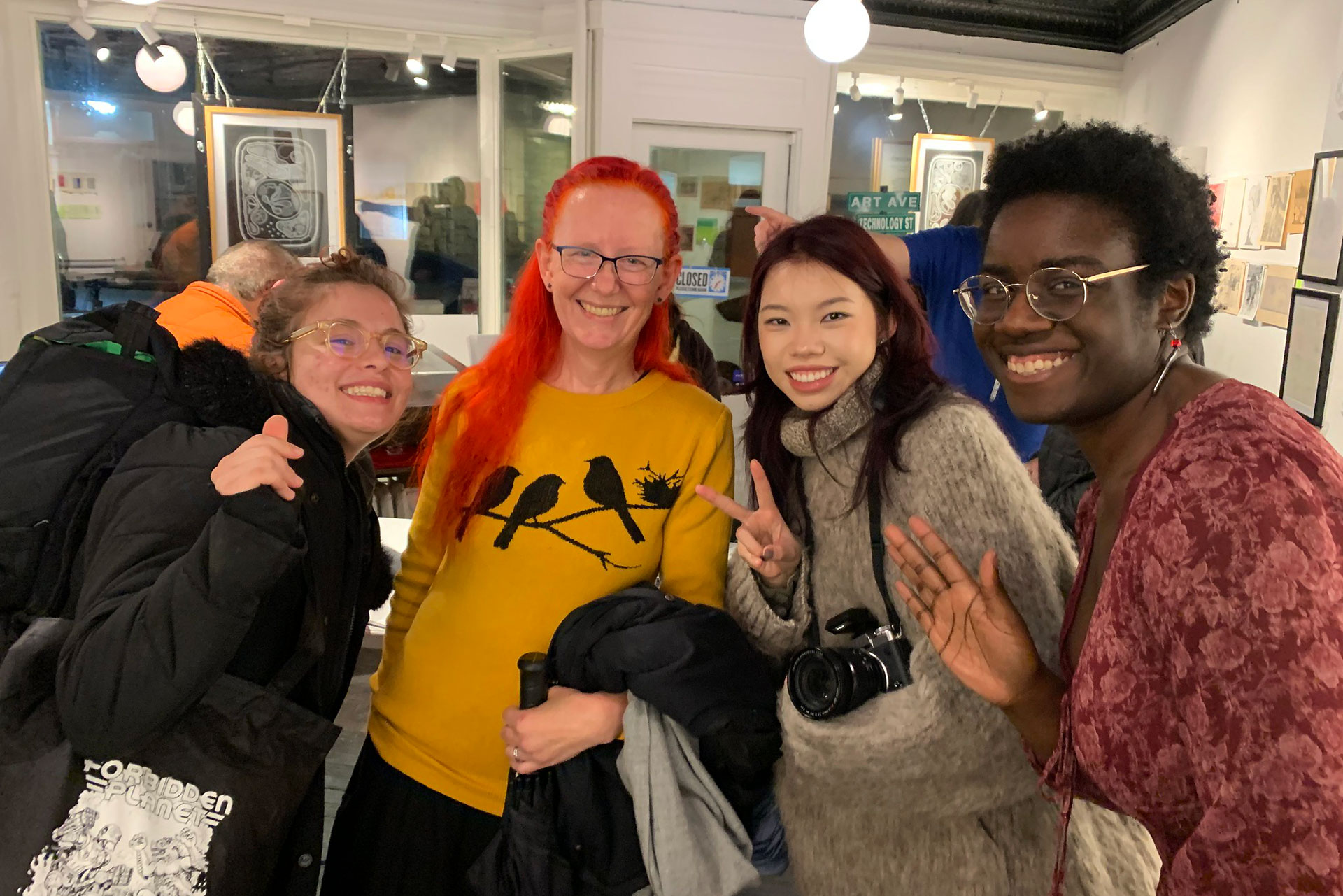
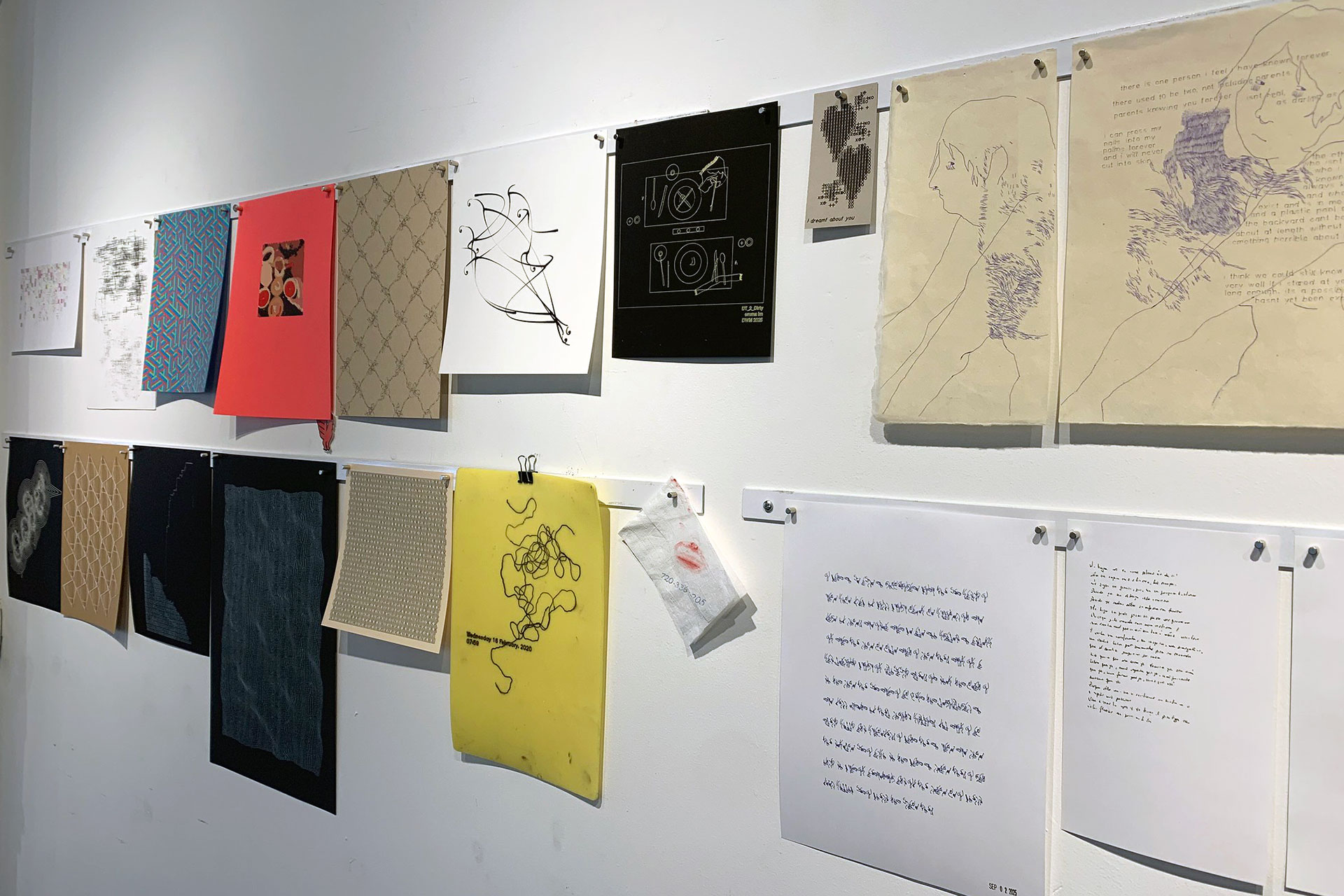

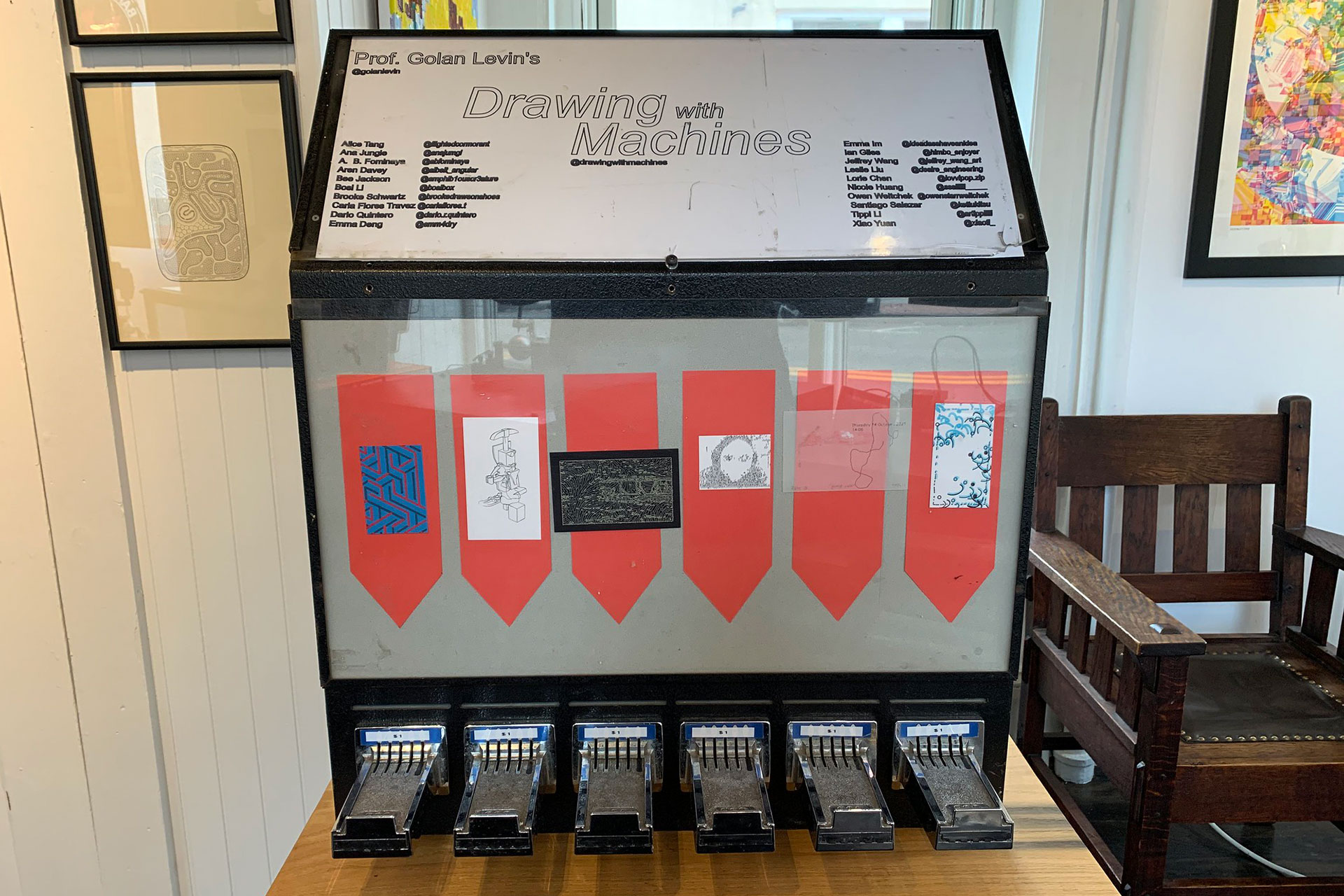
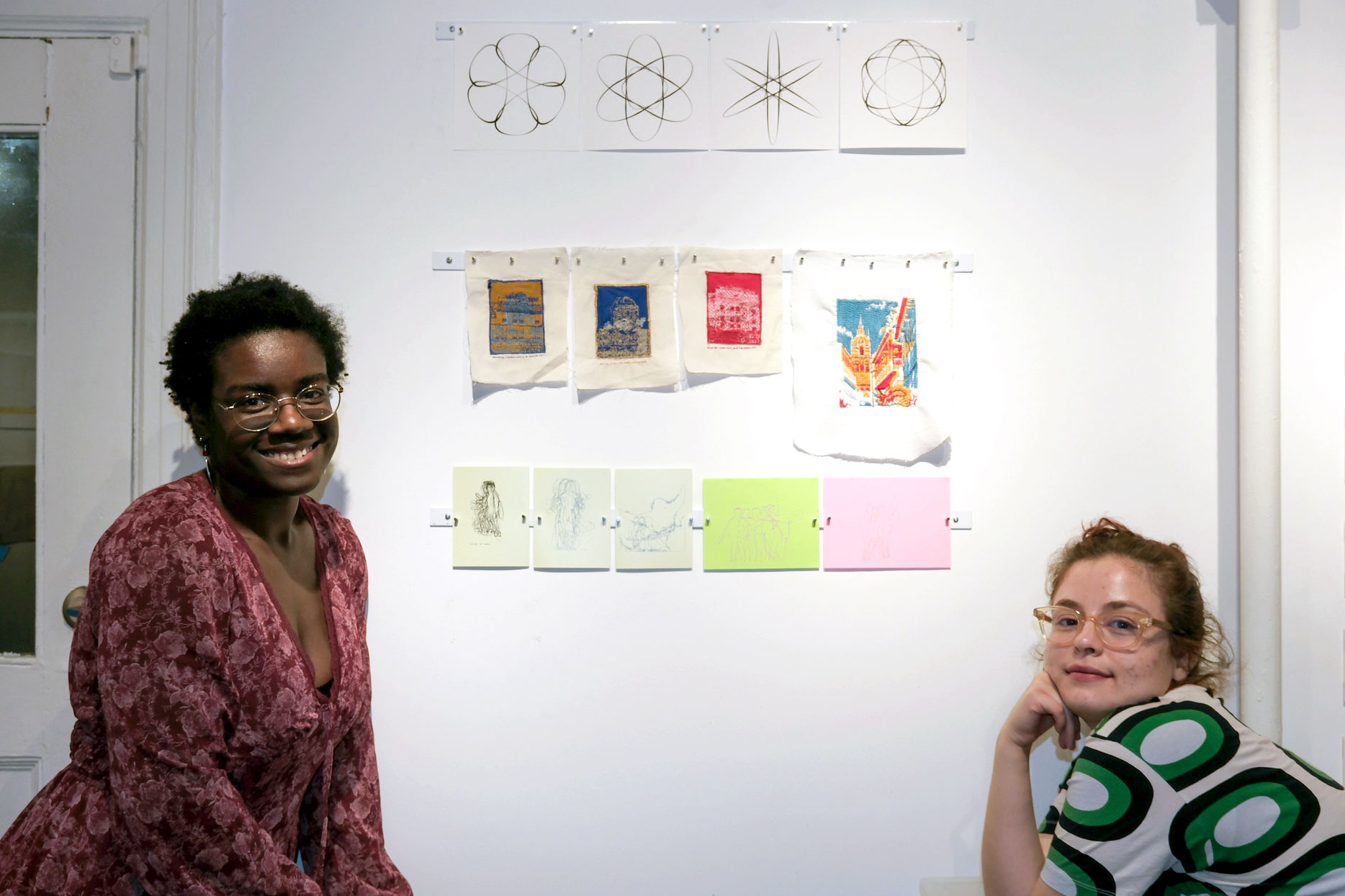
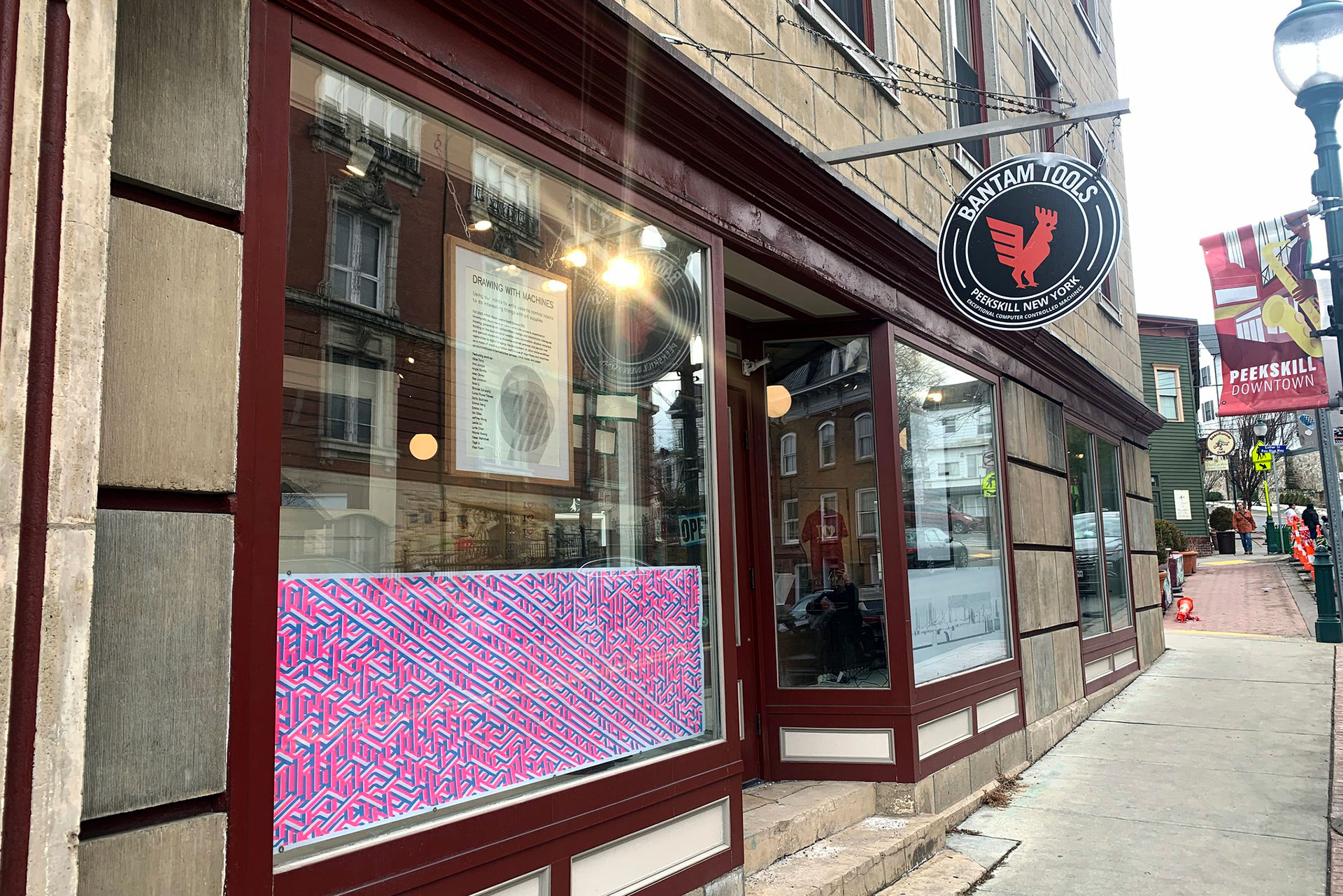
Opening reception for the “Drawing with Machines” exhibition at the Bantam Tools Machine Arts Gallery on January 9, 2026.
“There was a moment before the opening where chaos was everywhere, work still being curated and pinned onto the walls,” said senior Lorie Chen. “That was lovely to see.” Amidst the energy and excitement, the opening also gave students a chance to connect with people working in the world of machine arts, such as CEO and co-founder of Bantam Tools Bre Pettis and Bantam’s community manager, Zach Hendel. “Zach and I were talking about his approach to collecting,” Chen shared. “It was fascinating to hear what other art my work reminded him of, as well as how he’s trying to push the awareness of this medium.”
Levin’s course is designed to be intentionally exploratory, exposing students to unusual tools and the histories of machine control, such as G-code, a programming language from the 1950s still widely used today. Whereas some new media arts courses mirror real-world industry scenarios and production teams, “this drawing course was very much the opposite,” Levin explained, “a niche course focused on arcane and experimental methods of artmaking with no obvious commercial applicability. There are no big companies hiring graduates with expertise in generative plotter art. And yet the students seemed to crave a course in making for its own sake.”
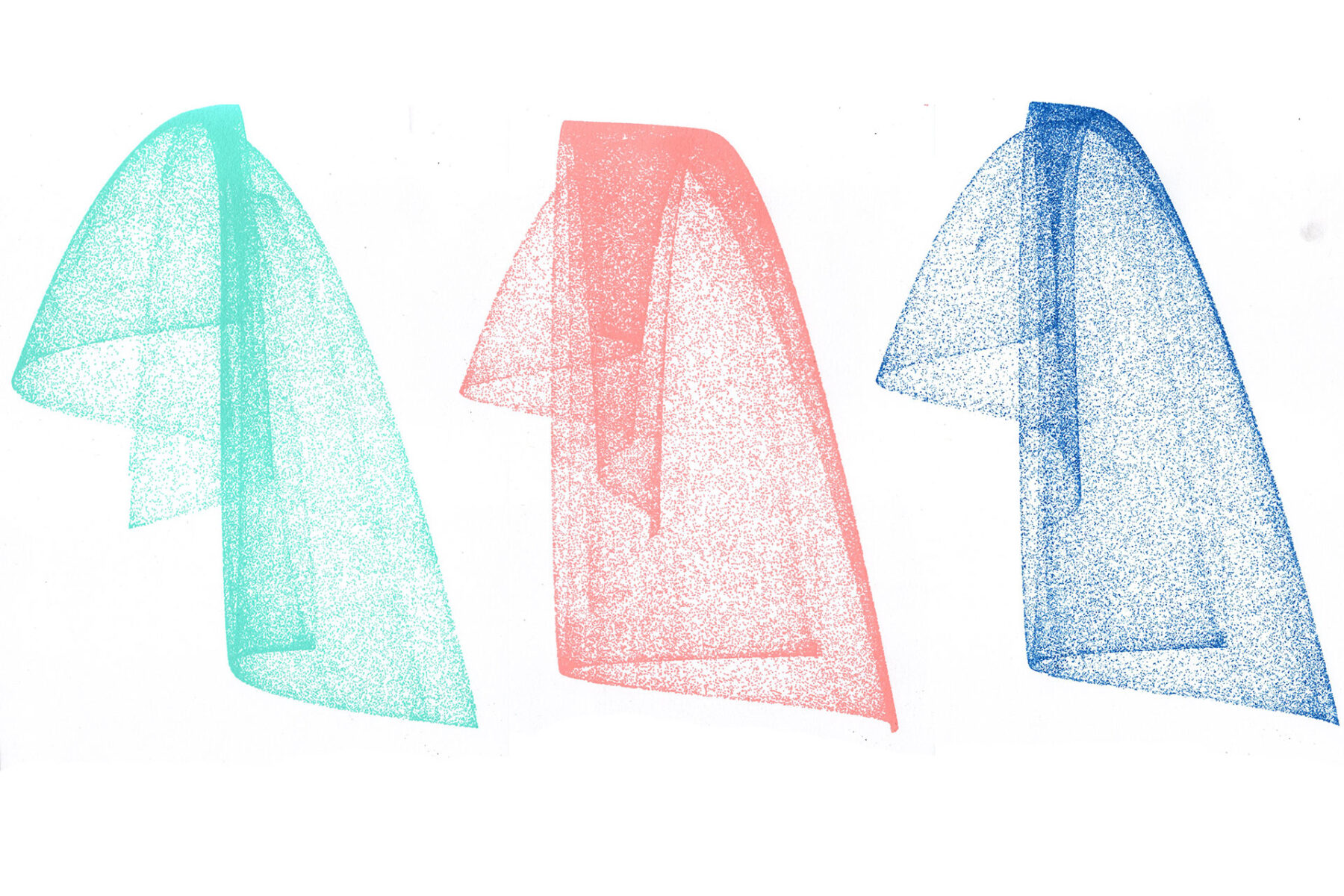

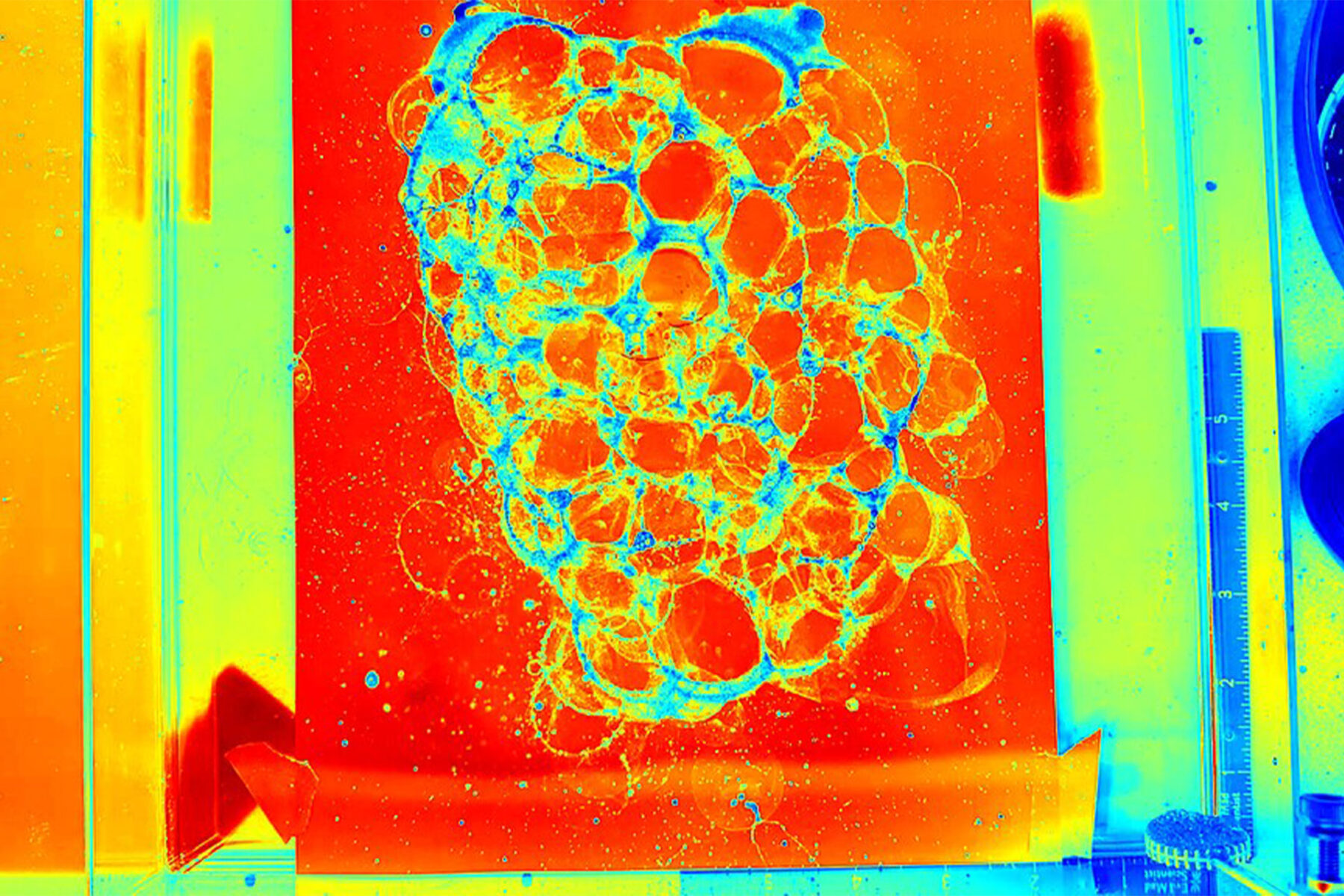
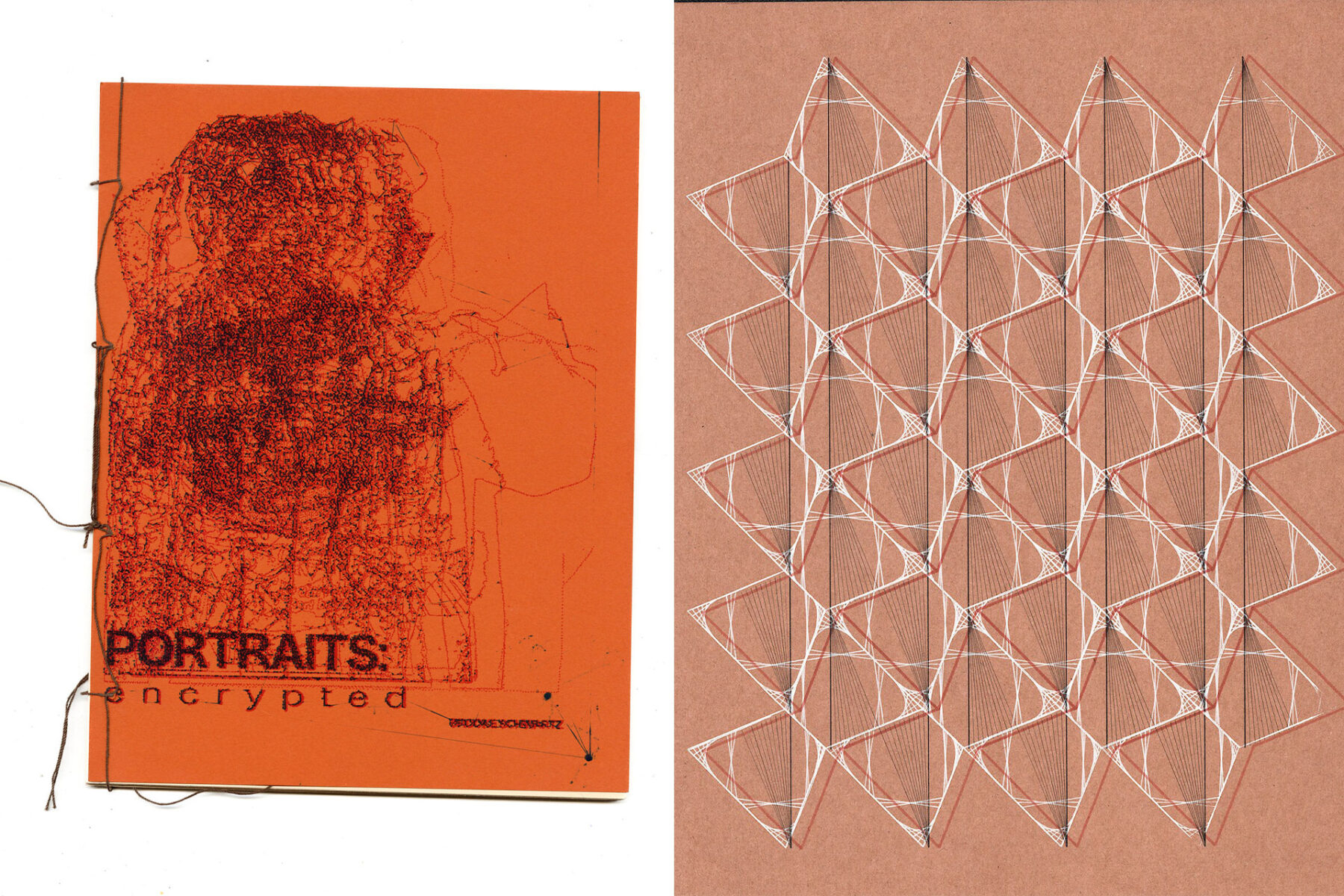
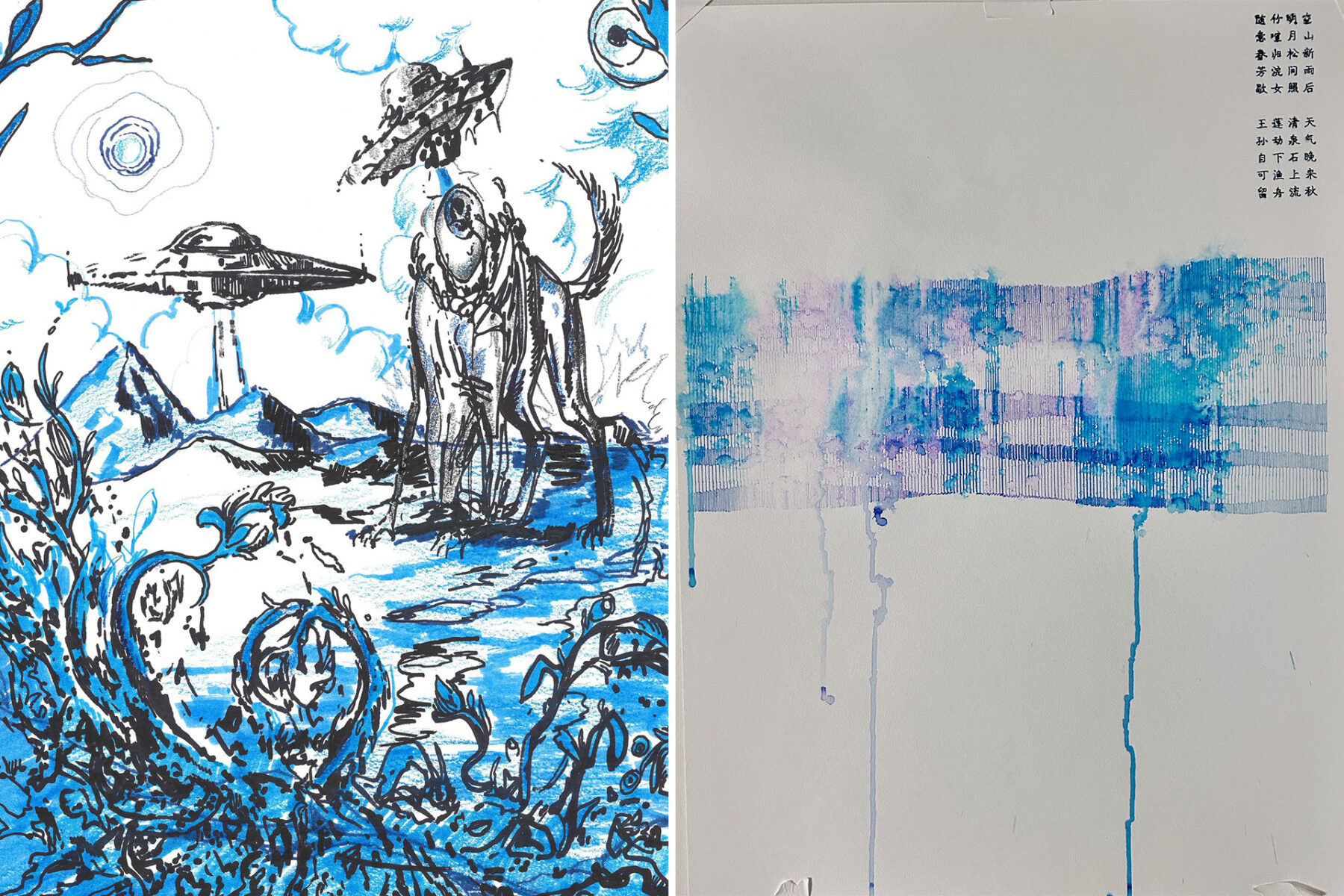
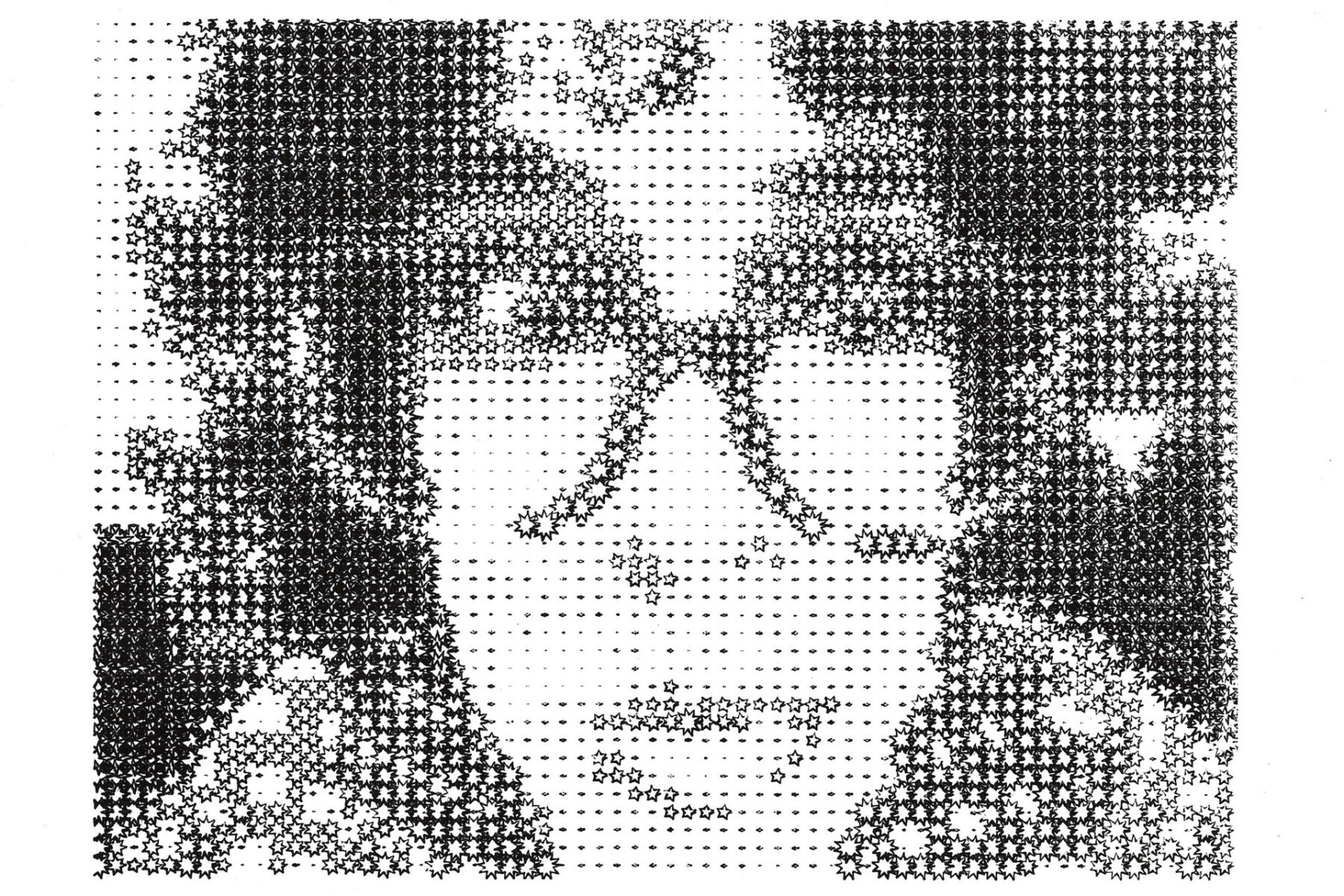

Student work from “Drawing with Machines”
This fall was a repeat offering of the popular class, although the culminating exhibition with Bantam — whose machines the students used in class — was new. “This continues to be a class in which students who might normally just be writing code behind a computer screen are now also able to ‘touch grass’ — using their code to control machines to do novel things with real, physical art supplies,” Levin said. “I was really impressed by how deeply they investigated these ideas and materials.”
Junior Nicole Huang said working through code and machines pushed her to think of drawing as building a system. “Instead of relying on my body and muscle memory, I had to articulate those instincts into precise deterministic rules,” she explained. “In that sense, I fell into the role of a teacher, teaching the machine how to create strokes that I had taken my body for granted to know.” At the same time, the plotter machines found ways to surprise the students: failed outputs, compilation errors, jammed motors, or yanking the paper out of alignment. “Sometimes there is beauty to be found in those surprises,” said Huang. “Other times it is just a sign I need to keep my head down and get better at code.”
Senior Aren Davey sees the machine’s role this way: “When I tell a drawing machine what to do, it always does what I say. If I say to travel two centimeters on the positive X axis, it will do so, even if it causes damage to itself. The real collaborators are the pen, the paper, and the physics. I cannot control these three forces, so accommodating them is the true whimsy of plotting.”
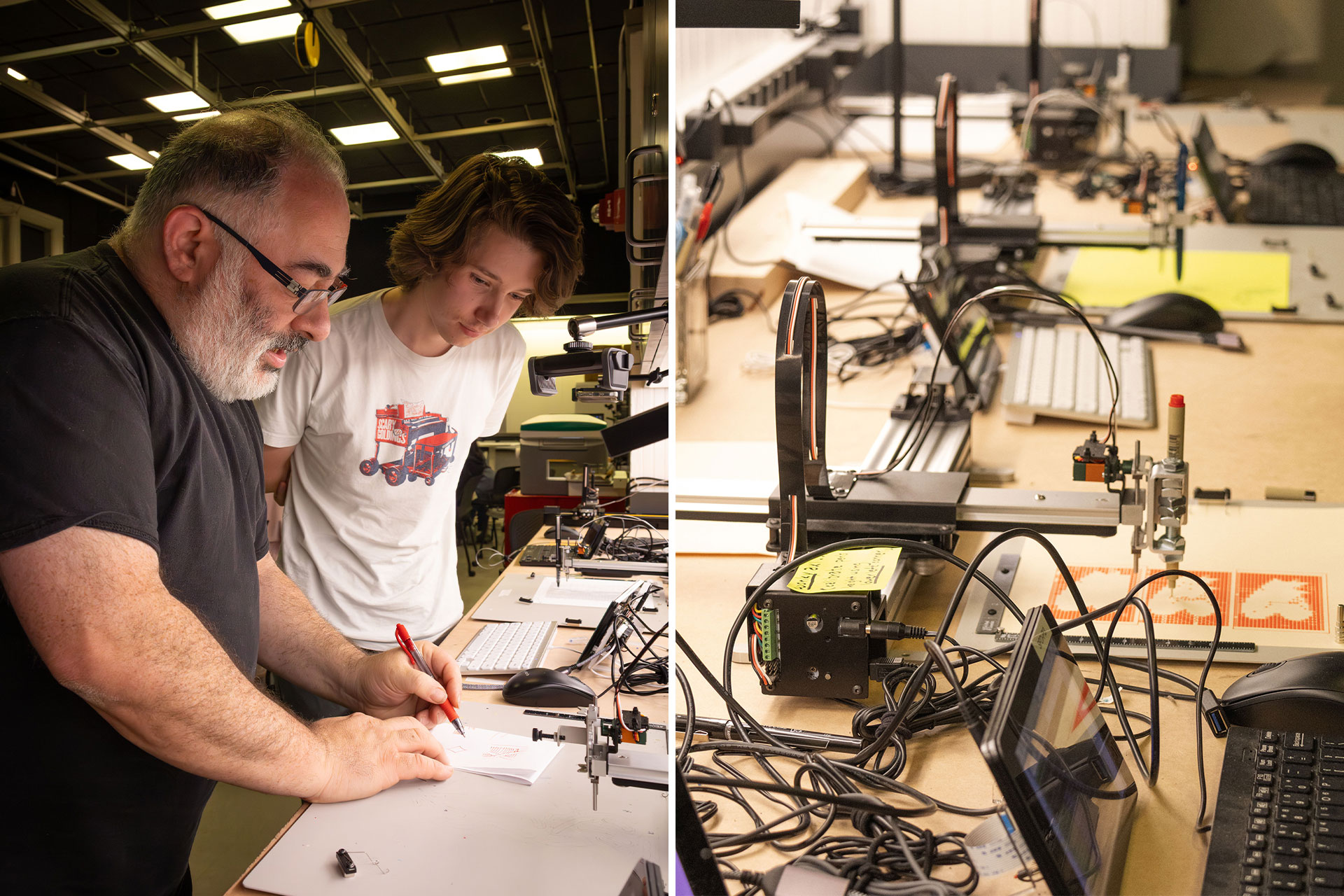
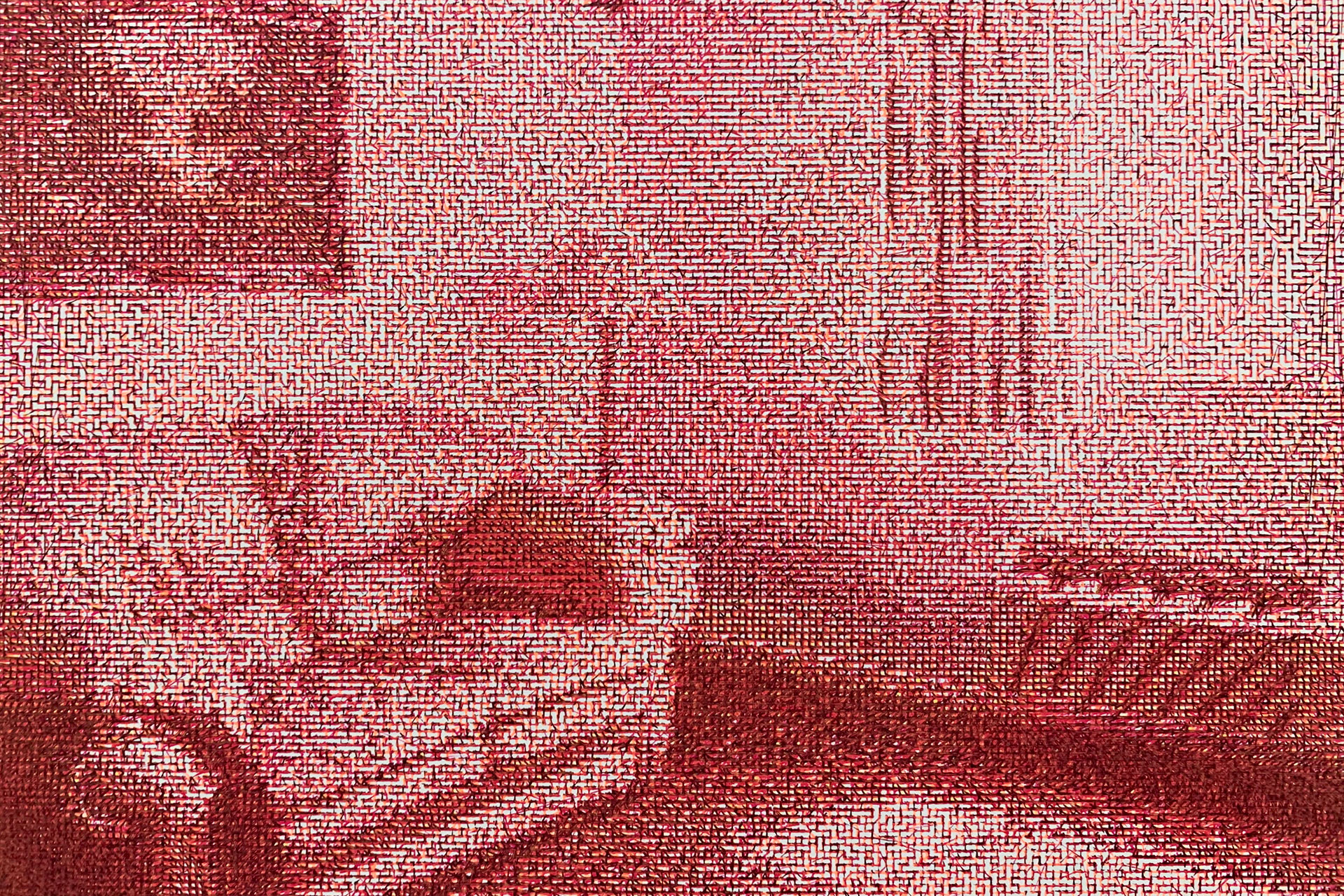
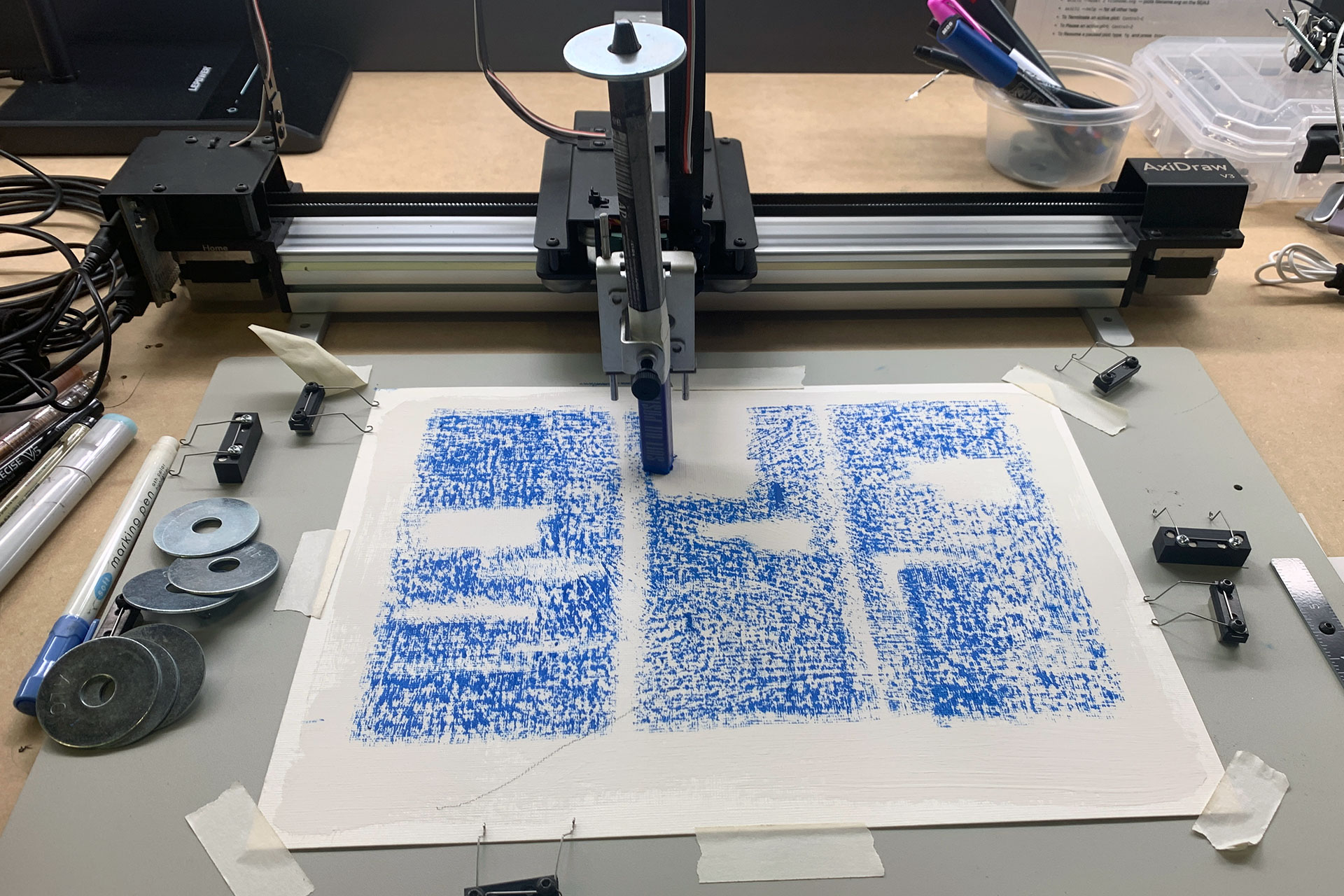
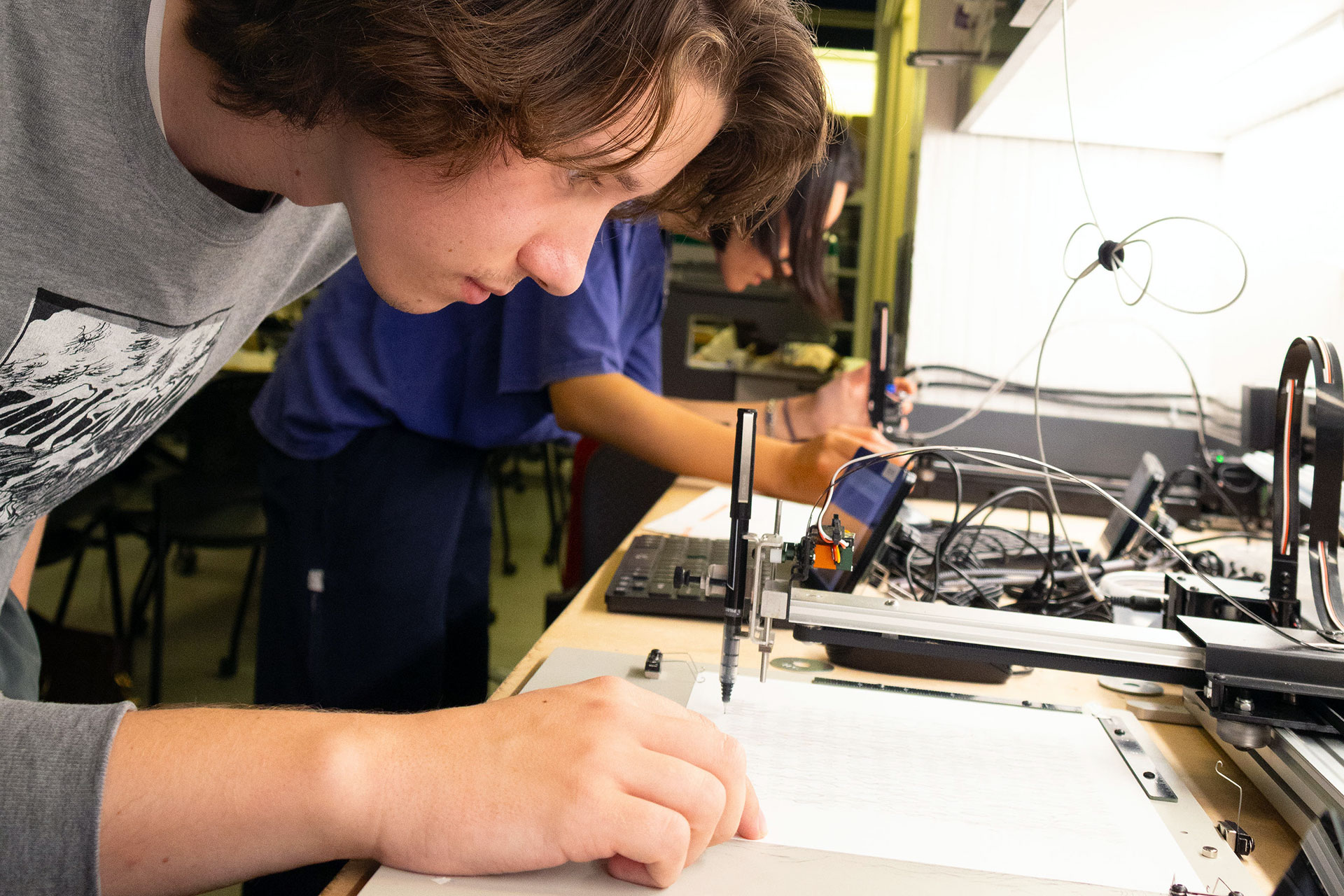
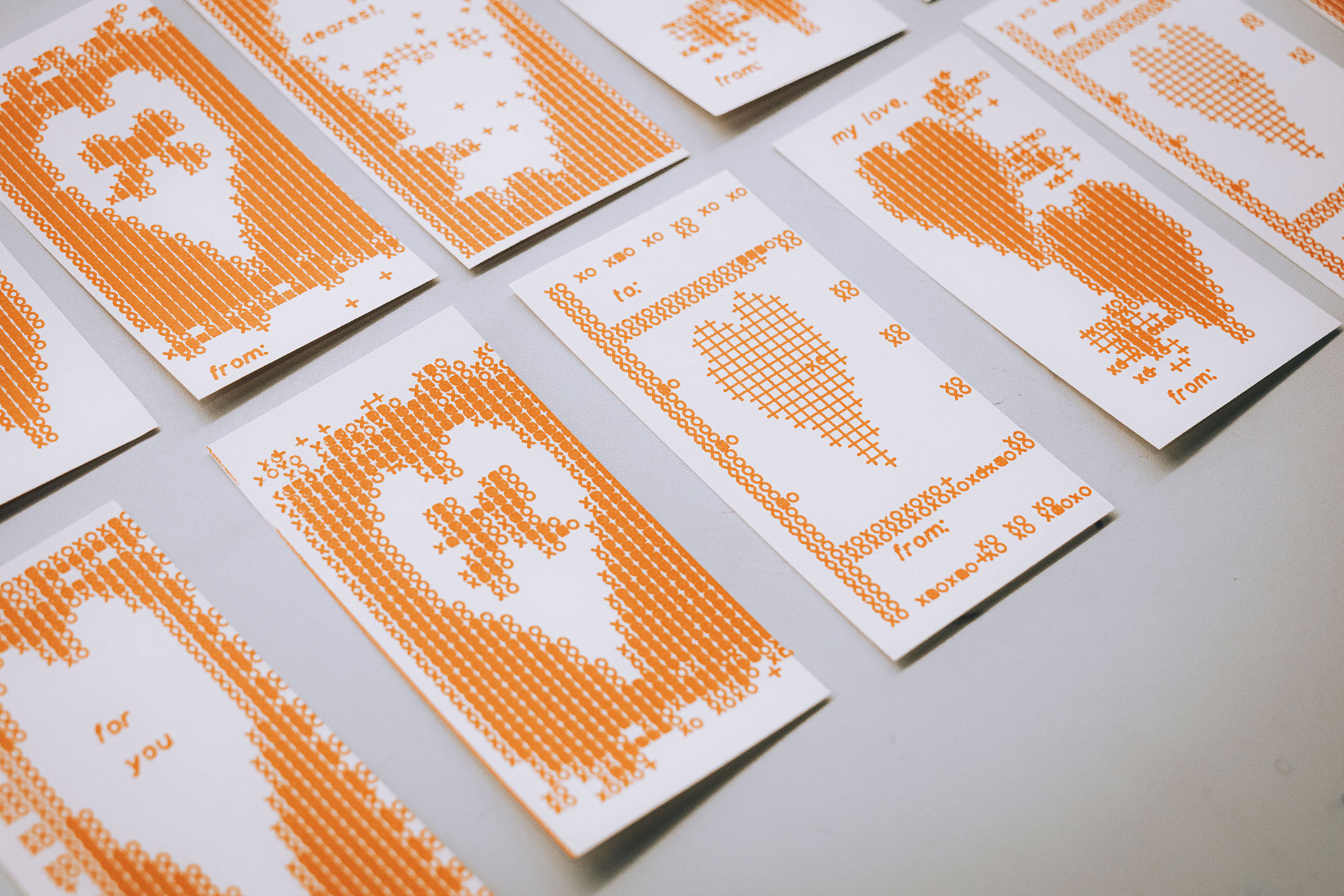
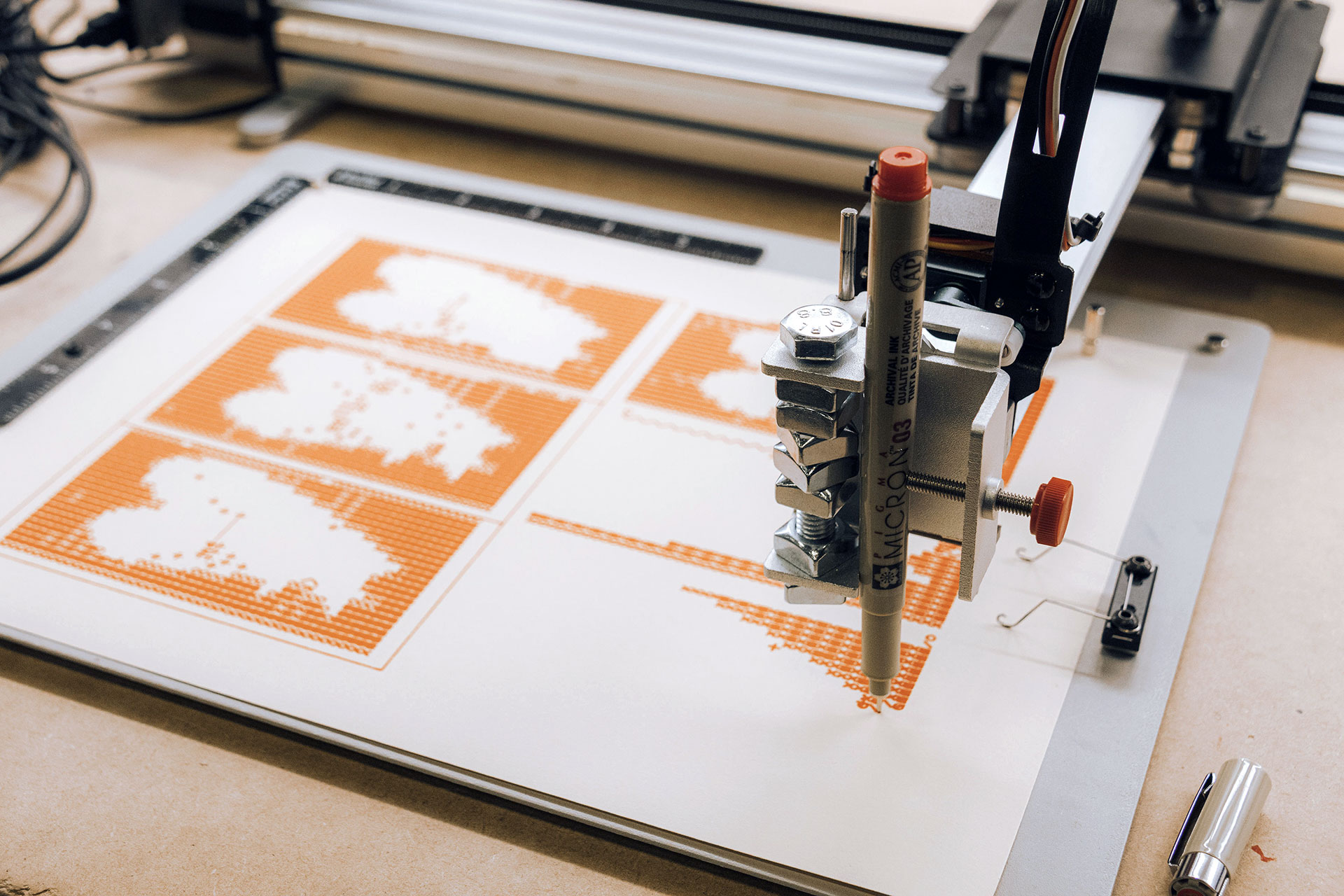
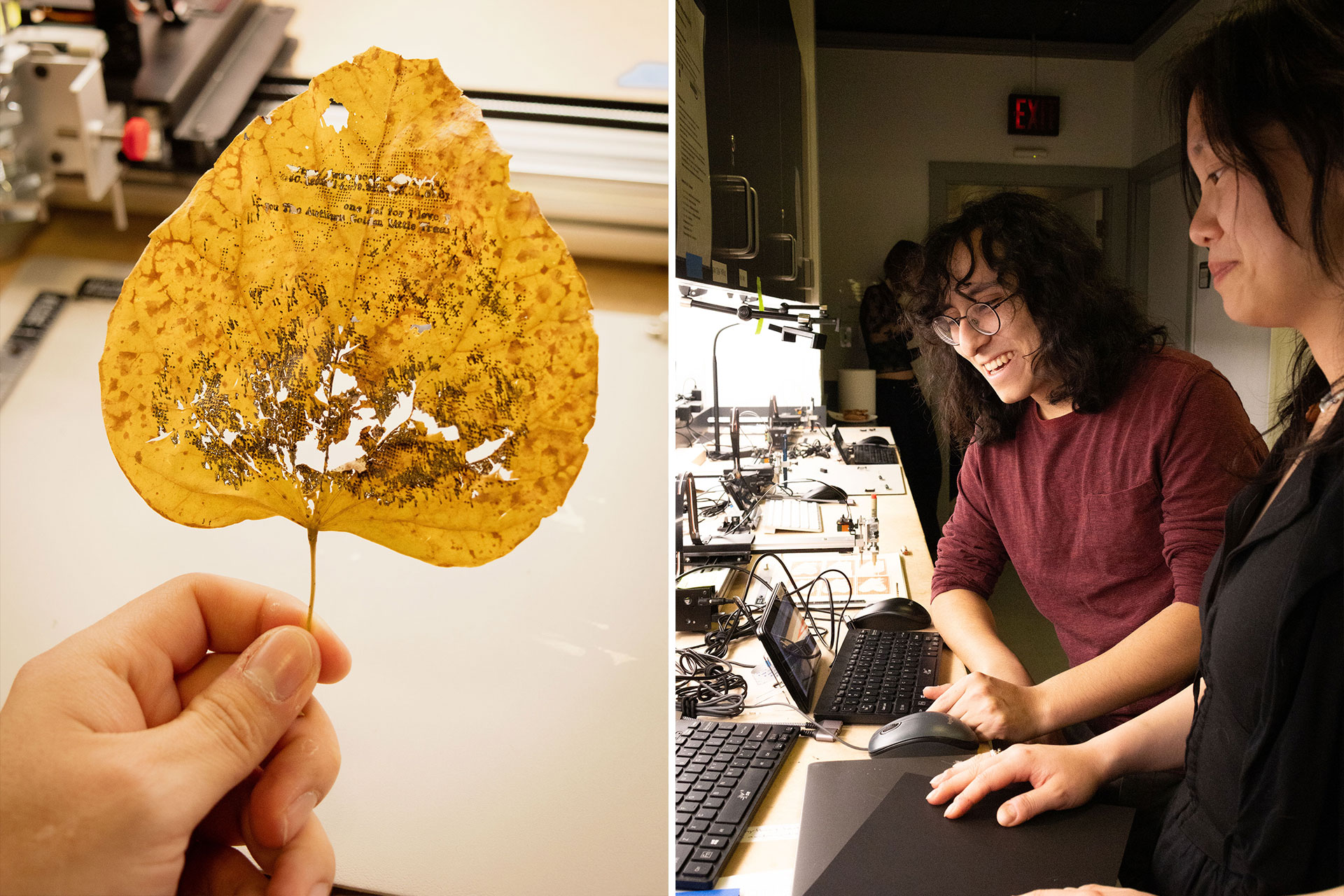
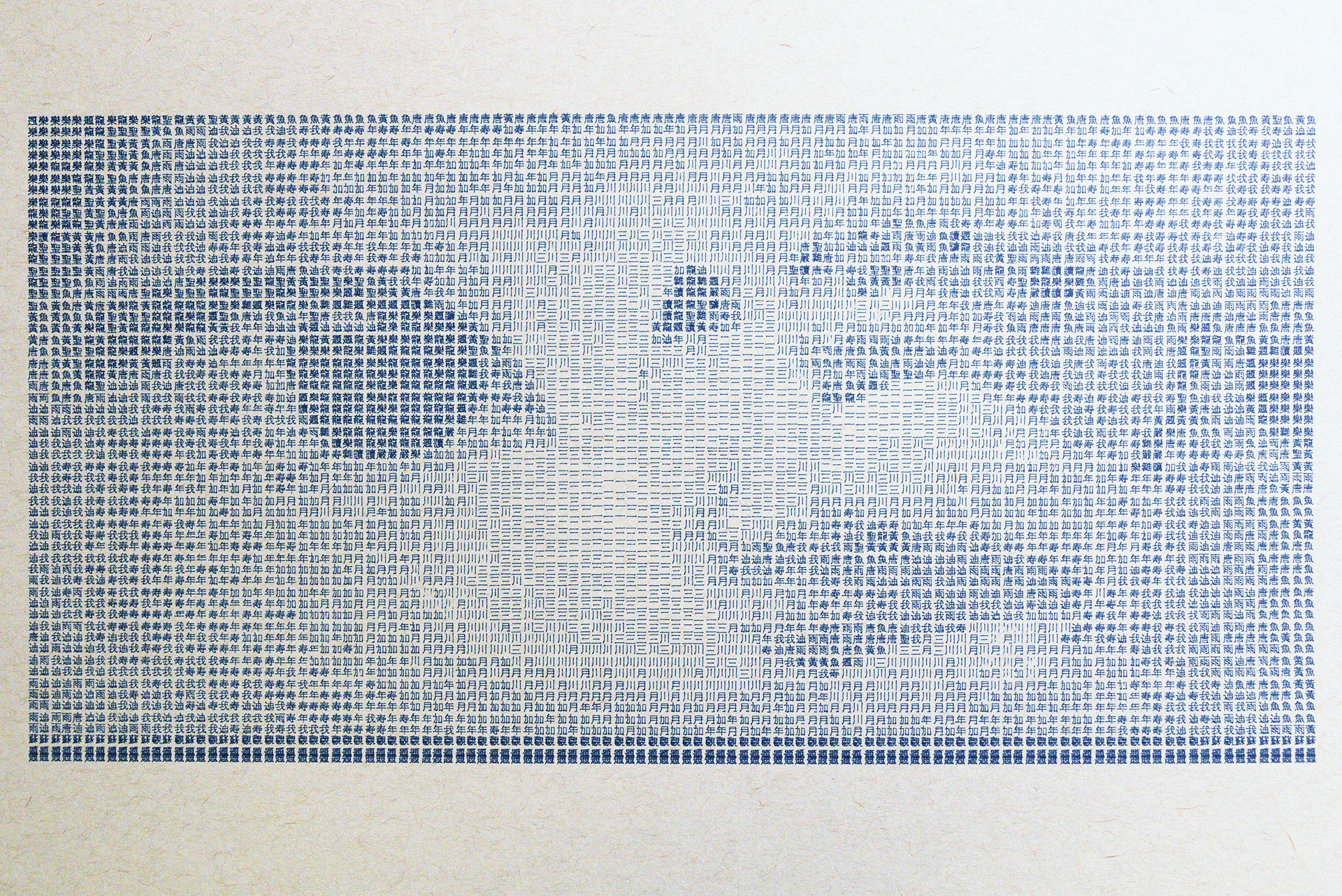
In-process and final projects from “Drawing with Machines.” Photos by Sonya Hamid and Golan Levin.
Davey expanded the gallery trip into a chance to produce new work on-site, arriving in Peekskill a few days early with a car full of pens and markers to take advantage of Bantam’s large-format machines. “The opportunity to have a mini-residency at Bantam was the pinnacle of my experience with the class,” Davey said. “My plots have never been larger than 18-by-18 inches, so seeing my work become taller than me was a very pleasant and fruitful experience.”
For Huang, traveling to Peekskill for the opening brought the semester full circle. “Being at Bantam felt like having dessert to end the meal — a very sweet treat,” she said. “These interactions with the real art world allowed us to participate in the full arc of plotter art, from ideas becoming code, code becoming collaboration, countless nights babysitting the machine, and finally the drawings existing in an exhibition context.”
Pettis, who also directs Bantam’s gallery, praised the students’ work as remarkably innovative and fresh. “Professor Golan Levin creates infrastructure for his students to be able to discover who they are by what they can produce,” he said. “On opening night the house was packed and work was flying off the walls. I already have ideas for more collaborations!”