

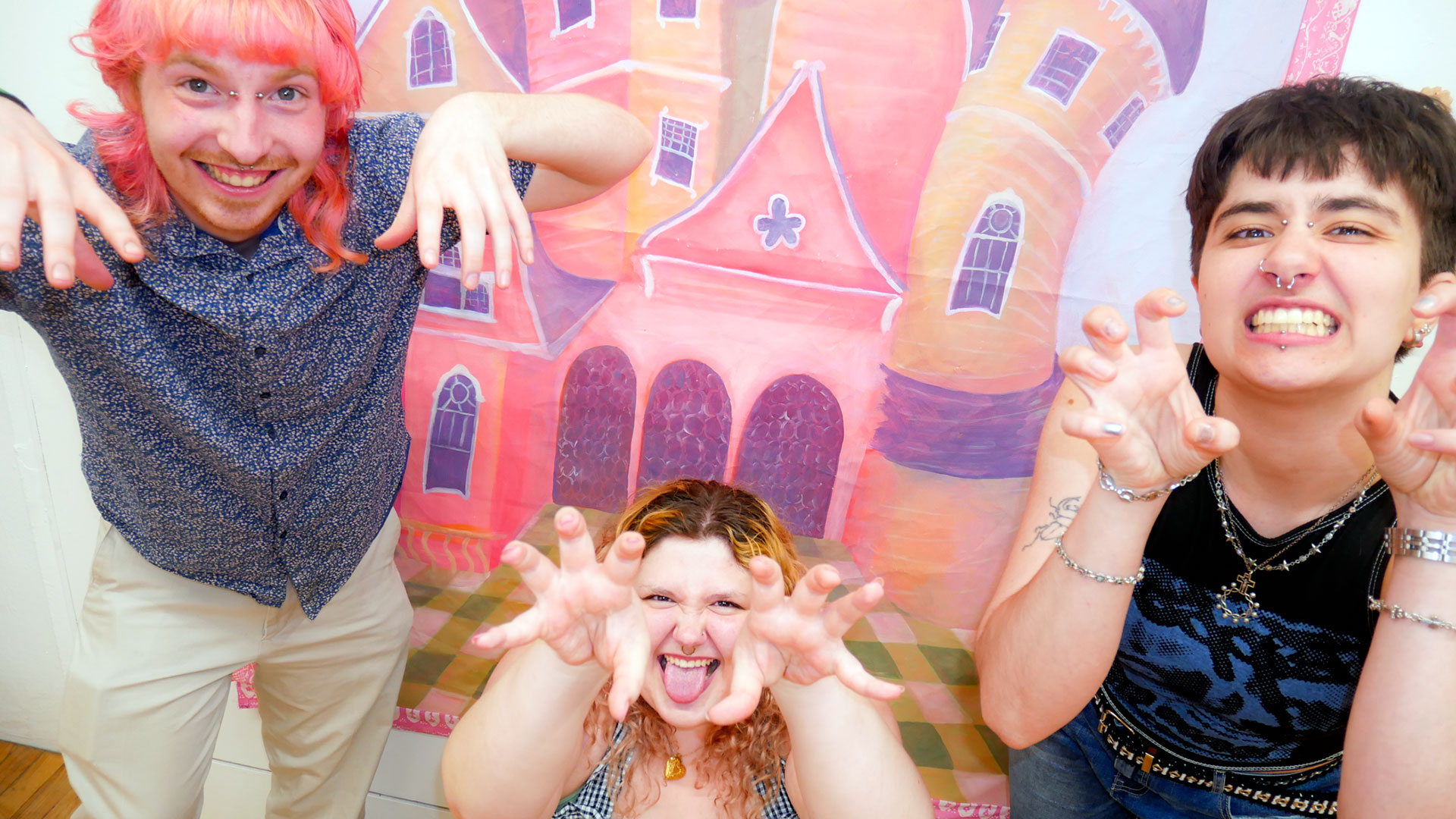
Through a vibrant collection of paintings, textiles, and ceramics, juniors Noah Moskala, Isa Paez-Pumar, and Hannah Paras subverted the familial household, transforming The Frame Gallery into a liminal space where “queer houses stand crooked.”
By Shienka Martinez
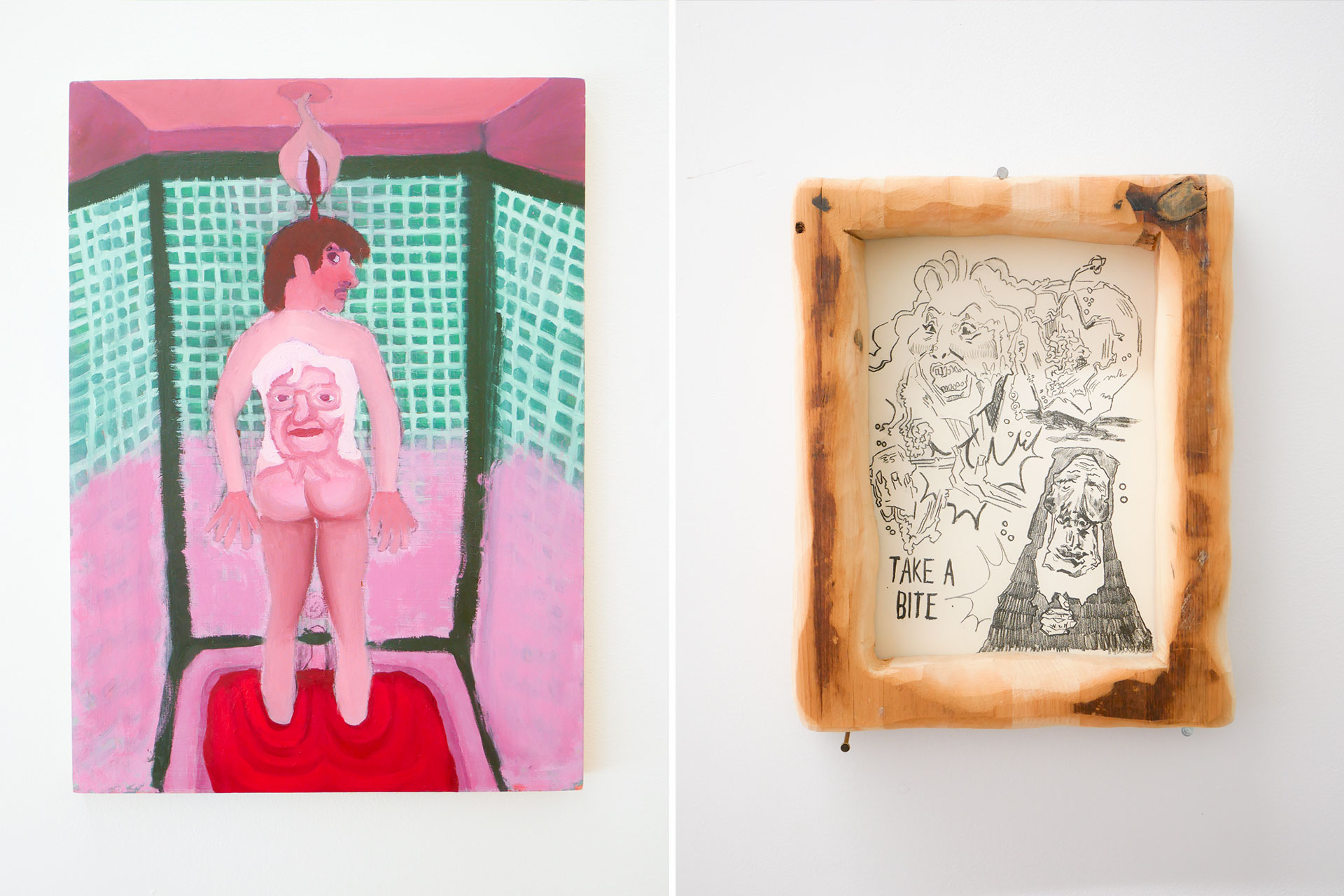
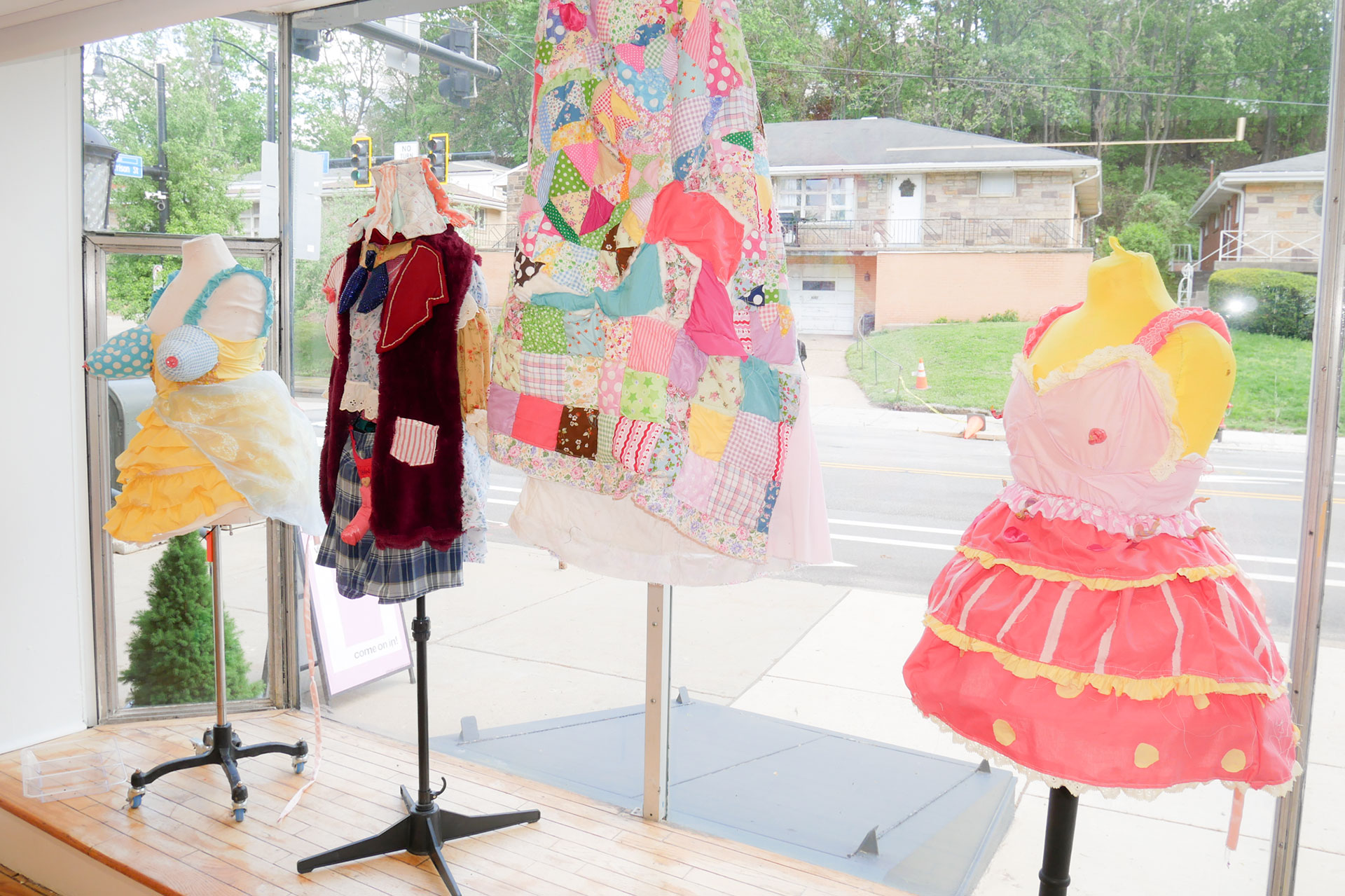
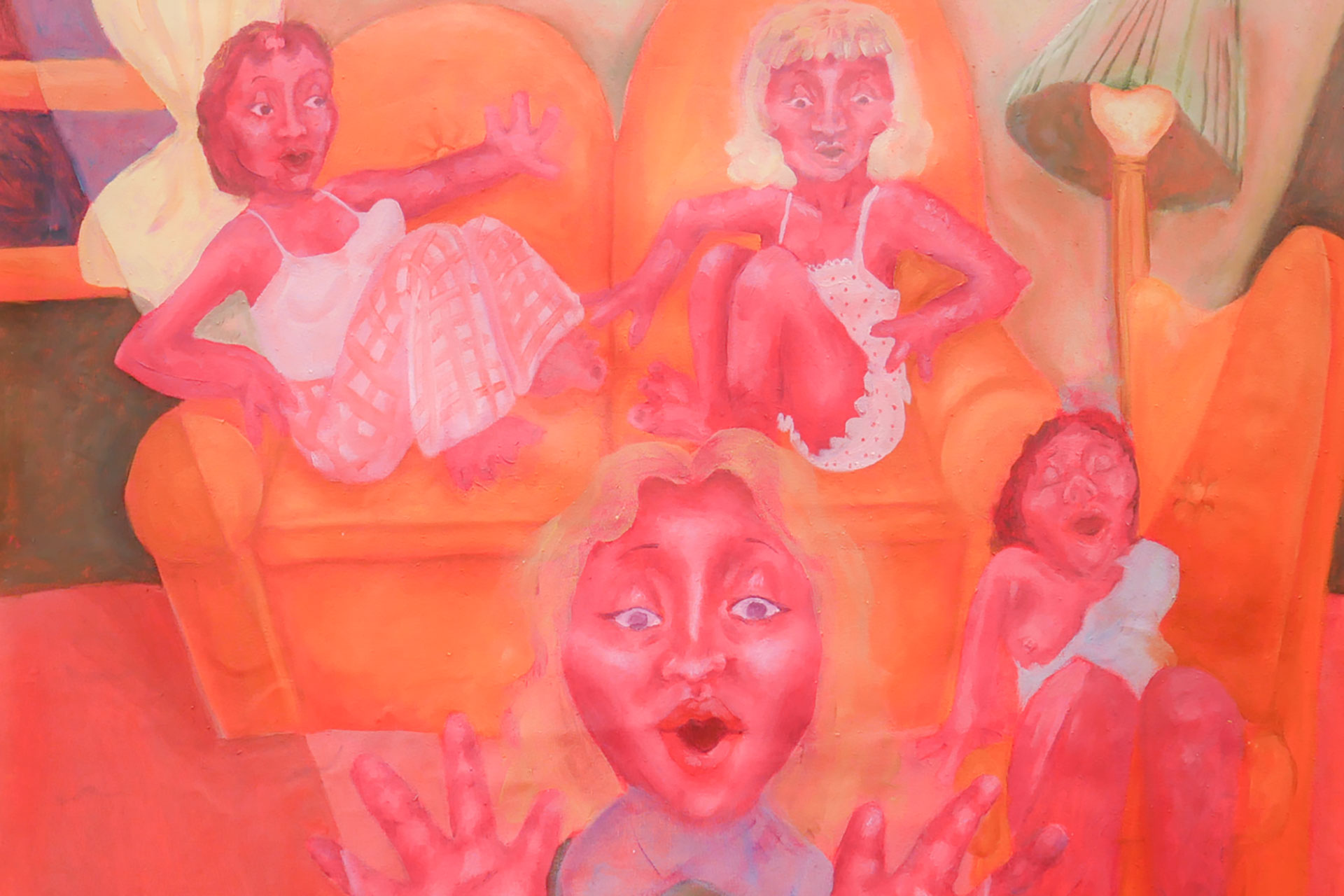
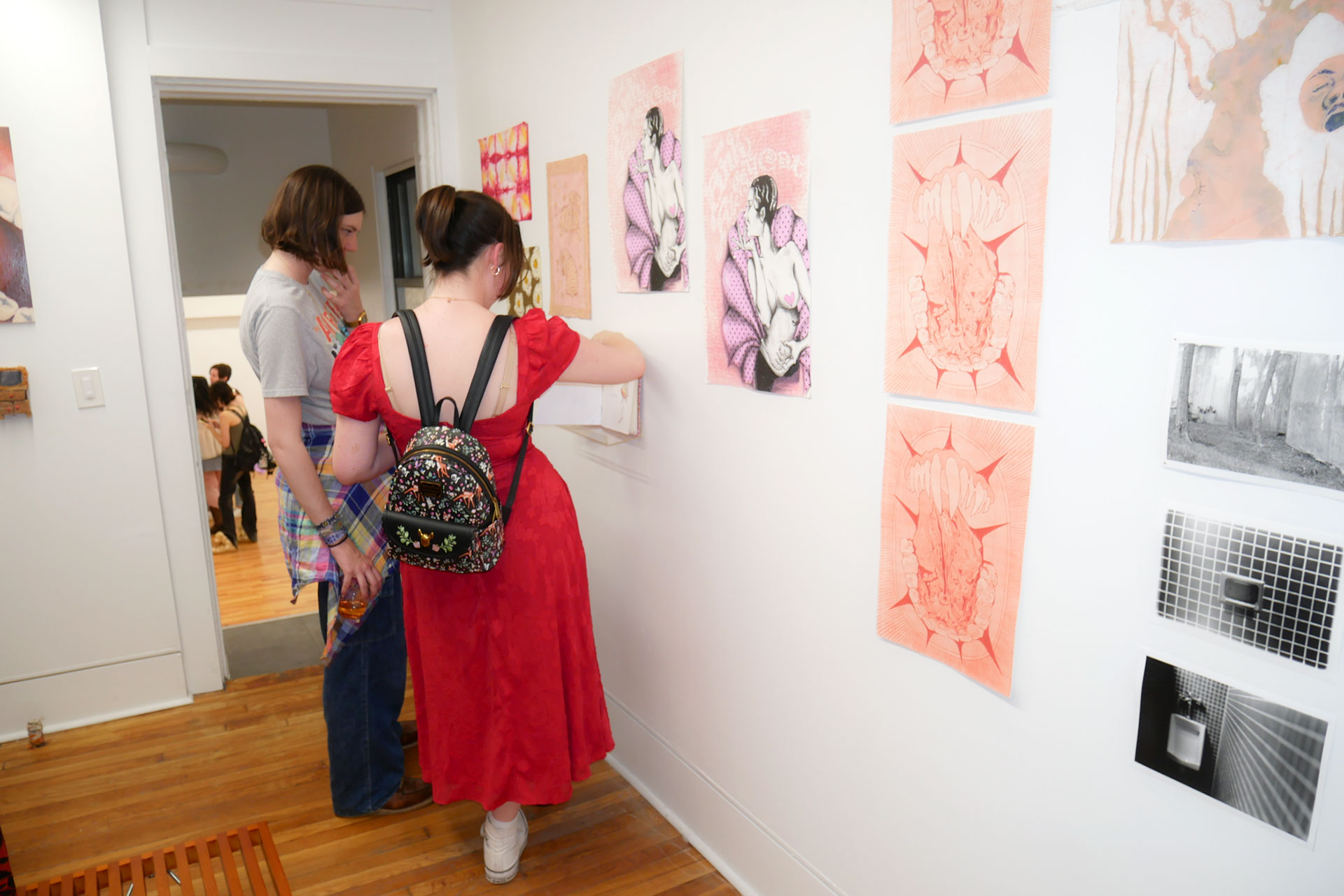
On April 17, juniors Noah Moskala, Isa Paez-Pumar, and Hannah Paras presented their collaborative exhibition, “This House is Made of Bricks.” Together, the three artists reimagined The Frame Gallery as a space between representation and abstraction, exploring the boundaries between object and subject to investigate how the queer body inhabits both private and public spheres. From hyper-colorful, campy visuals and subversive symbolism to explorations of body horror, the exhibition functioned as a set where the artists invited community to engage with queer identity.
What inspired the name of your show?
Noah Moskala: I had a feeling you were gonna ask this, so I already had a media-trained PR answer: The name came from thinking about all the meanings of “brick.” Like, nowadays it can be used as an insult toward queer people who don’t really fit in. But with our show, we wanted to reclaim that and think about queer domesticity, like building a new home life. We were also thinking about queer resistance, especially the first brick thrown at the Stonewall riots. So it was about reclaiming that and thinking about acceptance.
You are all very different artists, so how did you connect everything into one show?
Isa Paez-Pumar: We were all pulling from similar historical references and cultural spaces, but it came out differently. One thing that was really interesting was how people reacted to the show, everything was kind of mixed together. We didn’t label everything super clearly, so all the work was dispersed.
Noah: Yeah, everything was kind of integrated across all three of us.
Isa: And a lot of people said it felt really cohesive, especially color-wise and conceptually. So it was like different branches of the same tree.
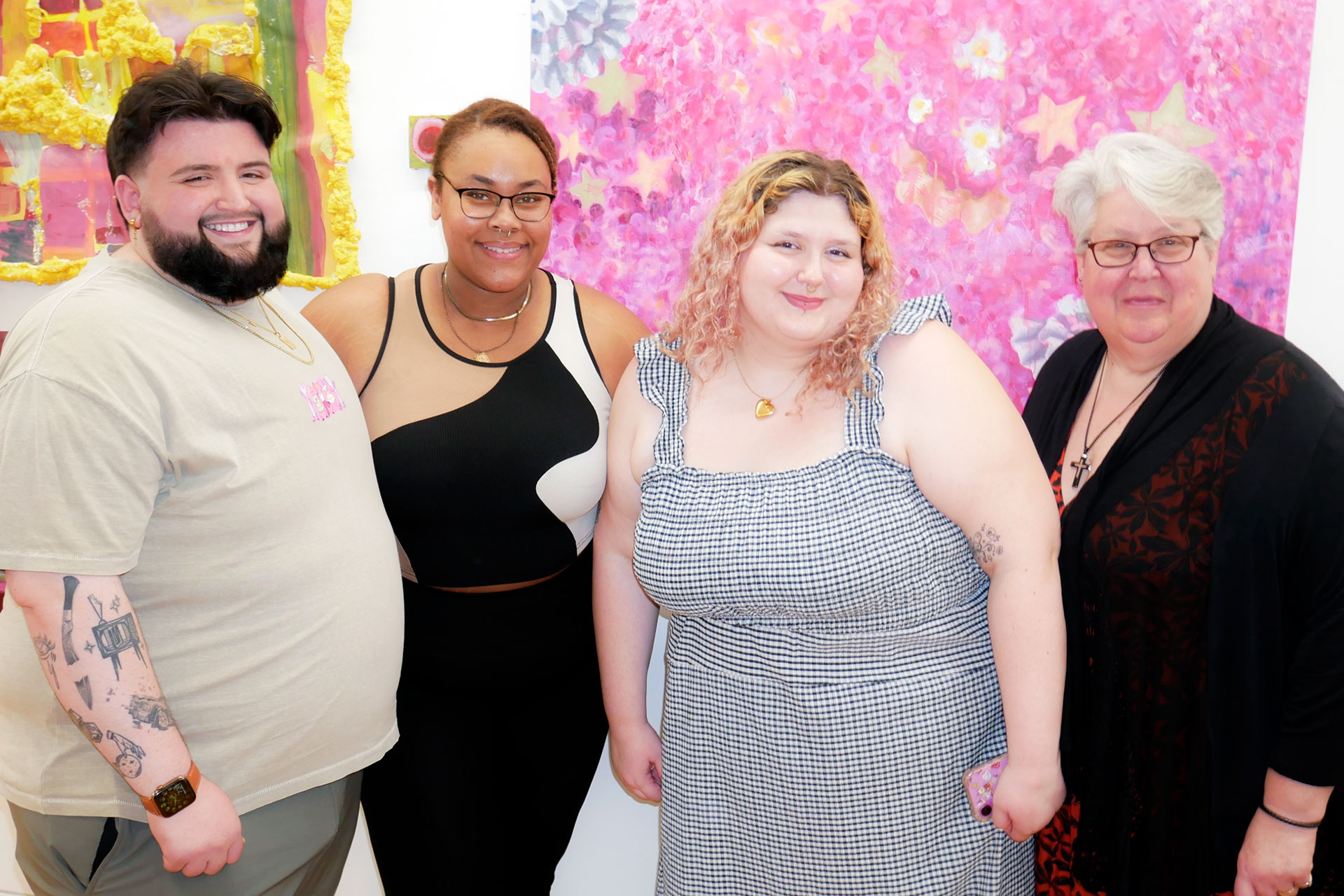 Hannah Paras


Do you have a favorite piece from the show, or one that represented it the best?
Noah: This was funny because we were literally asked to take a picture in front of our favorite piece.
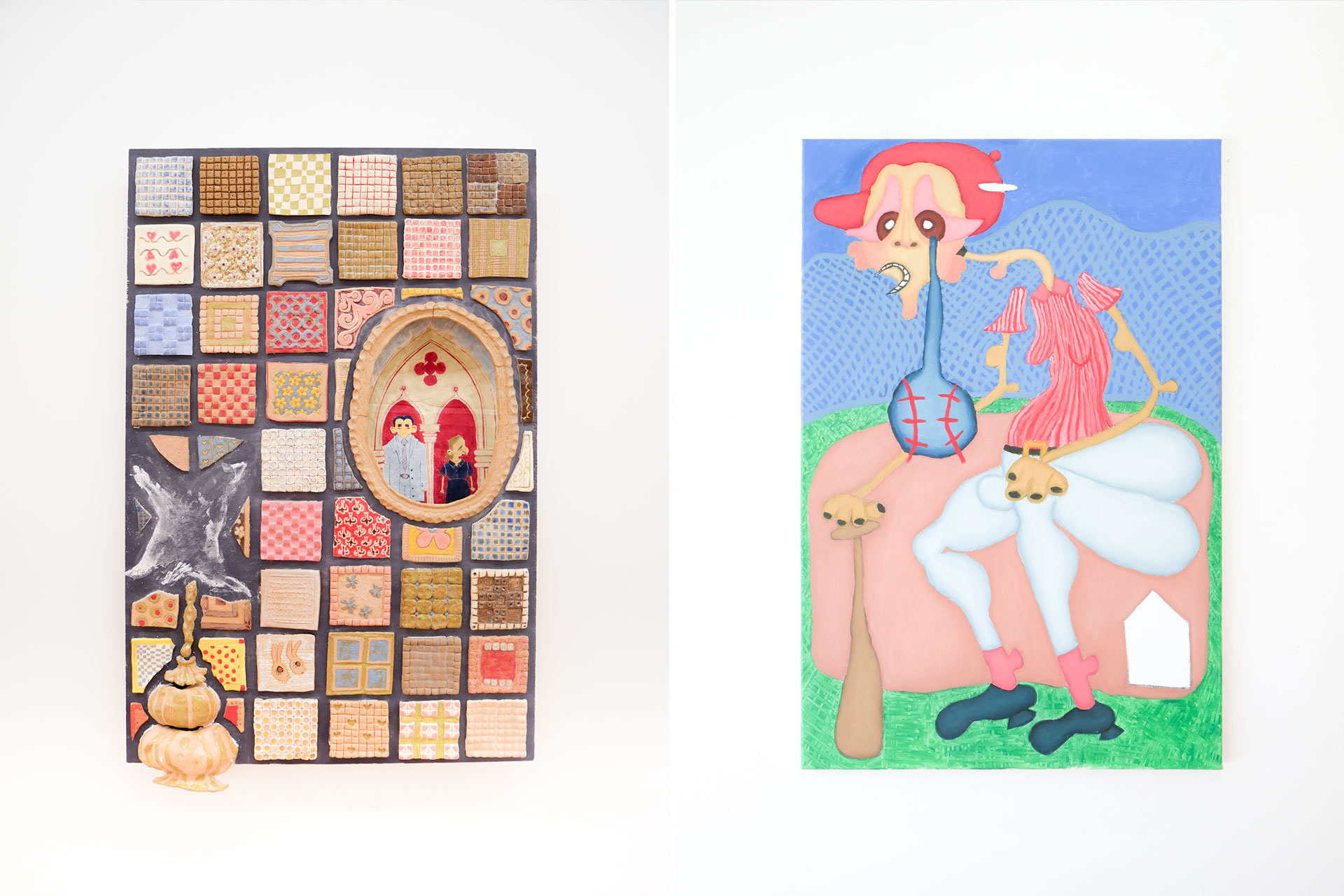
Hannah Paras: I think we all picked the big house painting.
Isa: Hannah made this book the year before, and there was a line that said “queer houses stand crooked,” and I felt like that kind of became the thesis. Even though the show was called “This House is Made of Bricks,” that crooked house idea really captured it.
Yeah, I loved that. So within the bigger theme, how did you each approach it differently in your work?
Noah: For me, I liked exploring queerness through really fantastical situations, but still grounded in my own reality. It was a way to process my experiences and make them easier to understand, both for me and for other people.
Hannah: Noah and I were similar aesthetically — we both used really hyper-colorful, campy visuals. But I thought a lot about life milestones and how they’re different when you’re not following a heteronormative path.
Isa: And I felt like mine was more focused on the body, like how you see your own body. There was a lot of body horror. But it still connected to their work through storytelling and world-building. We were all working in these fairytale-like spaces, just in different ways.
Hannah: And also just identity-wise, we all entered queerness differently, so naturally the work diverged.


How long had you been working with these themes? Did it start recently or had it been building over time?
Noah: For me, it really started sophomore year. I saw this photograph by Robert Mapplethorpe of two men in a domestic space, and that got me thinking about queerness in the home. Then I made a painting of two sailors living together, and I just kept going with that idea.
Hannah: I felt like I had always been interested in it, even if I didn’t realize it. When I was a kid, I drew this lesbian chicken wedding, which was kind of funny, but also very on theme. I think I really figured it out more around sophomore year, especially thinking about domesticity and life milestones.
Isa: For me, my practice followed my experience with my gender identity. Before I came out, my work was really internal. After I came out, it became more about disruption, how that affected family and space. And then I started thinking more about performance, or creating spaces where performance could happen.
Did you have any performances in the show?
Noah: Not formally, but honestly the performance was just us being there and guiding people through the show. Since nothing was labeled, people would ask whose work was whose, and we would walk them around. That kind of became its own performance.
How would you describe what the show looked like overall?
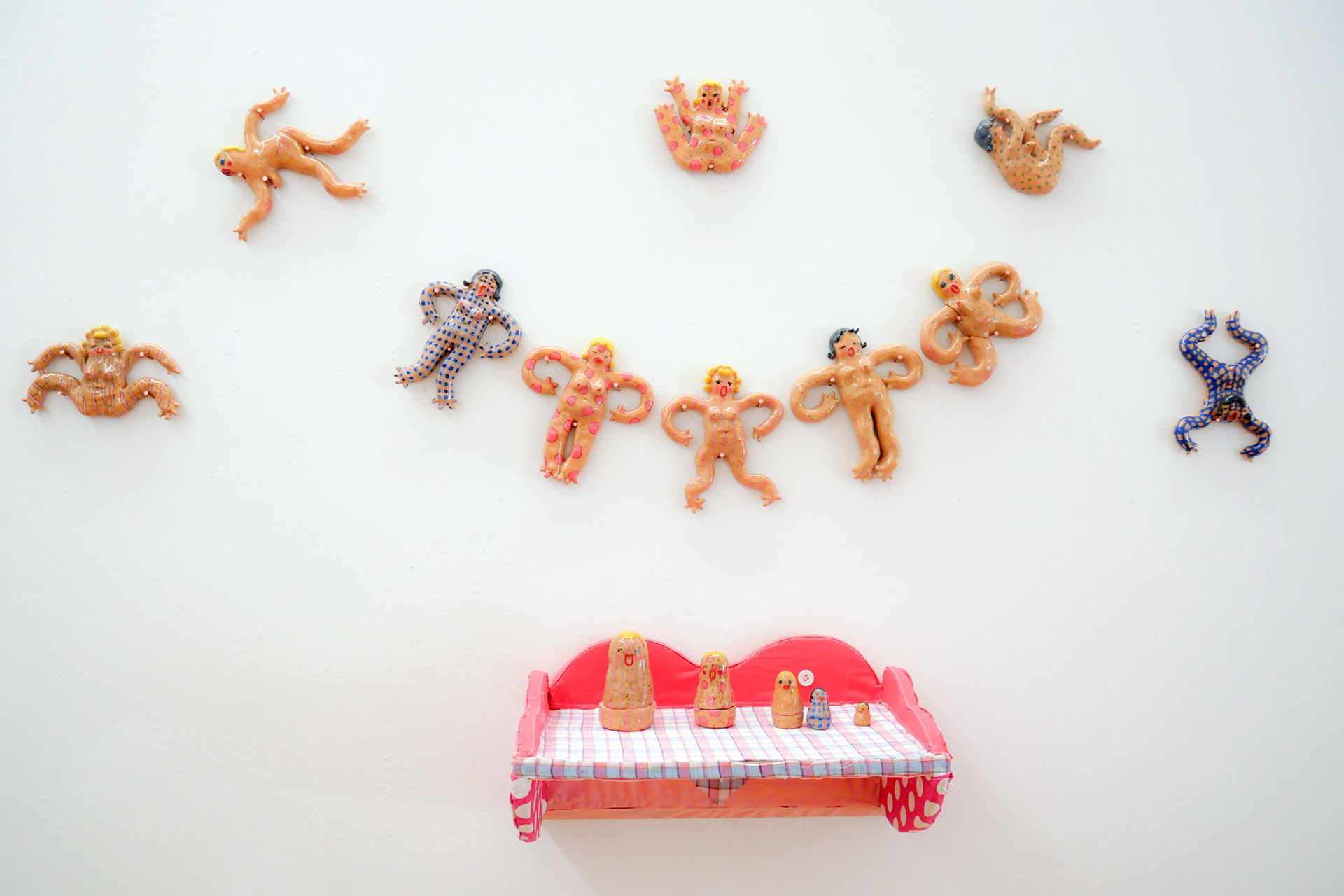
Hannah: When you walked in, there was this long table with food and flowers, very staged, very set-like. Then around it there were paintings, ceramics, textiles, stuff on the floor, just kind of everywhere.
Noah: In the center, there was this found-object sculpture, a witch’s hand and broom. It was about hidden labor in the home, like the kinds of work that aren’t usually visible.
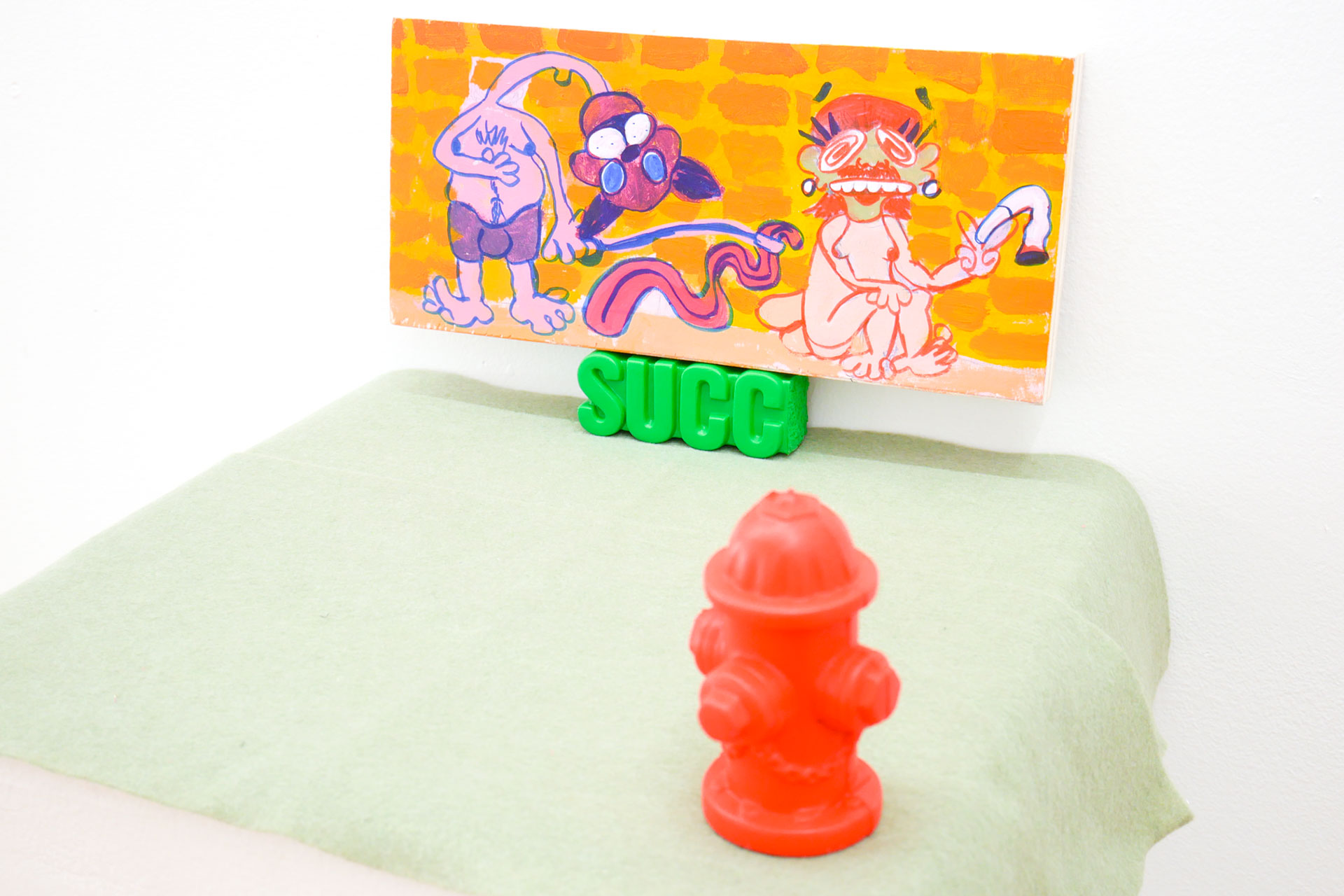
Hannah: And then there was this “play corner” with small objects, like wax dog figures, little ceramic houses, puppets, that people could interact with. You had to sit or kneel to engage with them.
Isa: It created different levels of interaction. The whole show itself kind of became the artwork, like a set you could move through.
I love the play corner idea. Was there anything you guys wanted to add that I didn’t ask?
Isa: I think it was really important for us to show queerness openly, not being silenced. And also just the sense of community and friendship, it felt really genuine.
Hannah: Yeah, galleries can feel really rigid, like big white rooms. We wanted to turn it into more of a community space.
Noah: There was power in showing up and being present. So we were really grateful to everyone who came.
All: And shoutout to Mo Nash. #thankyoumonash.
Shienka Martinez is a junior pursuing a BFA in the School of Art.