


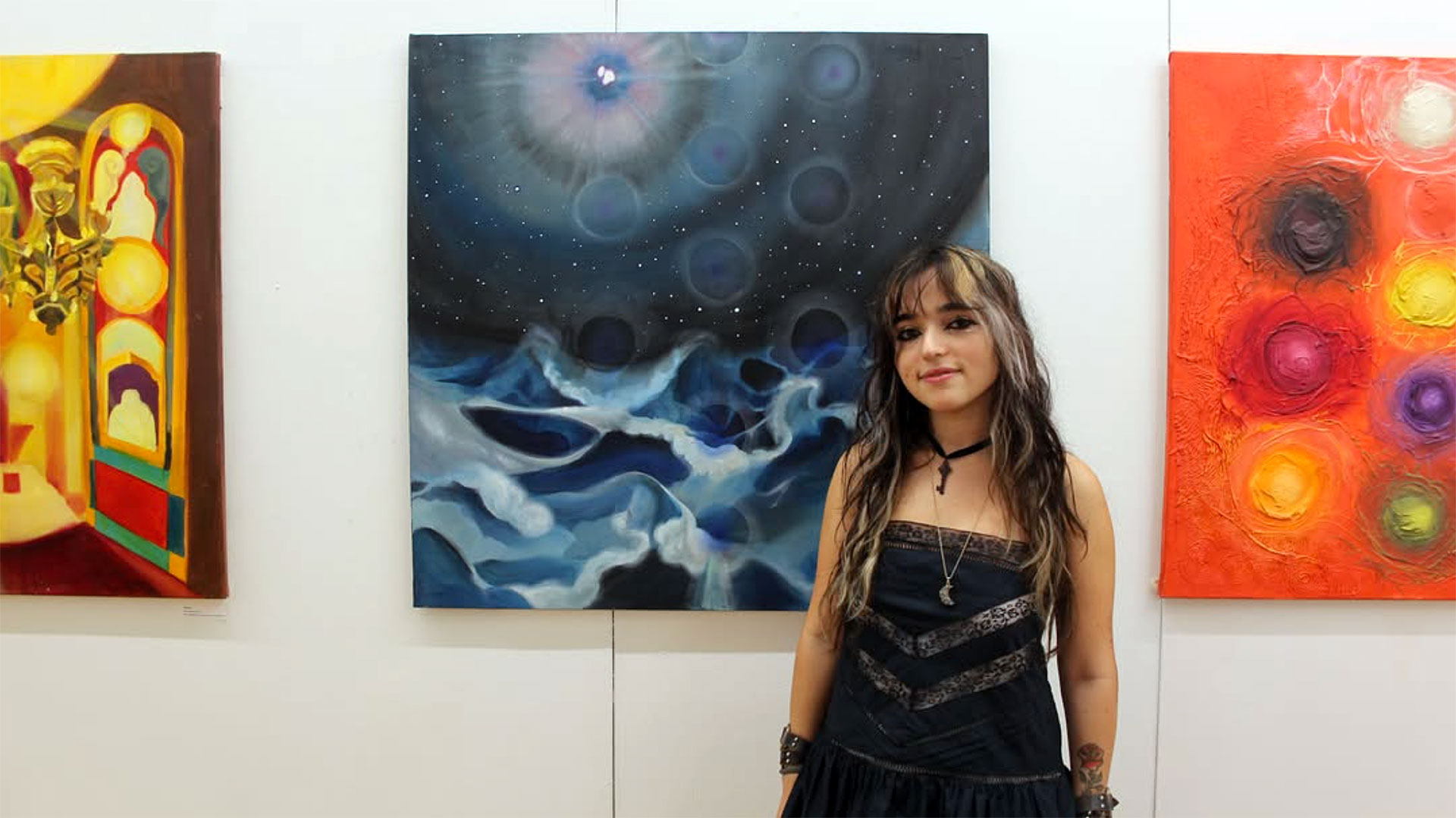
On October 2, senior Bee Applebaum-Schwartz presented “Let Me In,” a collection of major projects from the past few years. From fashion illustrations exploring London’s Goth scene to bright, abstract paintings and a tender series of charcoal drawings, each project invited the viewer to start a conversation.
By Amelia De Leon
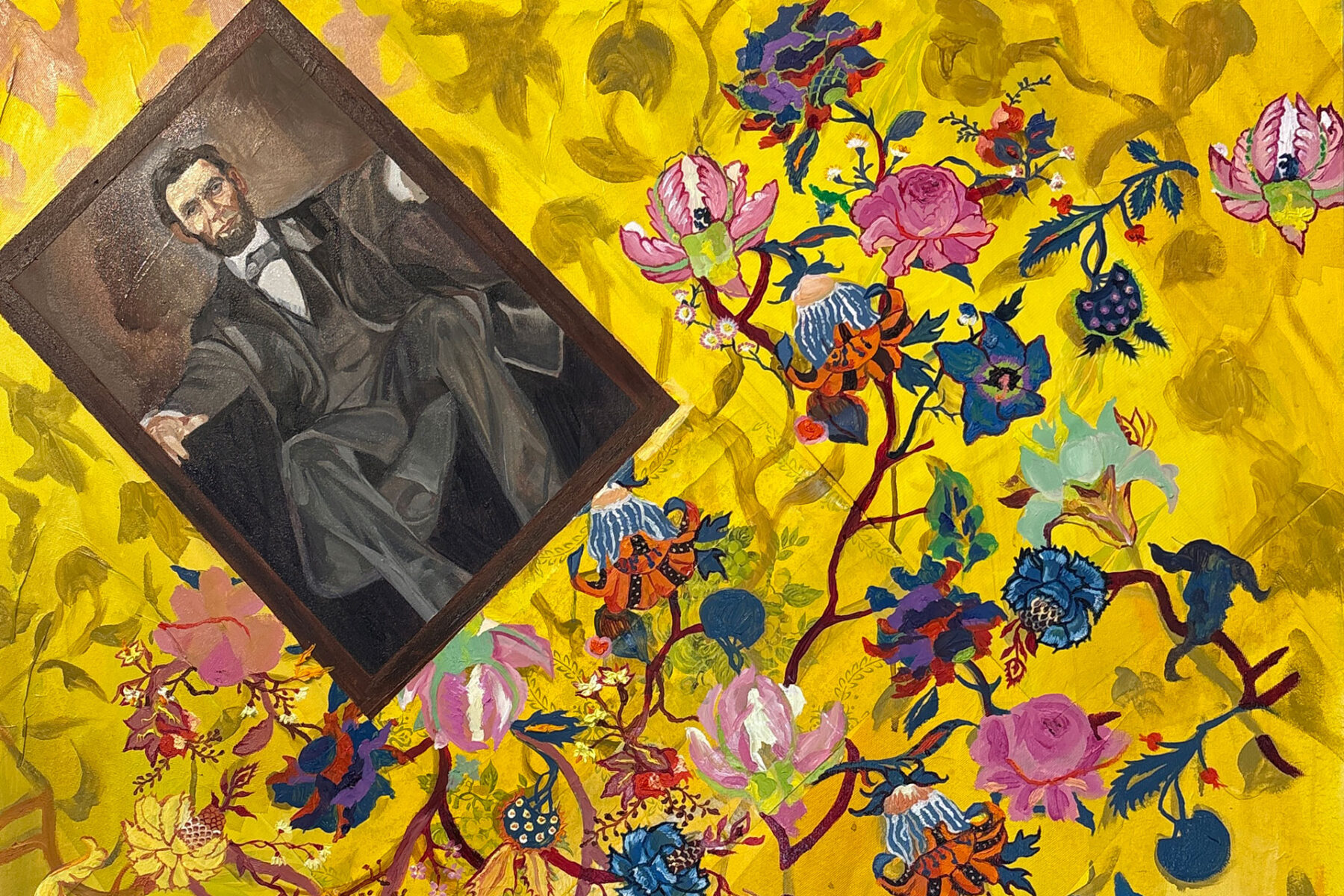
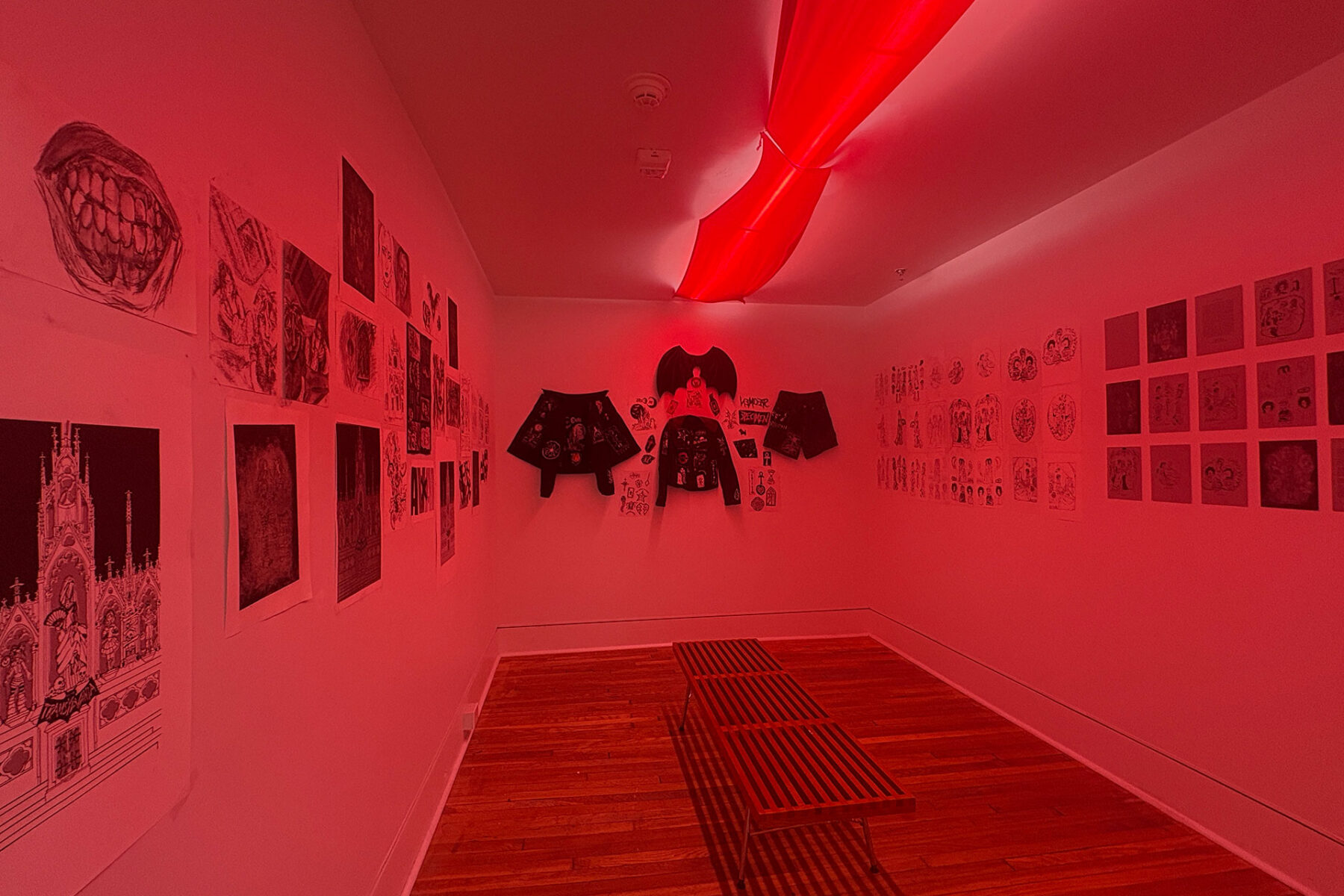
From October 2-4, 2026, senior Bee Appelbaum-Schwartz presented “Let Me In,” a collection of major projects spanning the past several years. On the surface, the works appeared wildly eclectic: a meticulously etched and screen-printed book of fashion illustrations documenting London’s Goth scene, an immersive gothic art installation in the annex, vibrant abstract paintings detailing spiritual Judaism, a maximalist series bordering on intense fixation, and a tender set of charcoal portraits accompanied by handwritten notes from sitters.
Yet, underlying this stylistic variety is a single unifying methodology summarized by her former studio partner: “You start a project in order to start a conversation.” For Appelbaum, who describes herself as deeply insular and often overwhelmed by the external world, artwork functions as both a sanctuary and a social passport. When direct interaction feels intimidating, creating a complex visual project provides a structured pretext, an excuse to ask forbidden questions, learn new technical crafts, and invite people into her orbit.
The exhibition space itself extended this invitation without requiring direct conversation. Posted throughout the gallery were extensive statements and detailed captions, allowing complex ideas to communicate silently across the room. Serving as a crucial bridge into her practice as an illustrator, Appelbaum created a dedicated reading area featuring comfortable chairs and copies of two of her display books, inviting viewers to pause and immerse themselves in her storytelling. Visitors were also invited to participate directly through an interactive guest book, reinforcing the collaborative dialogue at the heart of her work.
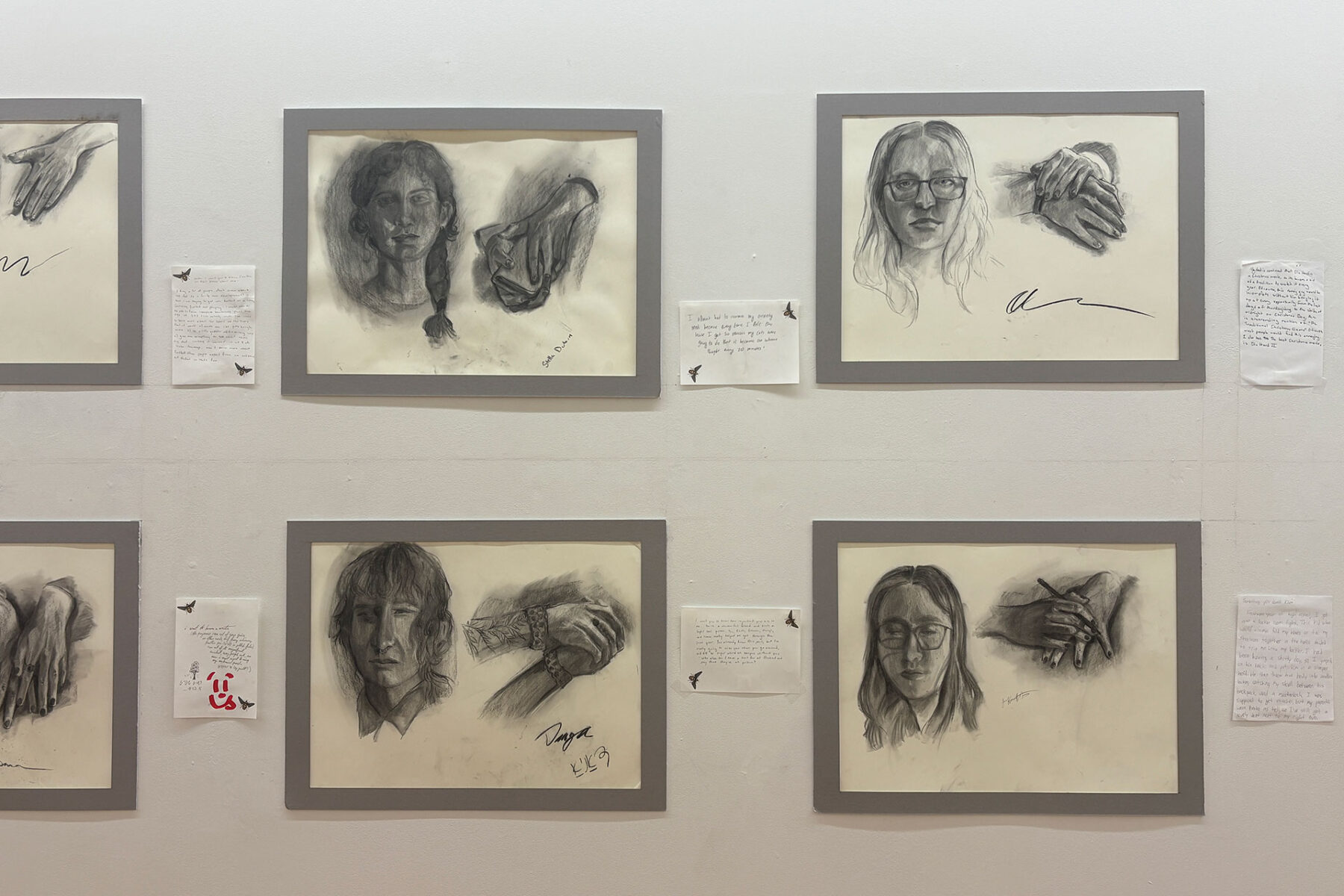
Appelbaum’s interactive practice is aptly displayed in her portraiture series. She invites friends to sit across from her while she renders their faces and hands in charcoal. Each session begins with a disarming joke: “This is not a kidnapping. This is not a seduction,” before turning into an extended face-to-face dialogue. To complete the piece, Appelbaum asks each sitter to bring their favorite writing instrument and leave a handwritten note answering a prompt about their relationship or personal truth.
The level of detail in each portrait is entirely dictated by the sitter’s willingness to remain present; a sitter who stays for hours yields delicate, finely rendered hands, while a rushed interaction leaves a faster, raw mark. Beyond creating a shared emotional space, this observational drawing practice serves a deeply practical function for Appelbaum. Struggling with face-blindness and low visual imagery, drawing is her manual recording mechanism. Rendering a loved one’s features line by line allows her to internalize and remember what her mind cannot easily recall on its own.
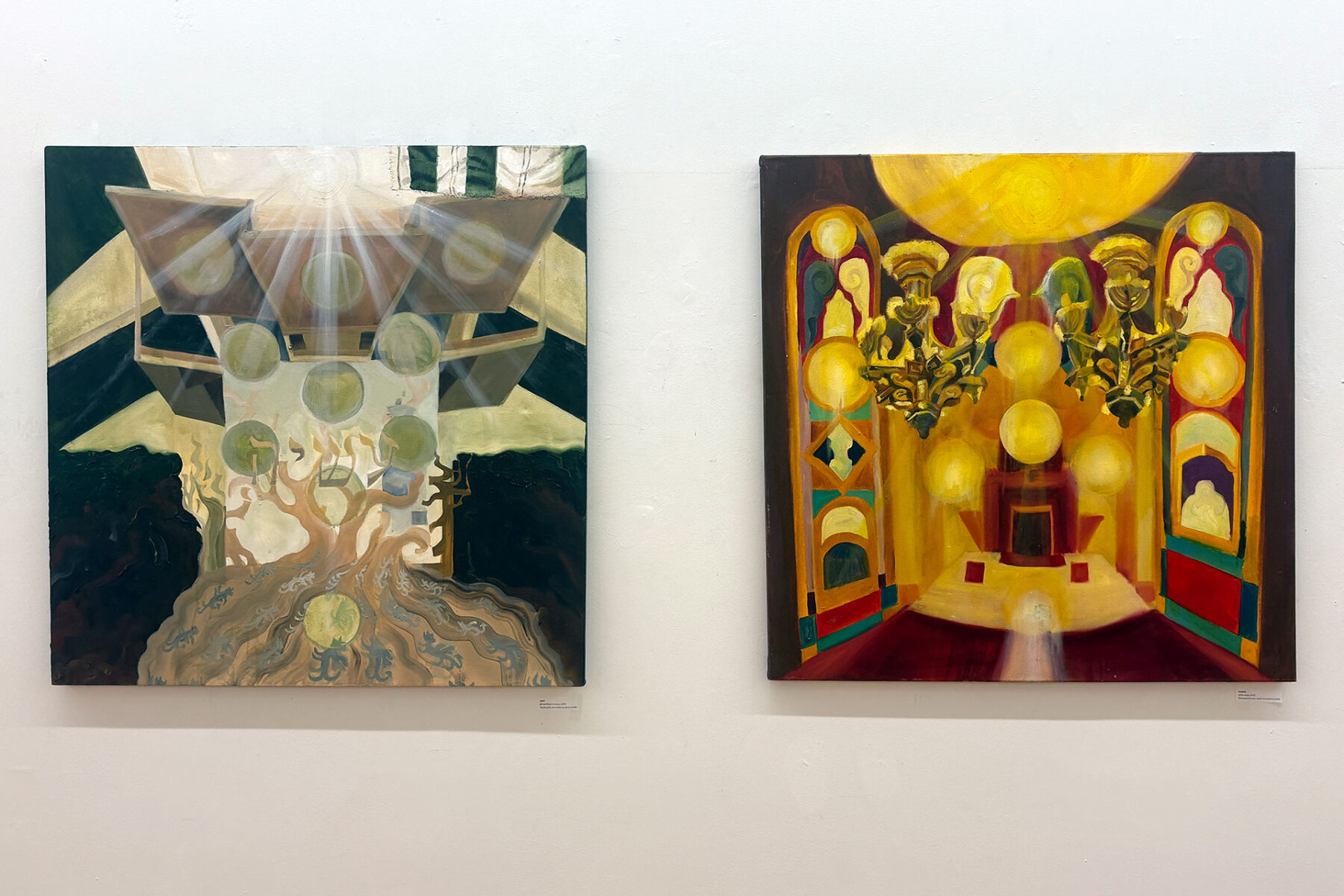
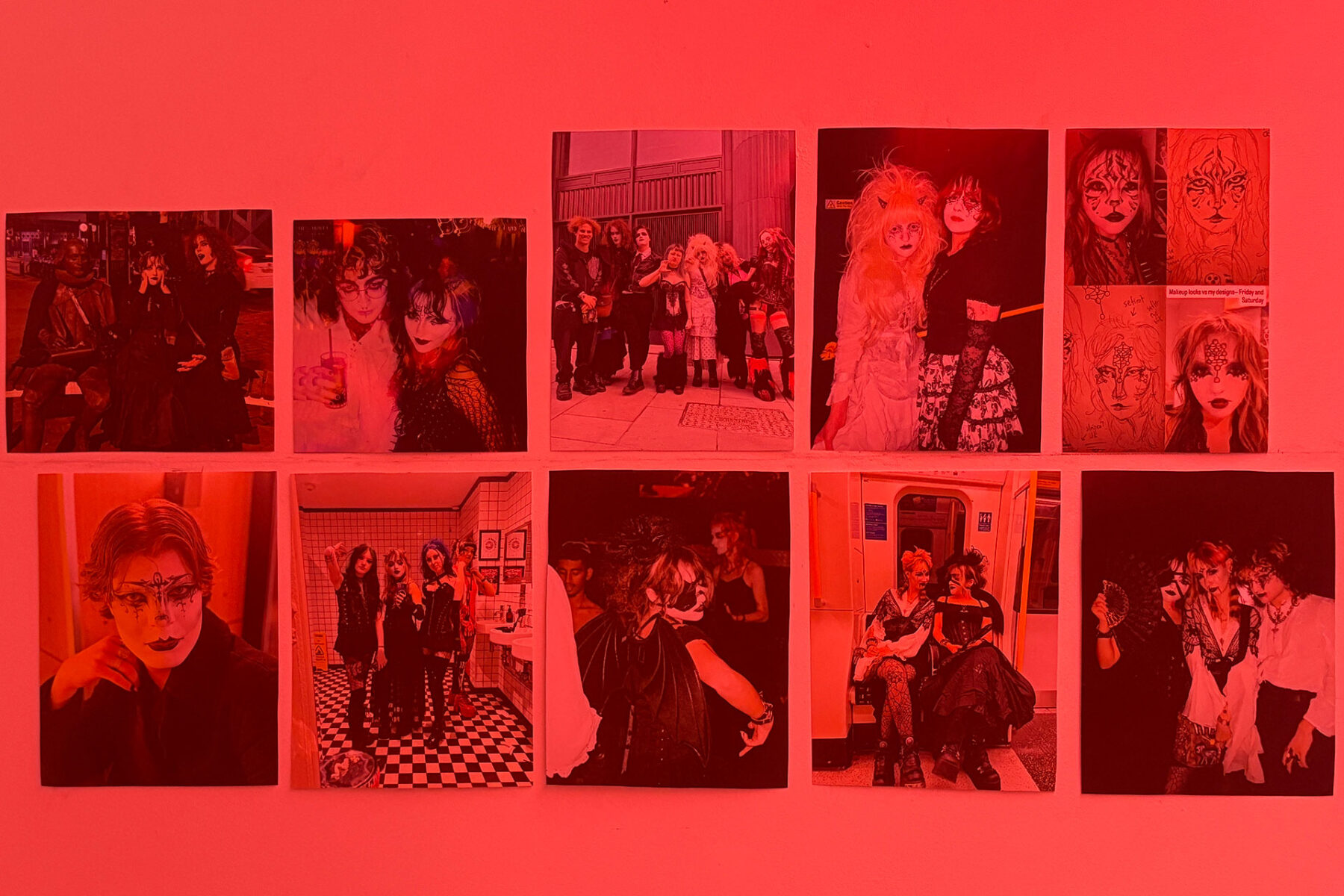
Where the charcoal portraits demand quiet personal vulnerability, Appelbaum’s fashion illustration project required immersive field research and subcultural integration. Exploring London’s Goth scene, she used fashion drawing as a vehicle to make friends, navigate a new city, and gain entry to underground spaces, like London’s historic club night hubs, a theme brought to full atmospheric scale in the gallery’s annex installation. Standing in contrast to her social and observational projects are Appelbaum’s abstract works, particularly her four-part series on spiritual Judaism.
Grounded in Kabbalistic philosophy, the paintings map out an intricate cosmos: the five parts of the soul, the four spiritual worlds, and the 32 sacred pathways. Where her portraiture affords agency to the sitter, these abstract oil paintings represent complete studio control and personal introspection. They stem from a desire to confront her birthright and ask internal questions about belief through complex painterly systems.
While the exhibition was mounted with the intention of extending these conversations, the actual opening brought a profound shift in Appelbaum’s self-perception and understanding of her audience. Leading up to the event, she was gripped by anxiety over how the work would be received. Instead, the room was filled with friends and visitors eager to engage. The show became a living demonstration of the connection her art had been building all along, bringing people together and deepening relationships in real time. Attendees moved beyond passive viewing to engage intimately: one friend brought their entire family, another was moved to tears, and an acquaintance initiated a candid conversation about his own complex relationship with religion.
Reflecting on the exhibition afterward, Appelbaum realized that her artwork was not about seeking attention, fame, or financial gain, but rather acting as a thoughtful, friendly bridge to humanity. Seeing how warmly people responded transformed her understanding of her community’s involvement. She realized that friends and collaborators participate in her projects not out of obligation, but out of a genuine desire to be around her and bring something meaningful into the world.
As Appelbaum prepares to transition toward commercial picture book illustration, currently working under the mentorship of artist and professor Clayton Merrell, her overall exhibition reveals an artist driven not by a desire for notoriety, but by an unsatiated curiosity and sheer persistence. “I’m not trying to be a hero or a genius or the greatest painter of our generation,” Appelbaum reflects. “I’m just trying to understand the world and make something beautiful on the way.”
More from Bee Appelbaum-Schwartz | @beeappelbaumillustration
Amelia De Leon is a junior pursuing a BFA in the School of Art. Follow her at @ameliadeleonn.