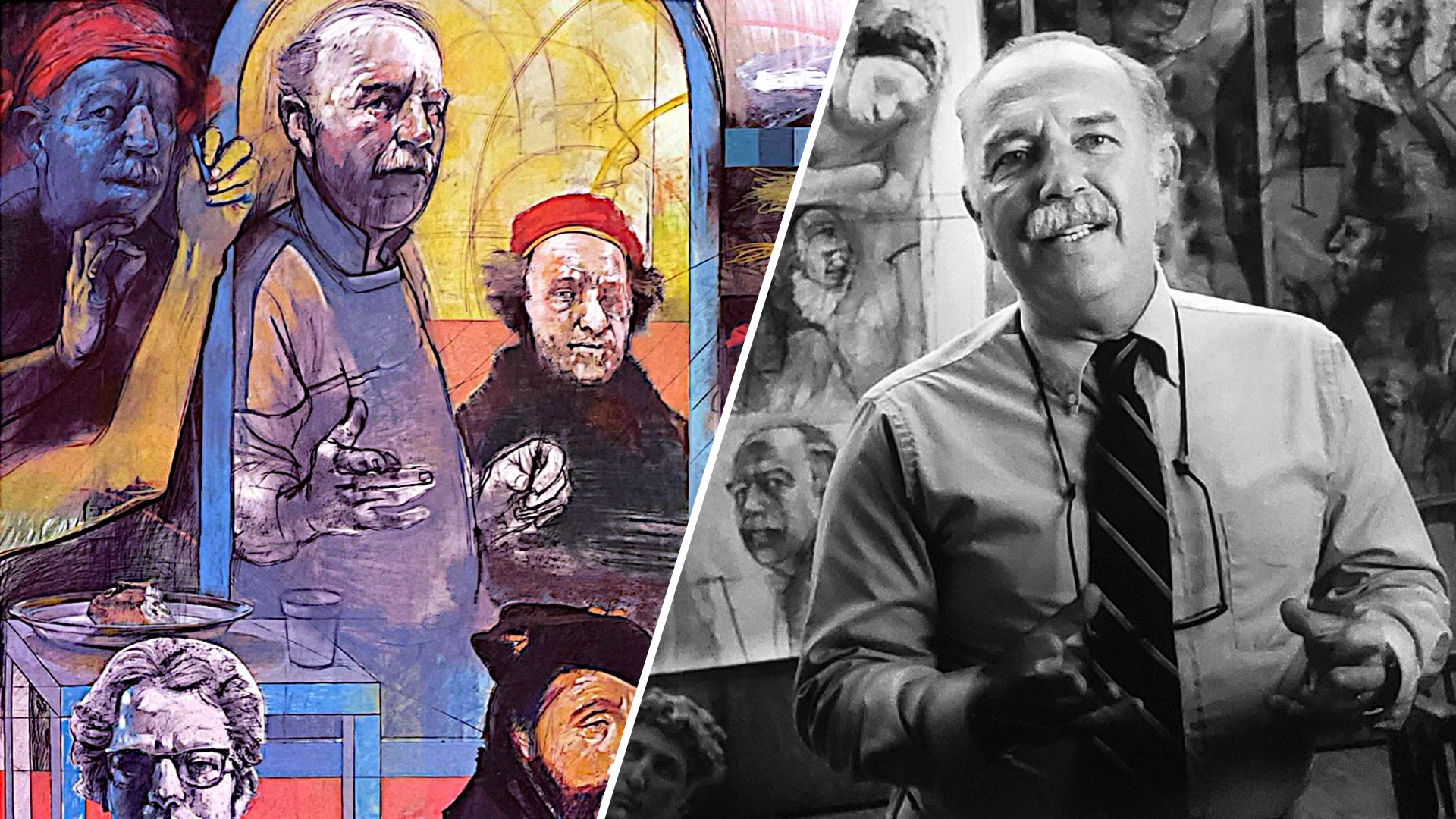
Join us in honoring alumnus and Professor Emeritus Herbert T. Olds by ensuring future generations of artists experience the world through drawing. Make a gift here to the Herbert T. Olds Endowed Scholarship.
His anatomy drawing class was legendary. Over 35 years at the Carnegie Mellon University School of Art, Professor Herbert T. Olds taught generations of students to be intrigued by the process of looking. “He taught us all how to see, how to focus, how to bring our observations to life on the page,” shares alumna Sarah Ratchye (BFA ’83). “His drawing assignments were so compelling to me that I usually fulfilled them twice.” Muscle, bone, and ligament may have been frequent subjects of his studio, but it was Olds’ heart, say many alumni, that was really on view.
“He was this passionate, brilliant guy who clearly loved drawing and pushed his students to make the best work,” says Katharine Kuharic (BFA ’84). “He cared so deeply about what had been made before us and the artwork that would come after us, presenting drawing as a continuum across human experience.”
In the catalogue accompanying Olds’ 1997 retrospective at the Butler Institute of American Art, David Wilkins, Professor of the History of Art and Architecture at the University of Pittsburgh, put it this way: “The continuing theme of his work has been the human figure, or it might better be said, humanity.”
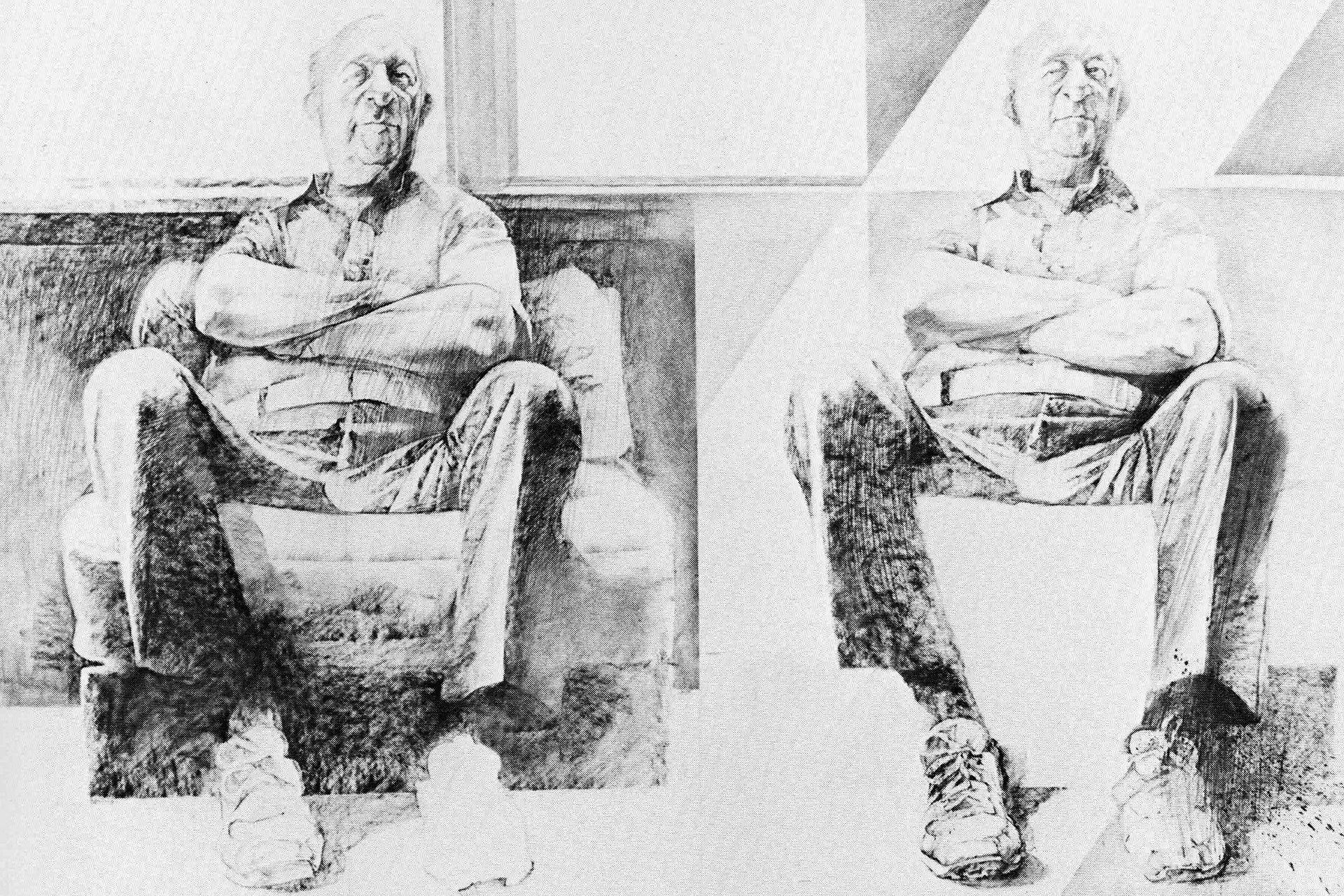
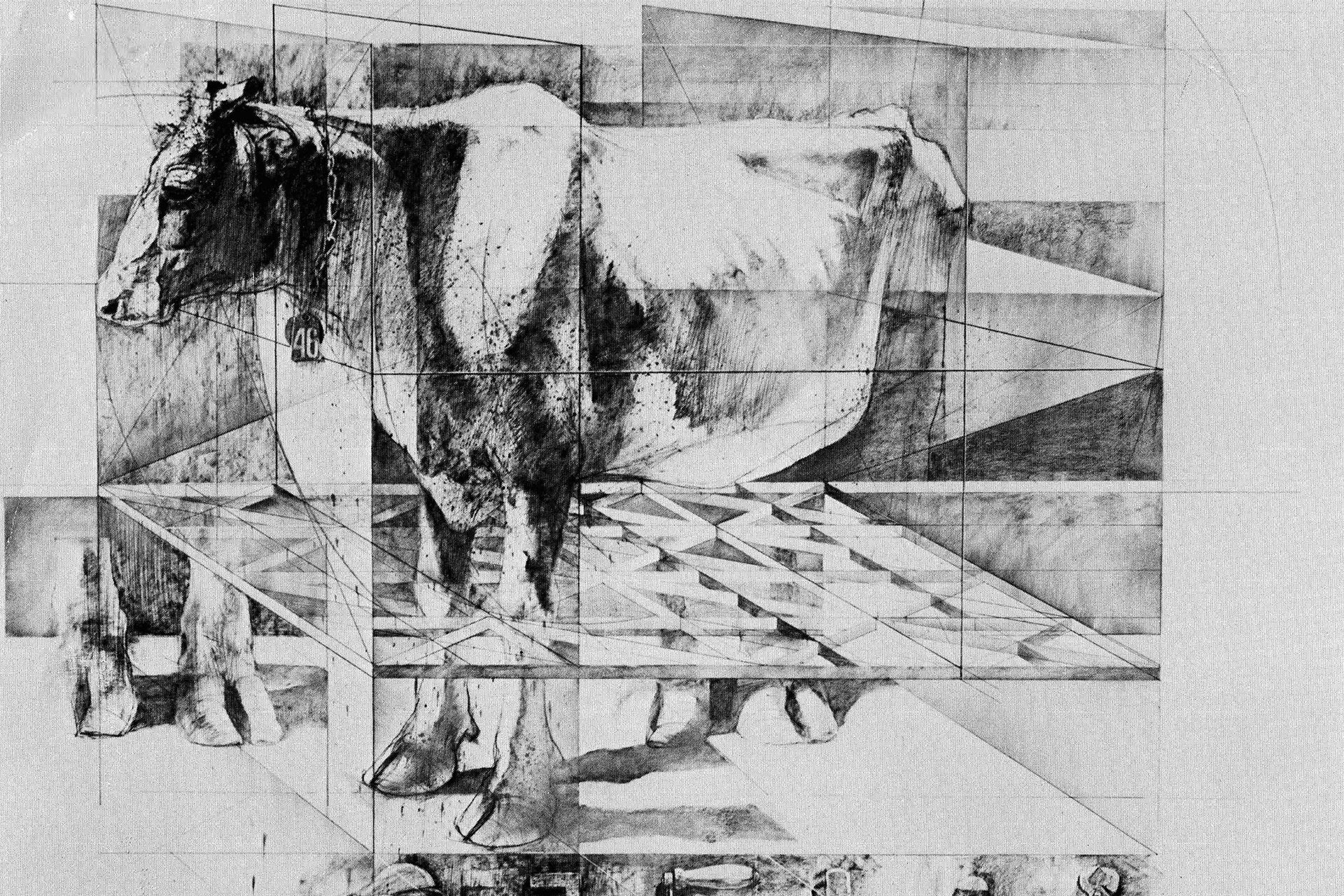
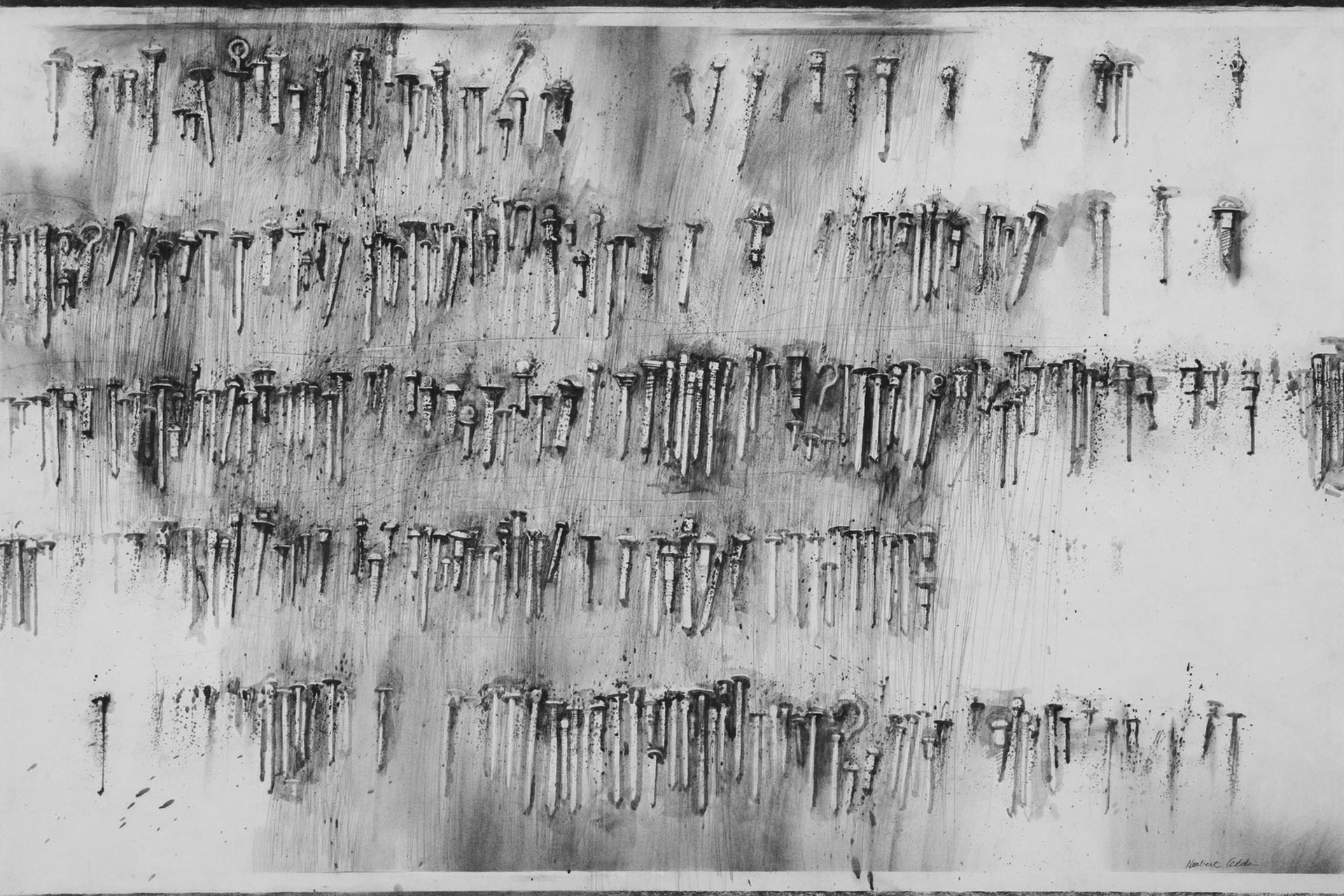
Two Images: Seated Figure, 1981 charcoal, 45×59. Turners #46, 1981 charcoal, 48×56. Collection, 1980, charcoal on paper, 33½×43¼, The Carnegie Museum of Art Purchase Award: 70th Annual Exhibition of the Associated Artists of Pittsburgh
Now 89 and residing in San Diego, California, Olds was born in Detroit in 1937, where both he and his wife, Elaine, attended Cass Technical High School, a magnet program renowned for its art curriculum. Olds moved to Pittsburgh in 1956 to begin at the Carnegie Institute of Technology (now Carnegie Mellon University), earning an $800 annual scholarship that made his tuition possible. He graduated with a BFA in painting in 1960.
“Back then, there were two such scholarships awarded,” Olds recalls. “One was for a Pittsburgh native, and the other one was for essentially anywhere else, and it turned out to be me. It meant a lot to me. My father could never have afforded the tuition.”
To ensure that future generations of artists receive the same transformational support that brought Olds to Carnegie Mellon, a committee of former students led by Brett Reichman (BFA ’82), Jamie Adams (BFA ’83), Katharine Kuharic (BFA ’84), Sarah Ratchye (BFA ’83), and Sherri Wolfgang (BFA ’83) has launched an effort to establish the Herbert T. Olds Endowed Scholarship.
Designed to support undergraduate artists who demonstrate excellence in drawing, the scholarship celebrates a legacy that reaches far beyond CMU through the generations of alumni who continue to share his approach to drawing in their own classrooms.
“Herb Olds was a formidable presence at CMU,” says Adams, now an art professor at Washington University in St. Louis, where he has adapted Olds’ anatomy course in his teaching. “Herb’s work demonstrated for all of us how drawing could embody the complexities of life — of questioning, of belief, of doubt, of grief.”
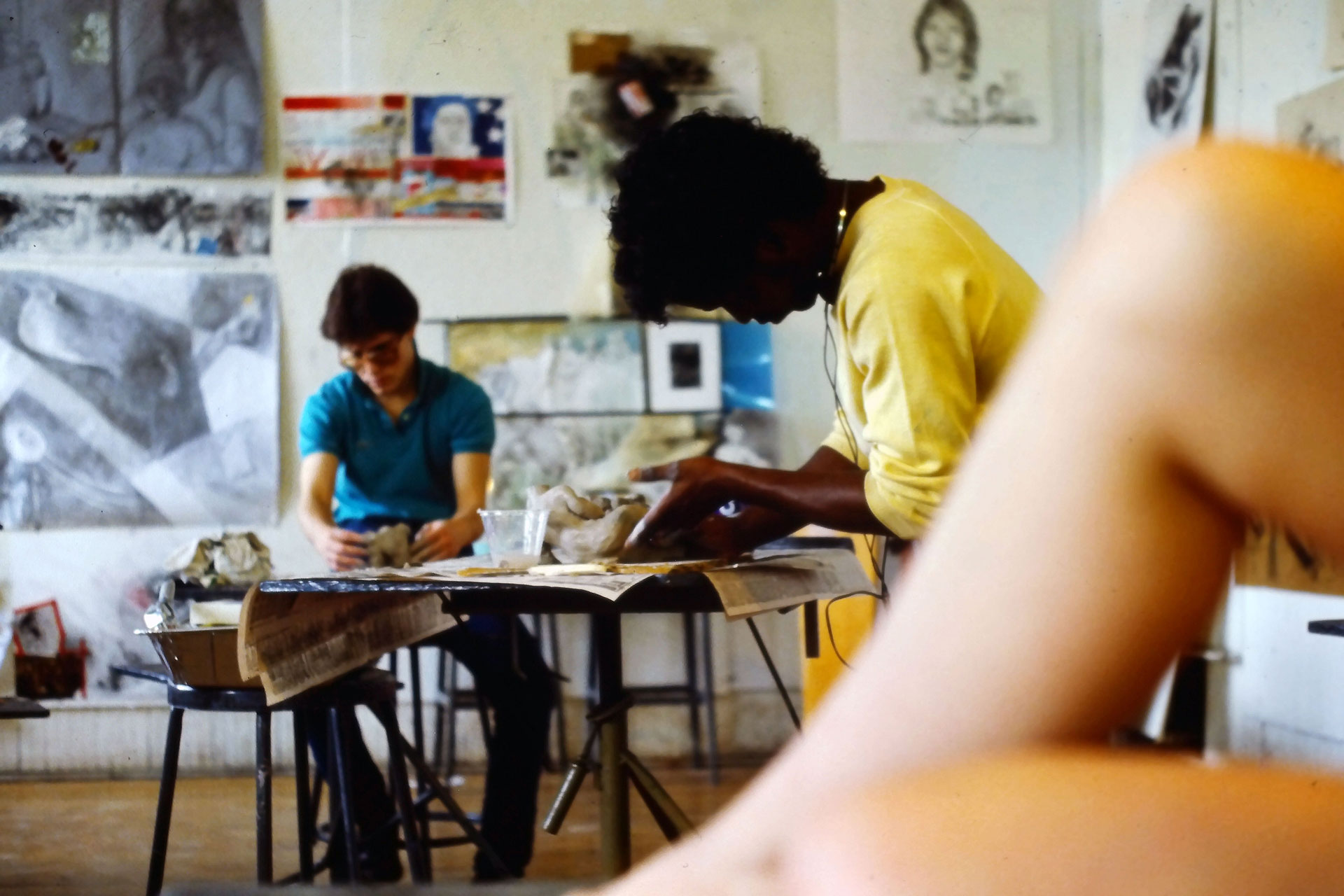
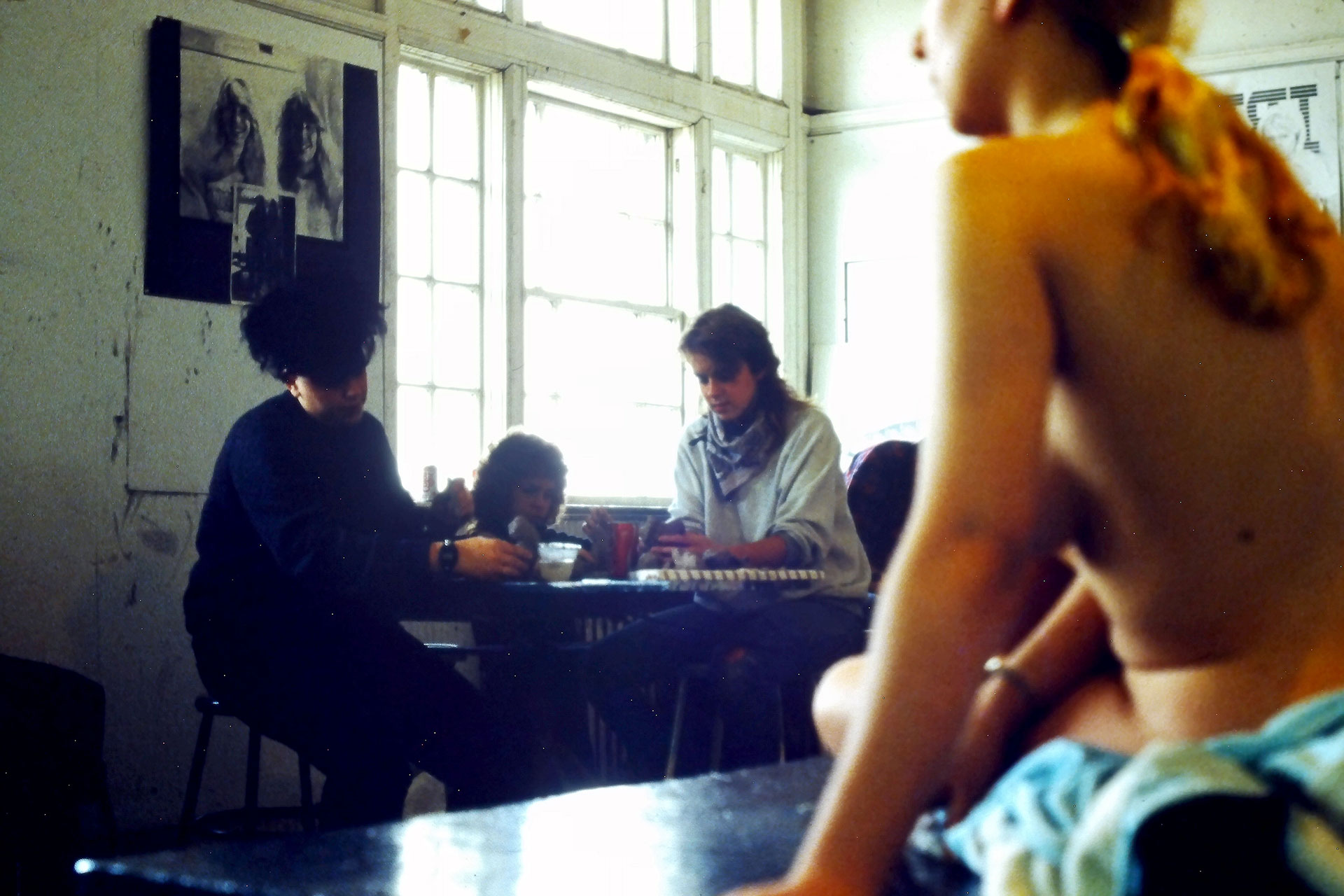
CMU School of Art students working from a live model in Herb Olds’ class in the 1980s. Courtesy of Jamie Adams (BFA ’83).
Cima Katz (BFA ’71), who became an art professor at the University of Kansas, says Olds was the defining teacher of her undergraduate experience. “I had the opportunity of a long relaxed visit with Herb several years ago in San Diego and it brought back such a rush of memories,” she says. “The best part was the realization that he was only four years older than me at the time — he seemed such an adult!”
After earning an MFA at Ohio University in 1962 and teaching at Concord College in West Virginia, Olds returned to CMU as an Assistant Professor in 1965. He and Elaine settled in Forest Hills, raising two sons in a family defined by a shared devotion to education. Elaine taught elementary school, and their older son went on to become a teacher and administrator. “We’re all teachers,” Olds says. “When we get together, we talk and argue about teaching processes.” Olds was promoted to full Professor of Art in 1982, and in 1989 was named the inaugural Dorothy L. Stubnitz Professor of Art, the Art Department’s first endowed chair. He retired in 2000.
“The thing about Herb’s teaching was that he positively radiated enthusiasm for drawing, and the students reflected that enthusiasm right back,” says Professor Clayton Merrell, the School’s current Dorothy L. Stubnitz Professor of Art. “I rarely saw Herb in the hallway without at least one student following him, hanging on his every word.”
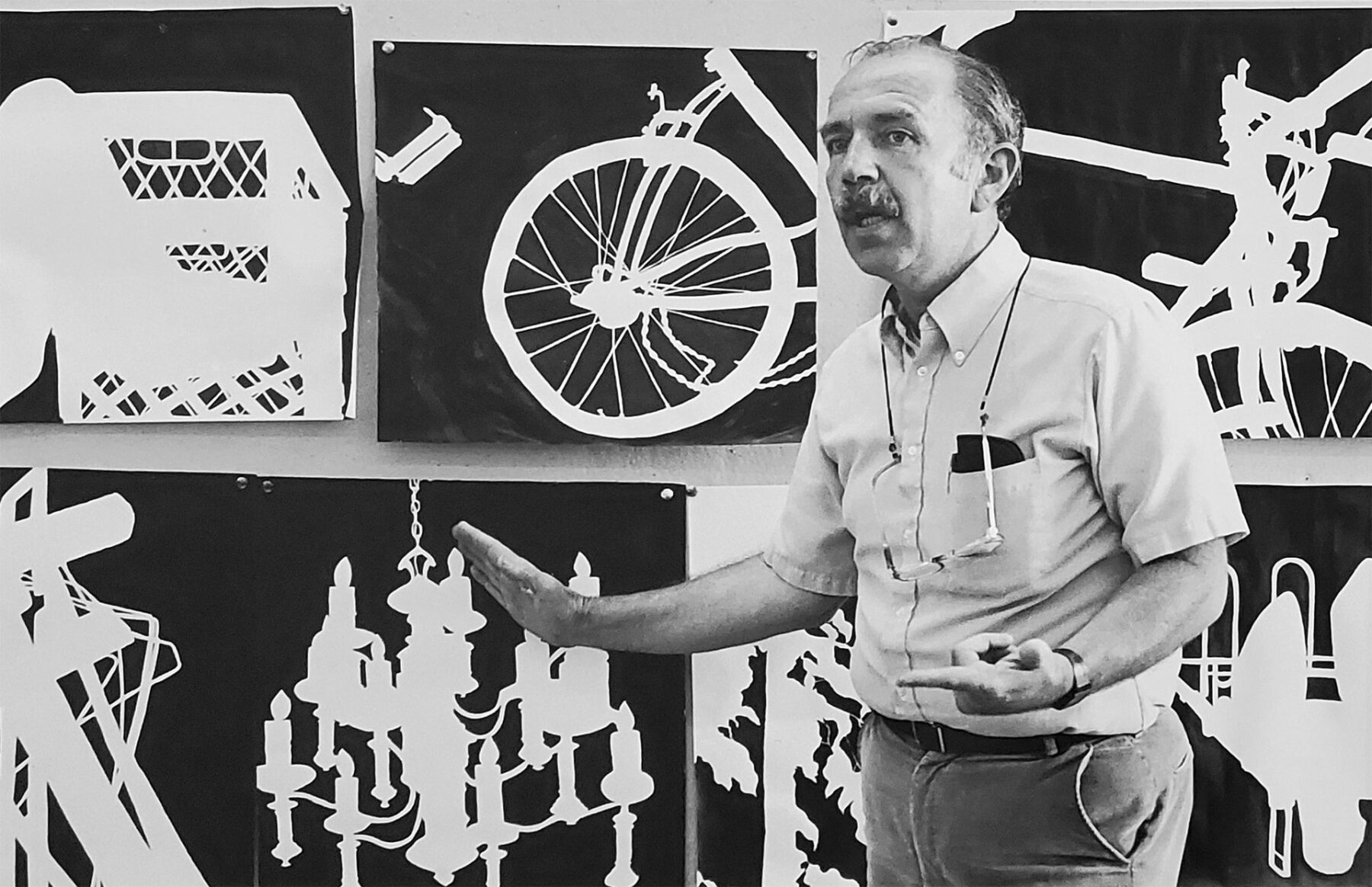
Herb Olds during instruction at the CMU School of Art.
Olds’ teaching centered on three elements of drawing that he viewed as universal to artmaking: subject matter, form, and content. “Subject matter being what one could see and understand,” Olds explains, “form being the way in which one did things, and then content being the result of the meaning gleaned from the first two items.” His teaching philosophy also left plenty of room for spontaneity. “A lot of the time I was just kind of feeding stuff out by the seat of my pants, but I found out I loved teaching. I got up in the morning and went to work, and I felt really happy.”
Brett Reichman, like Adams, adapted Olds’ anatomy drawing framework during his tenure as a professor at the San Francisco Art Institute. “I’ve often wondered if I would have succeeded as an artist had I not leaped at the opportunity to study with Herb Olds,” Reichman says. “During my first semester, I couldn’t help but notice the exceptional work being produced in Herb’s drawing class and sheepishly asked to transfer in. He thankfully agreed.”
Olds devised memorable class projects, such as tasking students to draw a “mile of noodles,” or to trace only the negative space within old sewing machines and bicycle wheels, or asking them to complete a “metamorphosis of a creature” project imagining how millions of years of evolution would alter the scale and form of a bug. In another exercise, he required students to “destroy” an object using natural forces like erosion or decay. In every case, Olds marveled at each student’s distinct solution to the problem.
“I tell them right from the beginning of the class not to worry about style because they already are a style,” Olds said in a 1974 interview with Focus, a CMU faculty publication. “There’s no sense in very neat, orderly-type people beating themselves over the head because they are neat and orderly, or for that matter people who are naturally kind of sloppy being overly worried… If you direct people too much, the tendency is to start forcing the drawings toward those poles, rather than letting them take the natural course.”
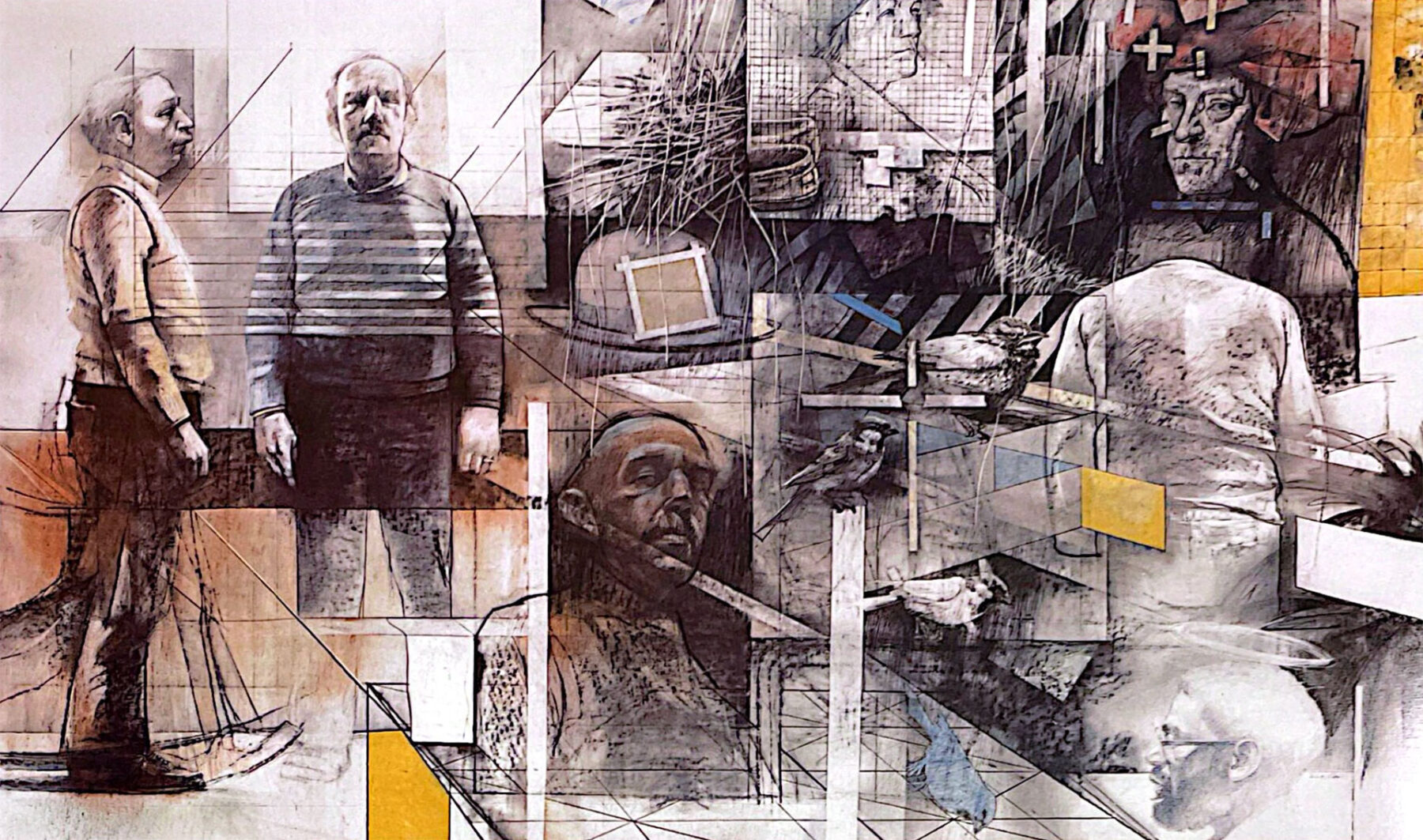
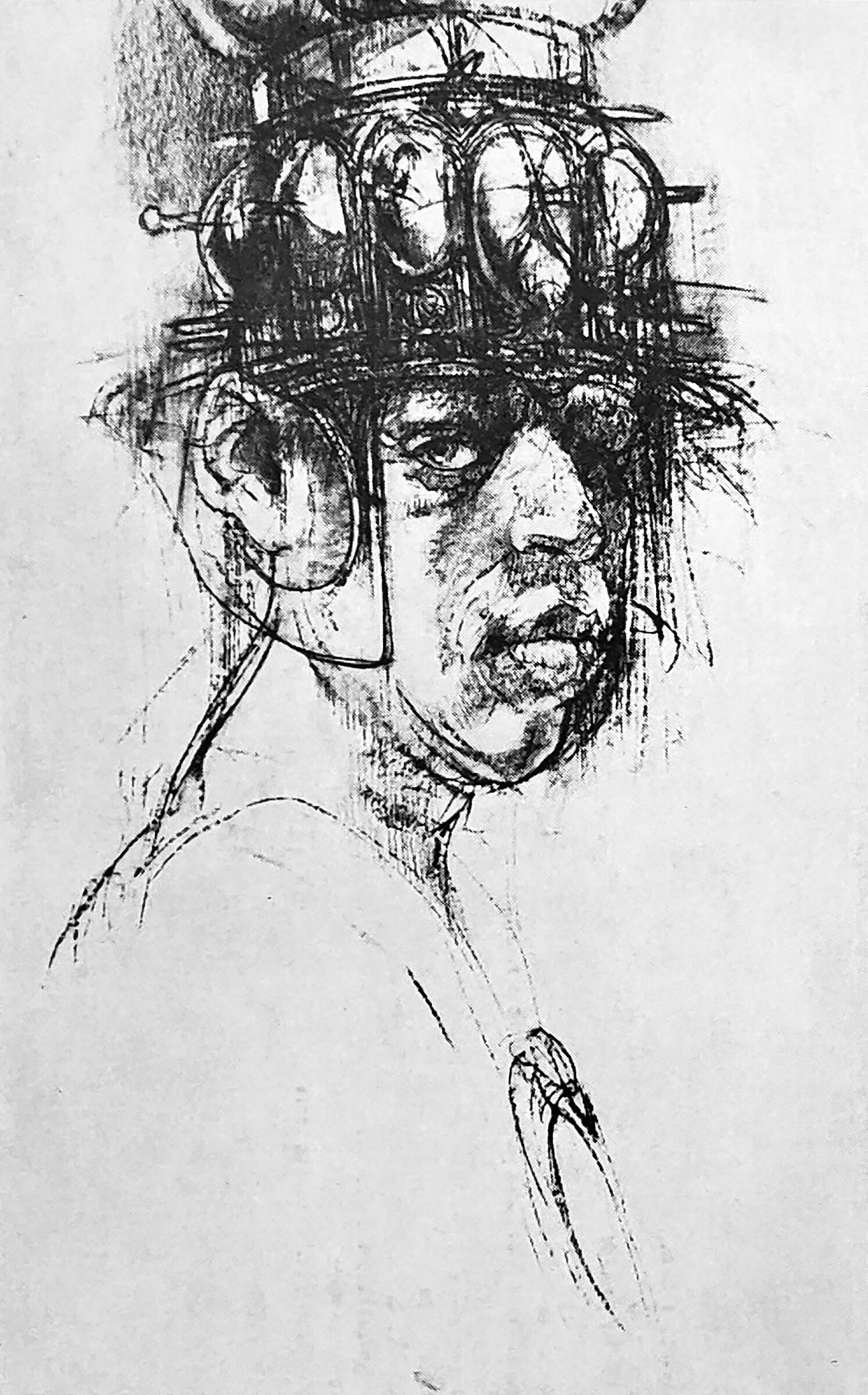
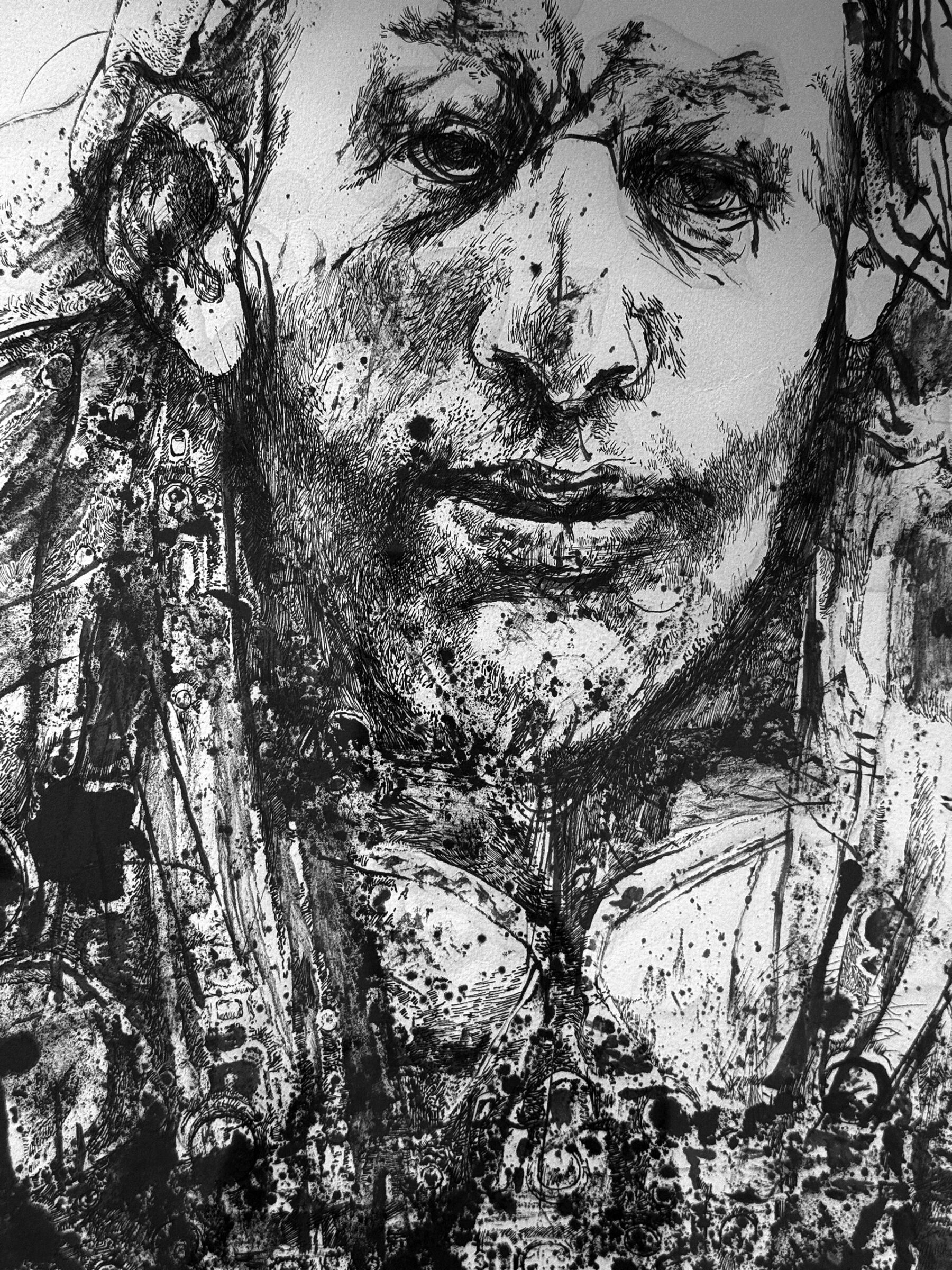
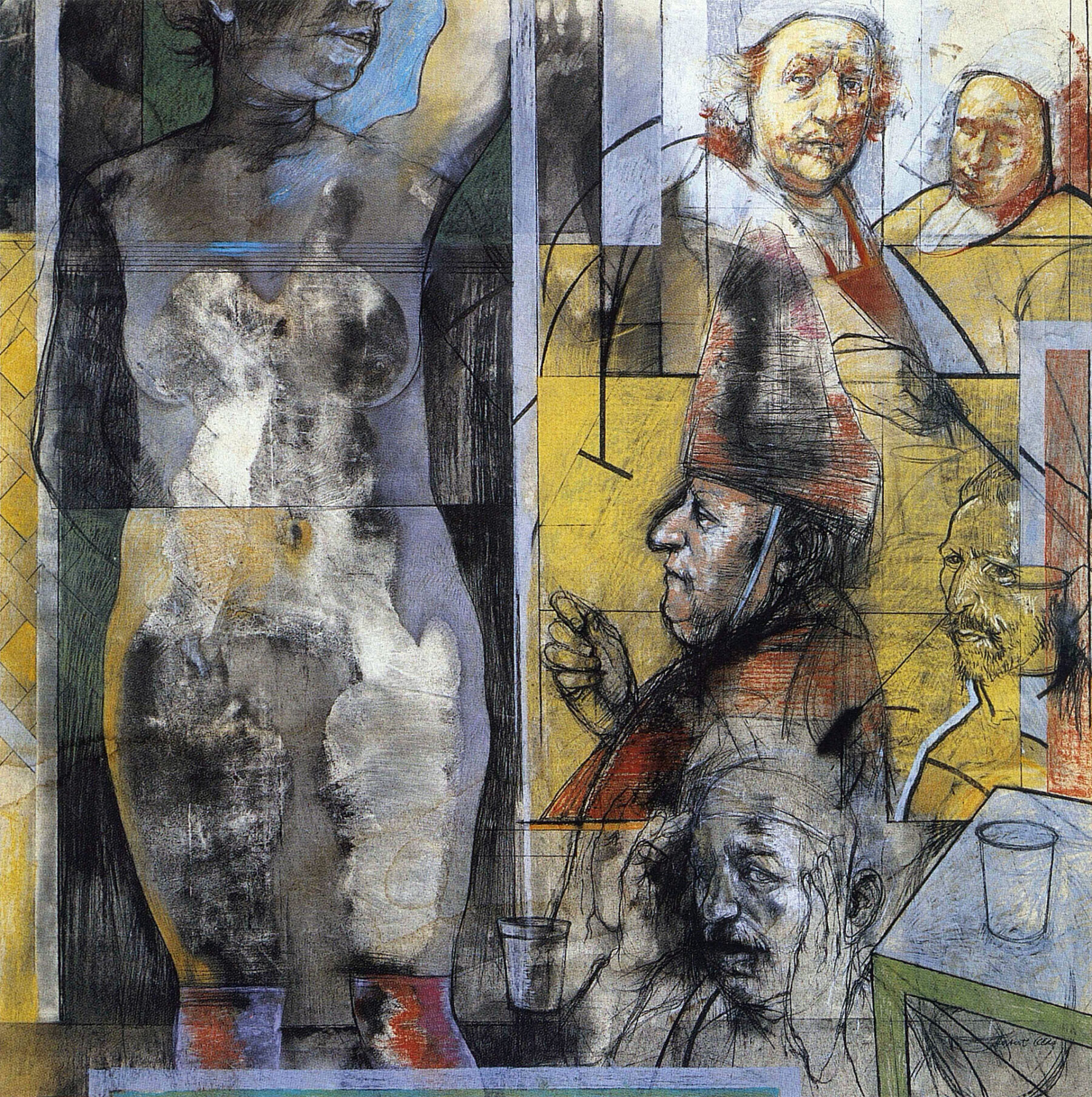
Selection of Herb Olds artworks, including Amsterdam (bottom), 1988, charcoal and pastel, 49×48.
In his own studio practice, Olds worked with equal personal ambition, often on life-sized or grander scales, executing drawings on rolls of paper five feet high and up to eight feet long. He created complex surfaces by layering charcoal, pencil, pastel, and acrylic, sometimes splattering the paper with charcoal crushed in alcohol to achieve a patina. Art historical references and figures often populated his compositions, like van Gogh, Rembrandt, and the woman pouring milk from Vermeer who appear in Olds’ Amsterdam, a 49-by-48-inch charcoal and pastel from 1988, alongside his own self-portrait in the lower right corner.
“Despite the fact that the drawings I make are representational, for me they will always contain a degree of mystery,” Olds said in 1985. “It is the mystery which is intriguing to me, and it is the mystery which keeps me drawing.”
Between 1992 and 1995, Olds collaborated with his former student and fellow CMU professor Mark Mentzer (BFA ’73) on an 11.5-by-45-foot mural for Oakland’s Community of Reconciliation Church. Commissioned to reflect the church’s founding spirit in response to Dr. Martin Luther King Jr.’s assassination, the duo spent three years photographing and then painting congregation members, working across their individual studios and assisted by students John Trivelli (BFA ’92) and Jeffrey J. Dorsey (BFA ’94). Mentzer later likened their improvisational process to “jazz musicians” responding to one another’s marks. “He would do something, and I would do something. Then he’d respond to that. It was fantastic,” said Mentzer, who retired in 2025 after 49 years at the CMU School of Design. “It was really fun.”
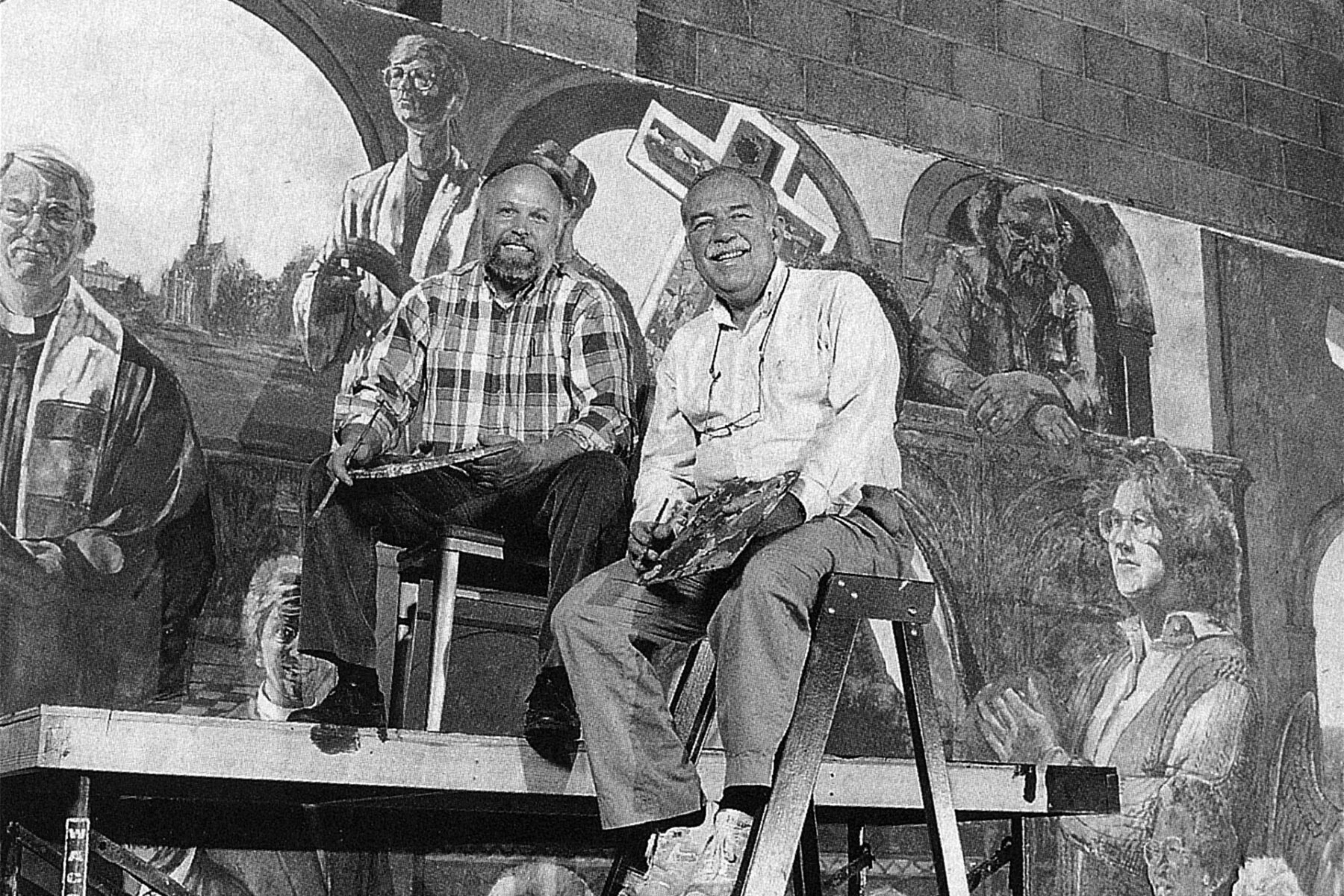
Mark Mentzer, left, and Herb Olds pose on their painting perch beside a mural for the Community of Reconciliation Church in Oakland.
During the 1980s, Olds, his wife, and Mentzer led summer trips for CMU students in France’s Loire Valley. The interdisciplinary program brought together students from across the College of Fine Arts, immersing them in the culture of places like Amboise, the riverside town where Leonardo da Vinci spent his final years. Back in Pittsburgh, his frequent class trips were wide-ranging: students drew taxidermy birds at the Carnegie Museum of Natural History, live animals at the Pittsburgh Zoo, and anatomical specimens at the University of Pittsburgh’s medical lab.
“Mr. Olds taught me that if I learned the anatomical structure of the figure, I could draw anything, and he was right,” said Sherri Wolfgang. “My first solo museum show was on the human figure, and I dedicated it to Mr. Olds. While it’s now been many decades, I still give him my gratitude. I hope that creating this scholarship in his name will help young artists develop a love for anatomy and figurative art.”
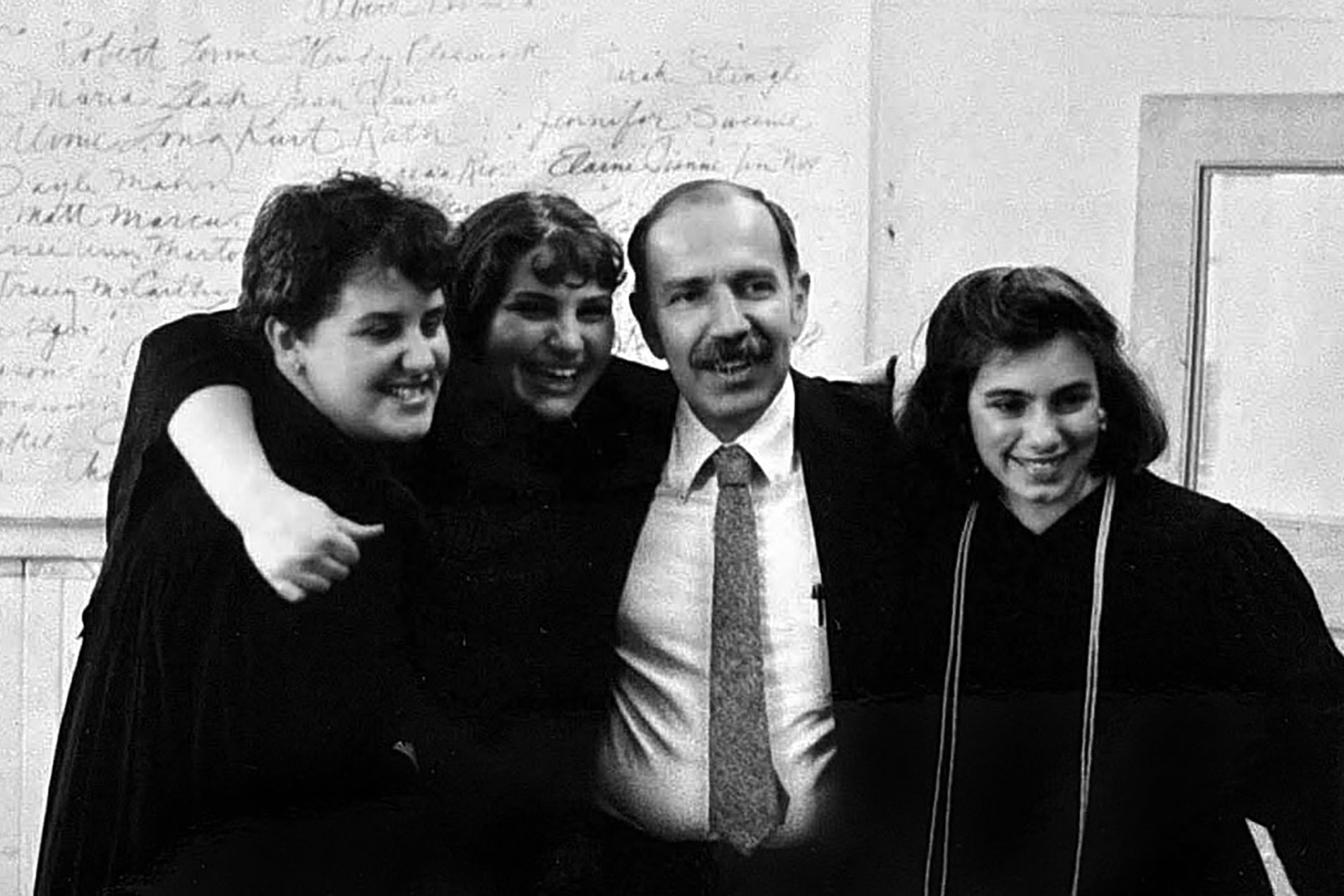
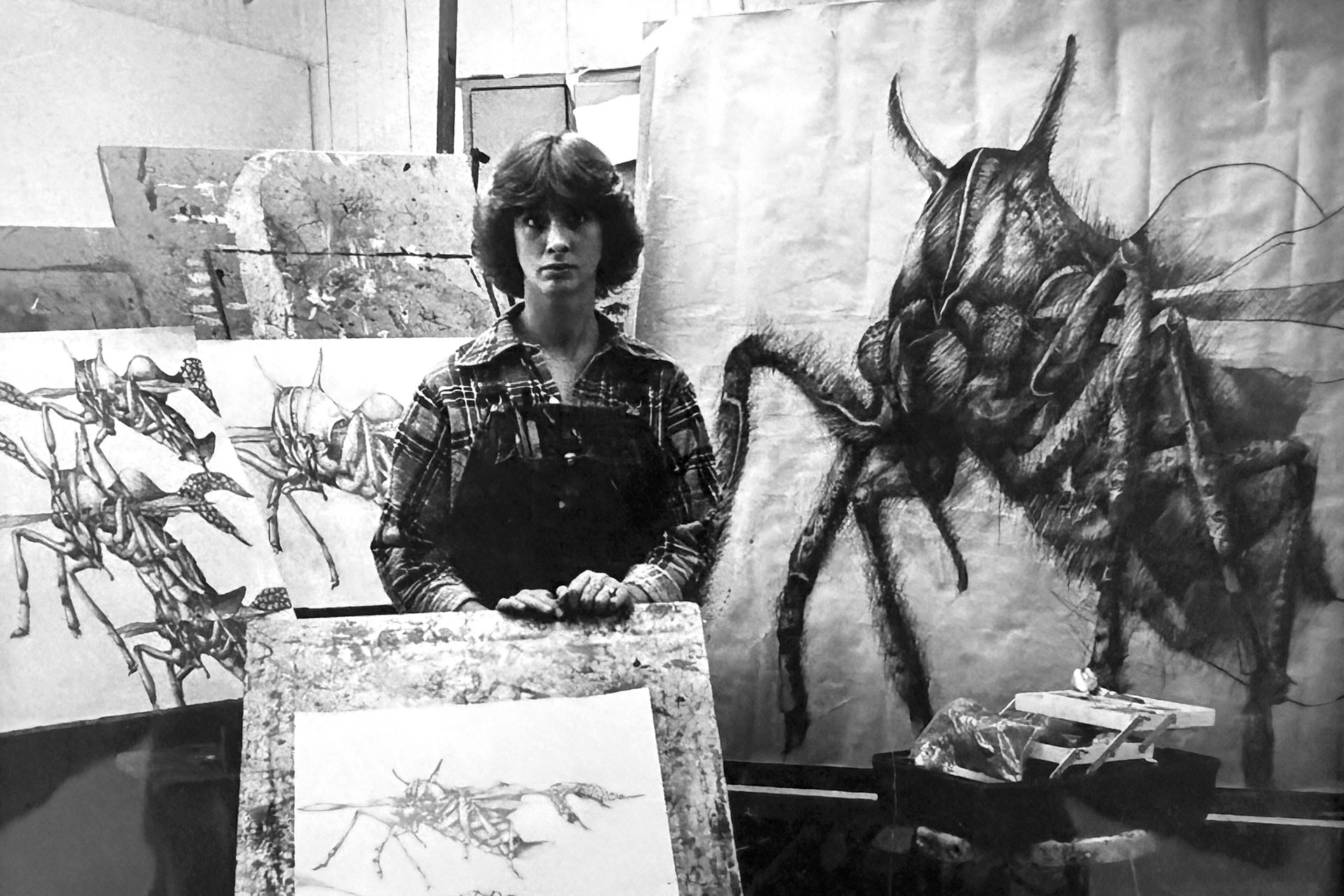
Herb Olds with the Class of 1984. Sheri Wolfgang in her studio in the College of Fine Arts, 1980s.
When he was still an Associate Professor in 1973, Olds received the Ryan Award for Meritorious Teaching, nominated by Orville Winsand, then head of the department of painting and sculpture. “Professor Olds is an unusual person,” Winsand said at the time, “for he combines the intensive preoccupation of a creative person and the compassion of a devoted teacher. His relationship to his students is always characterized by both love and respect.”
By teaching drawing as a form of inquiry, Olds showed his students that he also saw them — each curious about the world in their own ways. “It’s a mistake to think that drawing is a monolithic process,” Olds said the year after he received the Ryan Award. “We draw for all kinds of reasons, particularly in art school. [It] is a process of asking questions, of not deciding what a solution is but of literally allowing the act of drawing, the participation in the drawing, decide what the solution is, so that real discovery can occur.”
“It’s amazing once you challenge a person to see how much they begin to discover, how much they realize they haven’t seen before.”
Make a gift to the Herbert T. Olds Endowed Scholarship.