


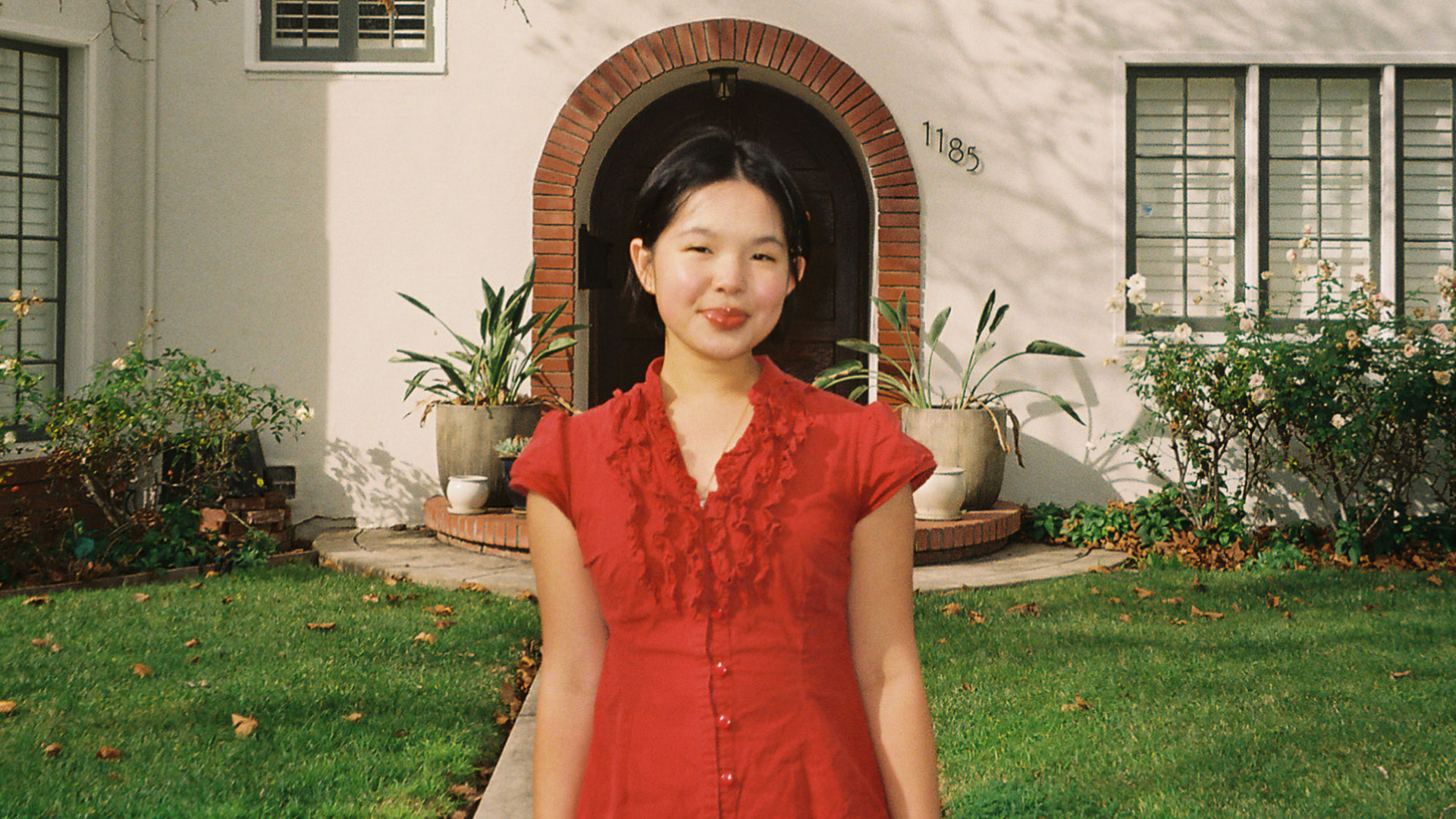
From April 24-26, senior BCSA student Suanna Zhong presented “Silicon Valley Girl,” an exhibition that meticulously deconstructed the queer adolescent experience within the Technothropocene. As Zhong interprets it, the Technothropocene is a technological innovation that heightens the effects of the Anthropocene, the current epoch in Earth’s history dominated by human-industrial activity. Through saturated landscapes and the aesthetics of “airport beauty,” Zhong explores what happens when the rigor of computer science is stripped of its fiscal motivation and redirected toward the canvas.

By Amelia De Leon
Growing up in a high-achieving Asian American community in the San Francisco Bay area, Suanna Zhong navigated a specific kind of social performance. She describes her high school persona as a form of “straight drag,” leaning into airport beauty (the glamorous makeup, hair styling, popularized by social media) as a protective layer.
“I think our idea of beauty was defined by what we saw on the internet,” Zhong said. “I could play this character… it was a way for me to hide my true exploration of my identity and sexuality at arm’s length.”
This performance was as academic as it was aesthetic, reflecting a pressure to compensate for her queerness by excelling in STEM. Zhong was a Silicon Valley girl who felt she had to be successful before she was ever allowed to be herself.
As a student at Carnegie Mellon University for the past four years, Zhong discovered a beautiful symmetry between her computer science studies and her painting practice. While many see the two as polar opposites, Zhong views them as two sides of the same coin.
Zhong admits a love for rules; whether it is a CS assignment with a predetermined output or an Old Master painting technique, she finds comfort in structure. She describes the process of chasing a photograph in the same way a student builds a program based on the course staff’s technical instructions. Drawing inspiration from artists like Henri Matisse, she uses her strong academic background to selectively break these rules in a way that feels elegant.


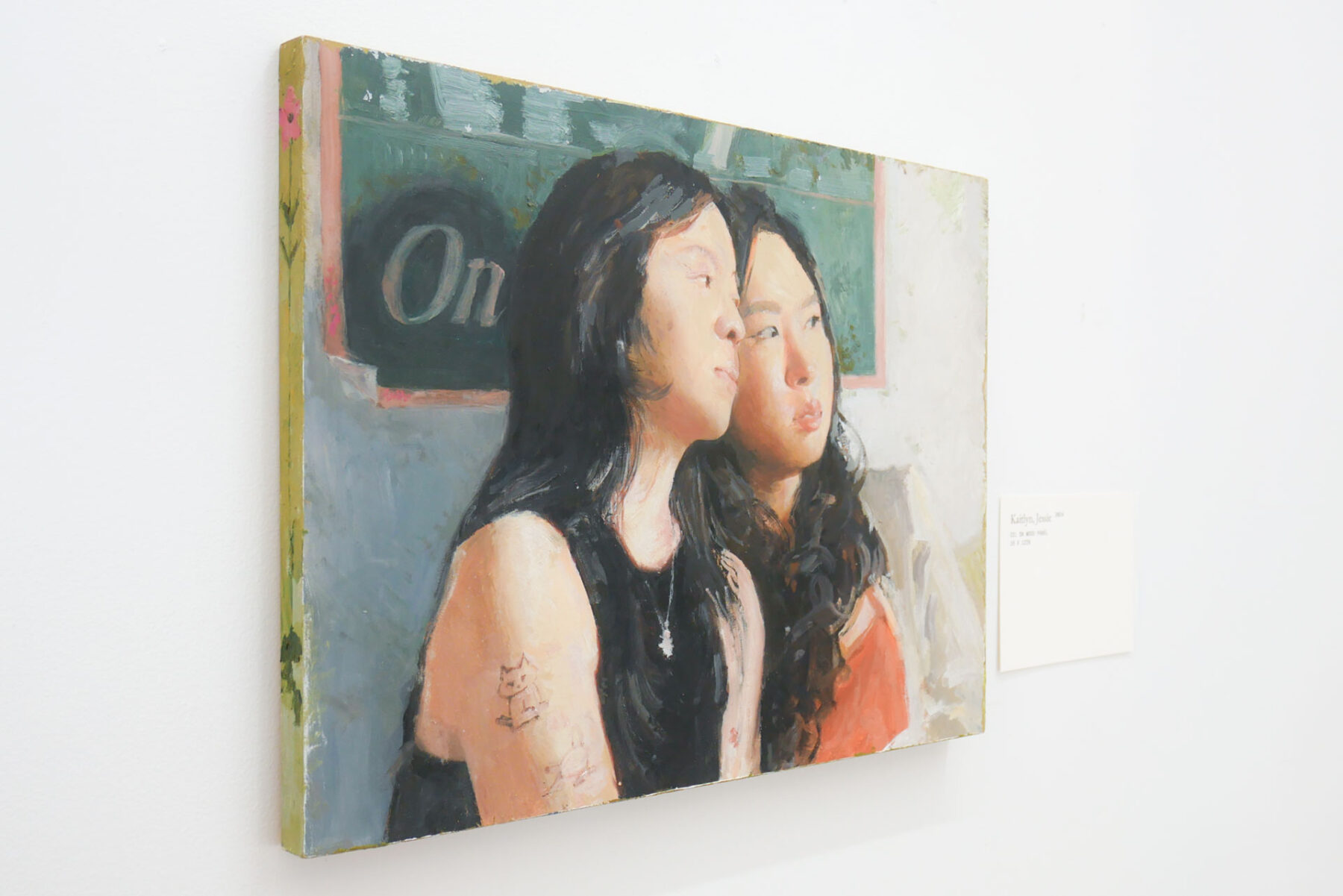
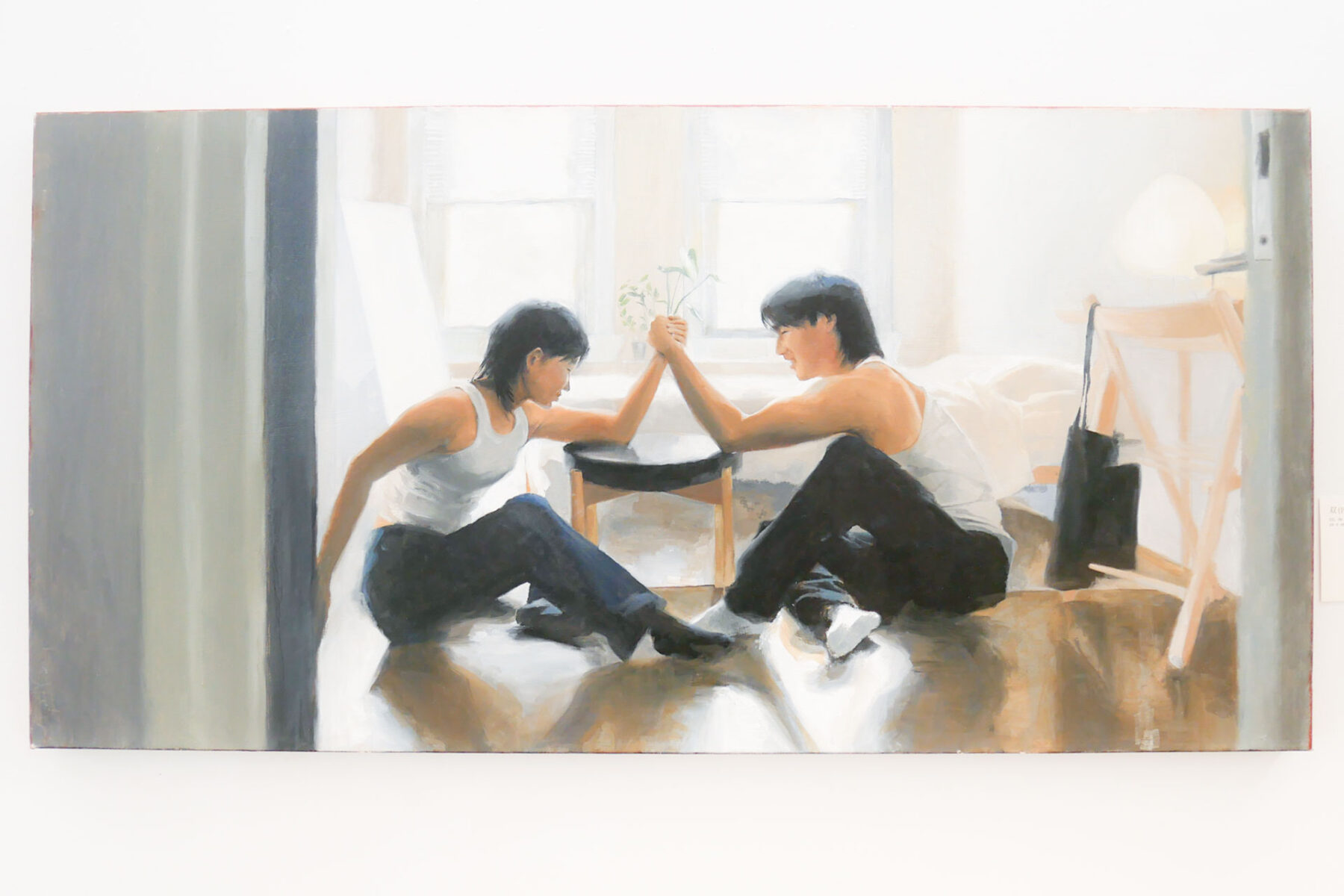
Her color palette is a direct intersection of her two disciplines. Referencing her studies in computer graphics, she notes that the human eye is evolutionarily tuned to be hypersensitive to the color green. Zhong intentionally defies traditional, “masculine” artistic rules that often shy away from kitsch. Instead, she embraces the color pink, finding it flirtatious and fun, especially when paired with complex, difficult-to-render greens.
Perhaps the most poignant takeaway from “Silicon Valley Girl” is Zhong’s reclamation of labor. In a world where technology is often harnessed for “short-term fixes causing long-term problems,” she offers a glimpse of what computer science could become in the absence of profit.
“The act of coding itself and the act of painting are very similar,” she explains. “It’s about getting into that flow where it feels like breathing. The problem isn’t coding itself, but the state of the world and the motivations behind it.”
When asked what the “Valley girl” of her high school years would think of the exhibition today, Zhong smiled. “I think she would be a bit envious. She would wish she could feel so secure in her queerness. She’d be happy that I’m still drawing and that I didn’t forget how to make art while studying computer science.”
“Silicon Valley Girl” serves as a manifesto for the modern polymath. Even in a world spiraling toward technological absurdity, there is still room to follow the rules, paint with pink, and find a version of success that finally feels like coming home.
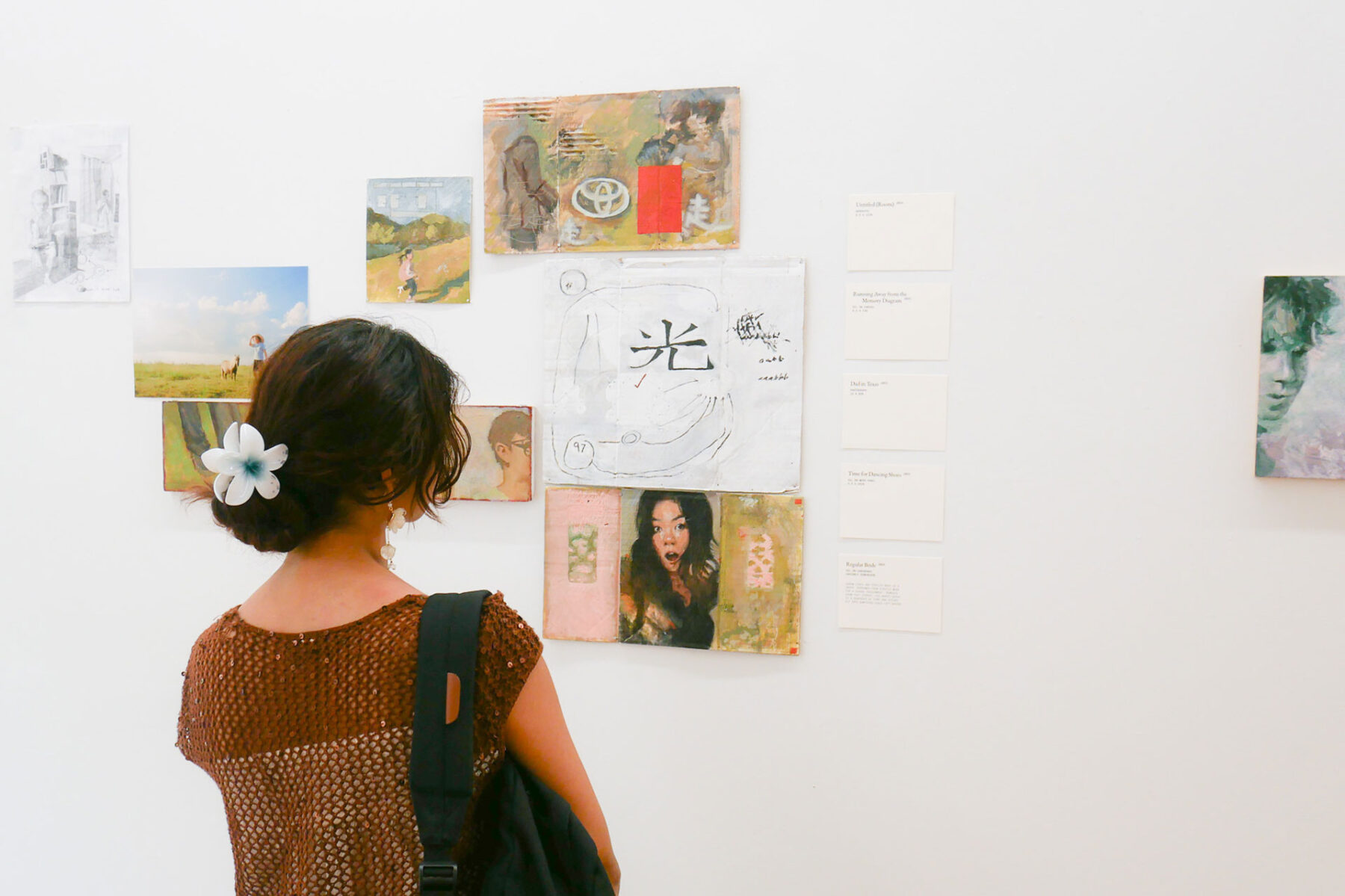
More from Suanna Zhong | suannazhong.com | @suannazhong
Amelia De Leon is a sophomore pursuing a BFA in the School of Art. Follow her at @ameliadeleonn.