Meghana Bisineer
Regina and Marlin Miller Head of School,
Professor of Art
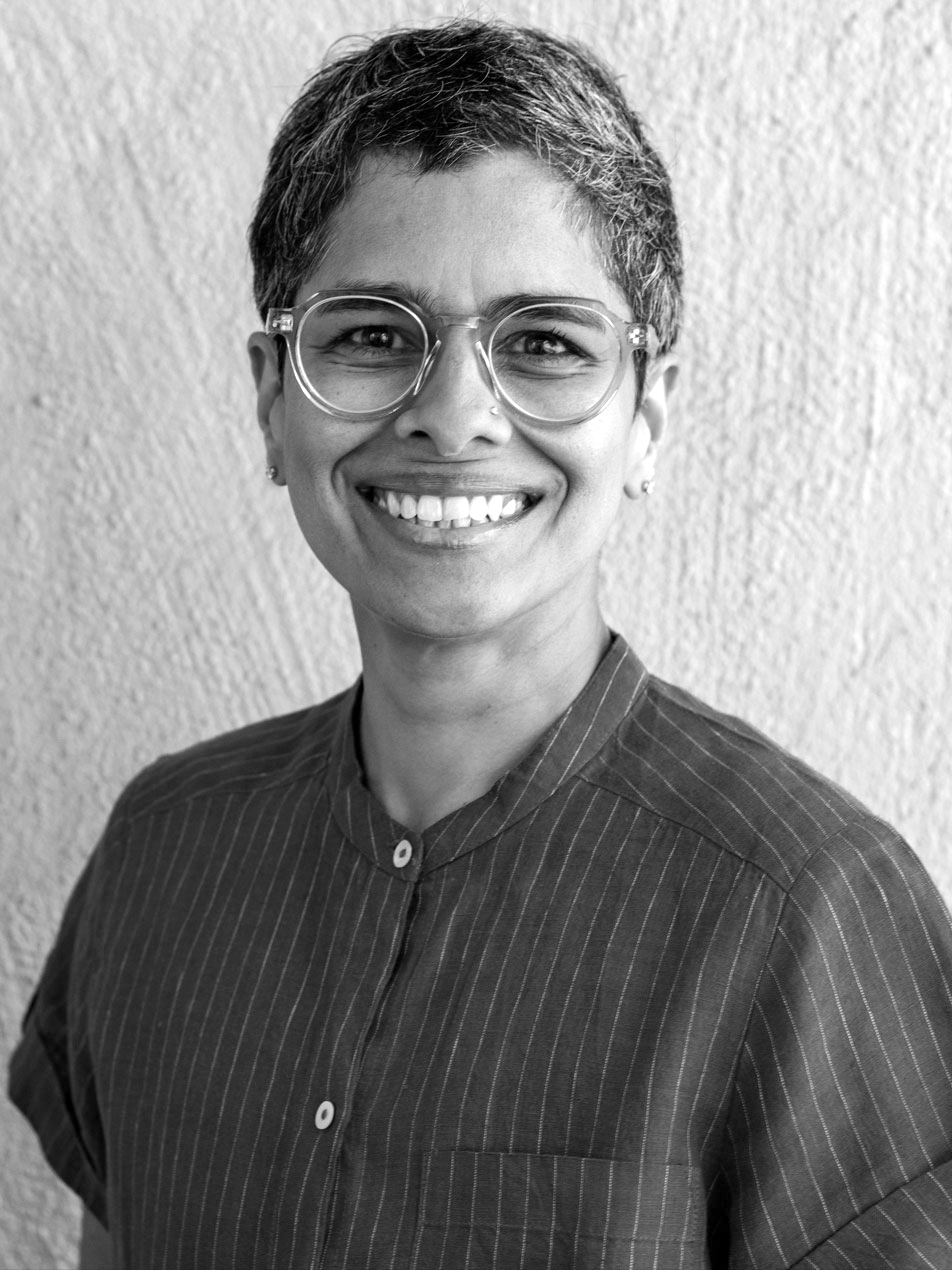
Meghana Bisineer (she/they) is an Indian-born artist, curator, and educator. Bisineer’s multiform works traverse experimental animation, installation, performance and ritual practice. Her works have been exhibited internationally in Asia, Europe and the USA across festivals, galleries, museums, and artist led spaces; including the Asian Art Museum, San Francisco, Berkeley Art Museum and Pacific Film Archive, Berkeley, Royal Festival Hall, London, Whitechapel Gallery, London, Annecy International Film Festival, Alchemy Film and Moving Image Festival, Scotland to name just a few. Bisineer joined CMU in August 2026 from California College of the Arts in San Francisco, where she served as Chair of Animation and Game Arts & Design since 2022 and as faculty since 2016. Bisineer works across Pittsburgh, California, India and the UK. She is the founder and co-curator of Eyewash Experimental Animation Salon and the artist run residency Upstream, based in the Sierra foothills. Bisineer is also part of the Dream Farm Commons collective, which stewards a project/gallery space in Oakland, CA.
Artist Statement
I am an interdisciplinary artist, educator, curator, and academic leader whose practice is rooted in experimental animation and extends across installation, performance, ritual practice, social engagement, and expanded forms of moving-image work. While my early training and professional experience were grounded in animation, my work has increasingly sought to expand the possibilities of what animation can be. I approach my craft as a way of thinking, sensing, and engaging with the world — a practice that can inhabit space, ritual, performance, material processes, community, and lived experience.
Over more than two decades of artistic practice, I have contributed to a growing discourse around expanded animation, helping to position animation as an interdisciplinary contemporary art practice capable of holding personal memory, embodied knowledge, cultural histories, speculative futures, and collective experience.
As a queer migrant moving between cultures, the themes of foreignness and home are present in my work. I am interested in the body and place as sites of multiple becoming. Through my practice, I seek ways of locating a changing self within an increasingly precarious world. Questions of migration, identity, labor, belonging, ritual, care, and cultural memory recur throughout my work, not as fixed subjects but as ongoing inquiries that unfold through making.
My artistic process is rooted in attention and presence. Influenced by both meditation practice and the traditions I inherited growing up in South India, I think deeply about the act of paying attention as an artistic methodology. In many ways, attention itself has become a material within my work. I think in time as my primary material. Through repetition, observation, duration, and embodied engagement, seemingly ordinary materials and gestures begin to reveal unexpected possibilities. Animation emerges not through spectacle, but through sustained encounters with people, places, objects, histories, and environments.
This understanding became particularly important during the pandemic. In the spring of 2020, during my sabbatical, what was intended to be a period of artistic focus and travel became a time of isolation and uncertainty. Stranded in London during global lockdowns, I began making drawings of a small stone on sheets of baking paper. When photographed and animated, the stone appeared to breathe. It was only later that I recognized how deeply this gesture was connected to the contemplative traditions I had grown up with — the act of meditating upon a stone, paying close attention to its presence and transformation.
At a time of rupture, I had unconsciously returned to a practice rooted in my cultural and spiritual inheritance. This evolved into my film ‘The Stone’. My work is process- and material-led, often developed through direct engagement with specific sites and communities. I enter into dialogue with places, materials, and histories rather than imposing predetermined forms upon them. Natural pigments, dust, food, textiles, found objects, sound, movement, light, architecture, and landscape become collaborators in the work itself.
This approach is exemplified by projects such as Dust and Raining Through My Bones, created on the terrace of my childhood home in Bangalore, India. Developed during a period marked by both personal return and global upheaval, these works emerged through an ongoing dialogue with natural materials, weather, memory, labor, and place. Created within and around a self-built bamboo structure, the projects explored ideas of femininity, migration, home, mortality, and belonging. The resulting animations function less as autonomous objects than as traces of durational, embodied encounters between inner and outer landscapes.
In recent years, ritual has become increasingly central to my artistic inquiry. I am interested in ritual not as a fixed cultural artifact but as a living methodology for making meaning, building community, transmitting knowledge, and creating spaces of care and resistance. Through food, collective gatherings, spoken word, sound, movement, textiles, repetition, and offerings, I investigate how embodied forms of knowledge might challenge dominant frameworks and create possibilities for connection across difference.
Works such as Beautiful In-between, Bad Yantra Cruel Mantra, KALI: A Thousand Names, Wipe Hands with Damp Flower, Sutra: The Stitchers, and the collaborative solo RASA explore the intersections of personal history, political memory, migration, spirituality, gender, and collective experience. These projects often expand beyond the frame of a film or installation into performances, communal meals, participatory actions, exhibitions, and conversations. I am interested in how artworks can become sites of encounter — spaces where people gather, reflect, share stories, and imagine alternative ways of being together.
One of the most meaningful aspects of my practice has been witnessing the resonance of deeply personal work with audiences across diverse cultural contexts. While many projects originate from specific experiences, places, and histories, they often find unexpected connections with viewers around the world. These encounters have reinforced my belief that artistic practice can function as a bridge between the intimate and the collective, between individual memory and shared experience.
My work has been presented internationally through exhibitions, screenings, festivals, museums, galleries, conferences, and artist-run spaces. It has screened at festivals including Oberhausen Kurzfilmtage, Ottawa International Animation Festival, London International Animation Festival, Taiwan International Animation Festival, Melbourne International Animation Festival, and Alchemy Moving Image Festival. It has been exhibited at institutions including MoMA, the Brooklyn Museum, Whitechapel Gallery, Royal Festival Hall, Berkeley Art Museum and Pacific Film Archive, the Asian Art Museum, Yerba Buena Center for the Arts, Kala Art Institute, Telematic, and The Exploratorium. More recently, my work has been featured in exhibitions in Japan and presented within international conversations around artistic research and expanded animation practices.
Alongside my studio work, I have become increasingly invested in building platforms and communities that support artistic experimentation and dialogue. Since 2016, I have co-founded and co-curated Eyewash Experimental Animation Salon, creating a sustained platform for artists working beyond conventional animation frameworks. Through screenings, conversations, workshops, and public programming, Eyewash has helped foster visibility and critical discourse around experimental animation practices.
Similarly, I co-founded Upstream, an artist-run residency in the Sierra foothills, and serve as a member of the collective that stewards and curates Dream Farm Commons, an artist-run gallery and project space in Oakland. These initiatives are not separate from my artistic practice; they are extensions of it. They emerge from a belief that the field grows through community, dialogue, mentorship, and the creation of spaces where artists can gather, exchange ideas, and take risks.
My scholarly work is likewise rooted in practice. Through conference presentations, invited talks, panels, and publications, I contribute to conversations around decolonization, migration, cultural memory, embodied knowledge, artistic research, and animation studies. Projects such as Unbound: Decolonizing the Encounter, presentations on practice-based research, and more recent initiatives including chairing Animating Antiracism reflect an ongoing commitment to examining how animation, art, and education might engage more critically with questions of power, representation, and knowledge production.
Throughout my career, I have sought to expand the boundaries of animation while remaining attentive to questions of care, community, and cultural responsibility. The various dimensions of my work — artistic practice, scholarship, teaching, leadership, mentorship, and curatorial initiatives — are deeply interconnected. Together, they form a practice grounded in attention, experimentation, relationship-building, and a belief in the capacity of art to create new forms of understanding and connection.
My contributions lie not only in the works I have created, but in the communities, conversations, and possibilities that those works have helped generate. Through artistic innovation, curatorial initiatives, scholarship, and pedagogy, I remain committed to advancing an expanded understanding of animation — one that embraces interdisciplinarity, embodied knowledge, critical inquiry, and the transformative potential of art in public life.