


Read how PhD candidate Alicia DeVrio explores the tension between stability and collapse through woven forms.
By Amelia De Leon
For Alicia DeVrio, a PhD candidate at Carnegie Mellon University’s Human-Computer Interaction (HCI) Institute, the loom is a site of sociotechnical resistance. Her exhibition at The Frame Gallery, titled “STRUCTURE/LESS: holding together // falling apart,” served as a tactile exploration while on view to the public, January 30-February 1.
DeVrio’s work centers on the friction between structure and structurelessness. DeVrio takes existing, traditional patterns and modifies them via computer software to introduce irregularities. By leaving large sections of the warp unwoven, she allows the fabric to droop and drape, creating forms that seem to be simultaneously disintegrating and coalescing. Patterns are shrunk or enlarged until they are embedded within themselves, defying the repetitive nature of industrial textiles. These “broken” structures are a physical manifestation of DeVrio’s research into how people resist harmful AI systems. DeVrio breaks the perfect repeat of a weave to reclaim agency from the machine.
“I think that there’s something pleasant about trying to see how much I can break in an existing weave structure,” DeVrio said. “It sometimes reveals unpatterned patterns. There are patterns that are traditional or accepted, and then you break those patterns when you see something new start to emerge.”
Though DeVrio initially viewed her weaving as a side thing, her artistic practice and her doctoral research into remediation and resistance have begun to merge. Her dissertation focuses on how those most affected by AI systems, marginalized communities and individuals can take control and resist technological harms.
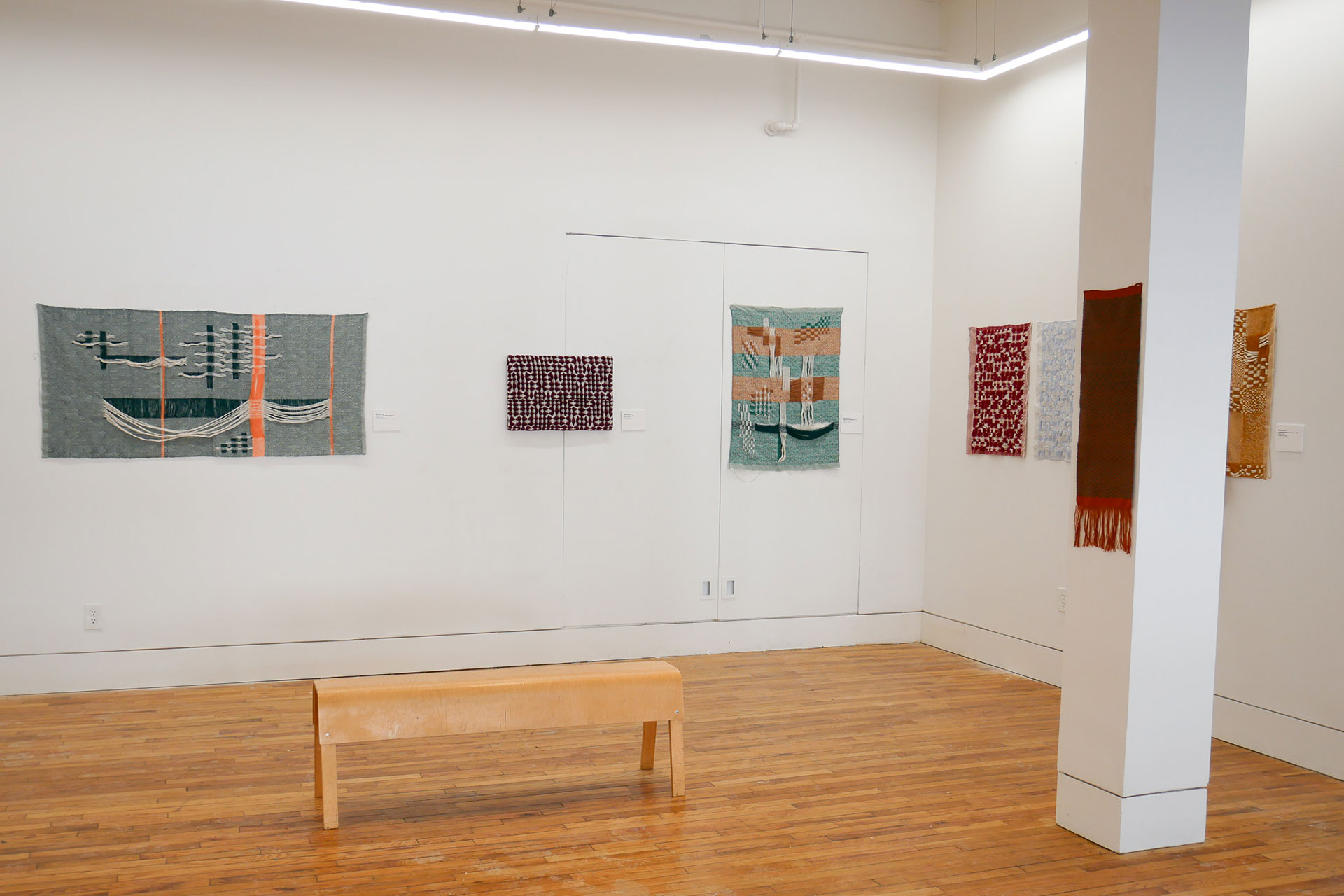
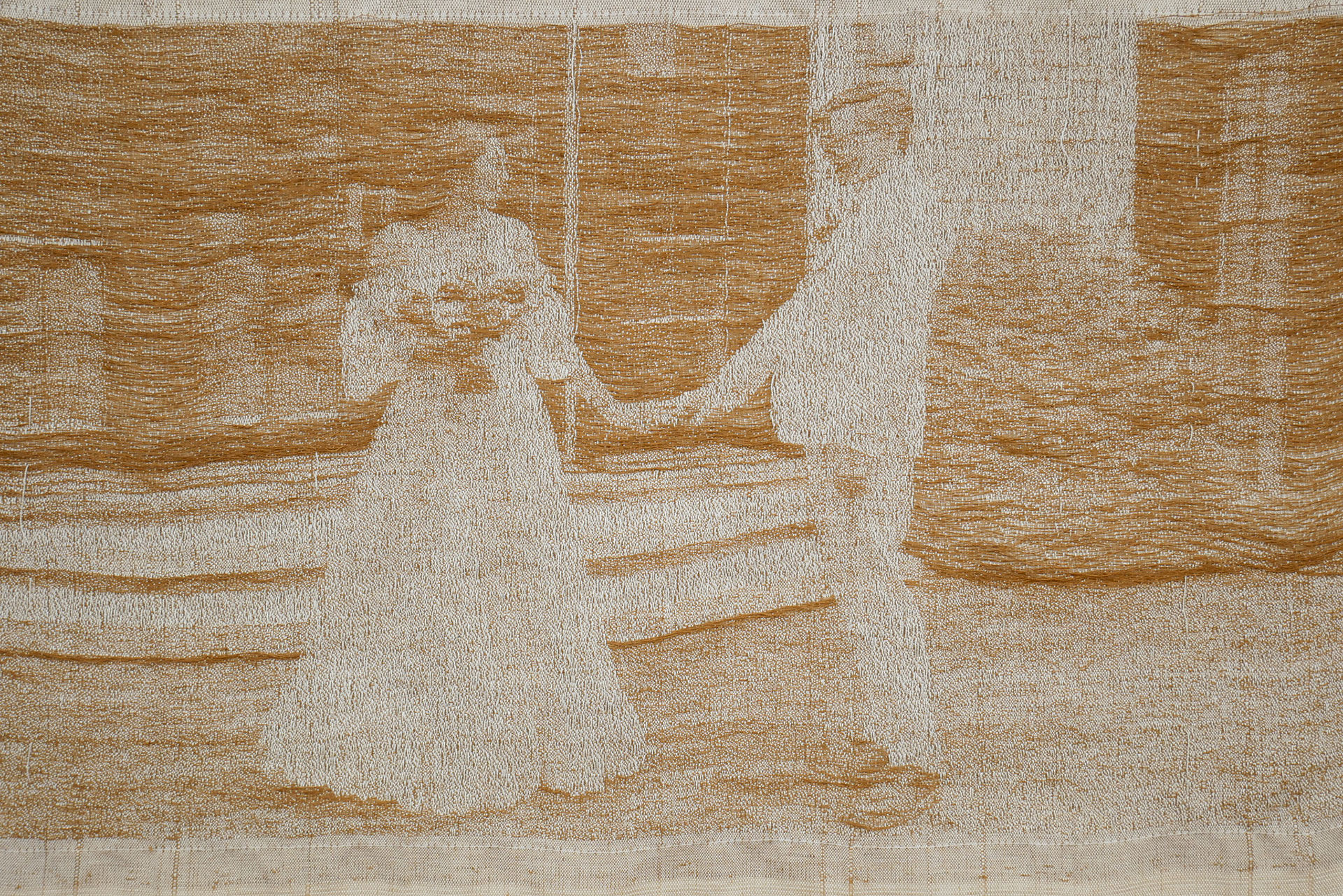


For DeVrio, the loom acts as an open machine. A loom is mechanical and transparent; when it jams, the error is visible and fixable. She embraces mistakes as opportunities for surprise, particularly in her use of color and unconventional tension. She views each piece as a finished product, but also as a set of notes on what it means to build a future out of fractured systems.
The exhibition reflected a massive investment of time and physical labor, where DeVrio highlighted that the majority of the work happens before a single thread is woven. The grueling process of stringing the loom and maintaining tension can take many hours. The act of throwing the shuttle, the clean weave, is fast, but the preparation is where the structural integrity is born.
By bringing her HCI background to the jacquard and tapestry looms, DeVrio creates human-centric generative art, one that stands in stark opposition to Generative AI. Her work is organic, chaotic, and fundamentally manual, offering a radical possibility for what happens when we choose to unmake the world in order to repair it.
More from Alicia DeVrio | aliciadevos.com | @aliciaweaves
Amelia De Leon is a sophomore pursuing a BFA in the School of Art. Follow her at @ameliadeleonn.