
Part fiction, part memory, Myers’ multimedia solo exhibition transformed The Frame Gallery on November 21-23 into a radioactive world of creatures and comics. In this Q&A, she shares how her hometown’s history shaped the show’s narrative, explored across sculpture, film, drawings, and more.
By Shienka Martinez
“In the foothills of Appalachia is the barely fictitious town of Artemis Valley, located in Geiger County. Strange lights blink in the sky at night. Hunters mysteriously disappear into the woods. Road kill is reborn. And located within the heart of the town- the nuclear processing plant, slowly seeping its radioactive material into the surrounding environment.” —“Geiger County” exhibition text


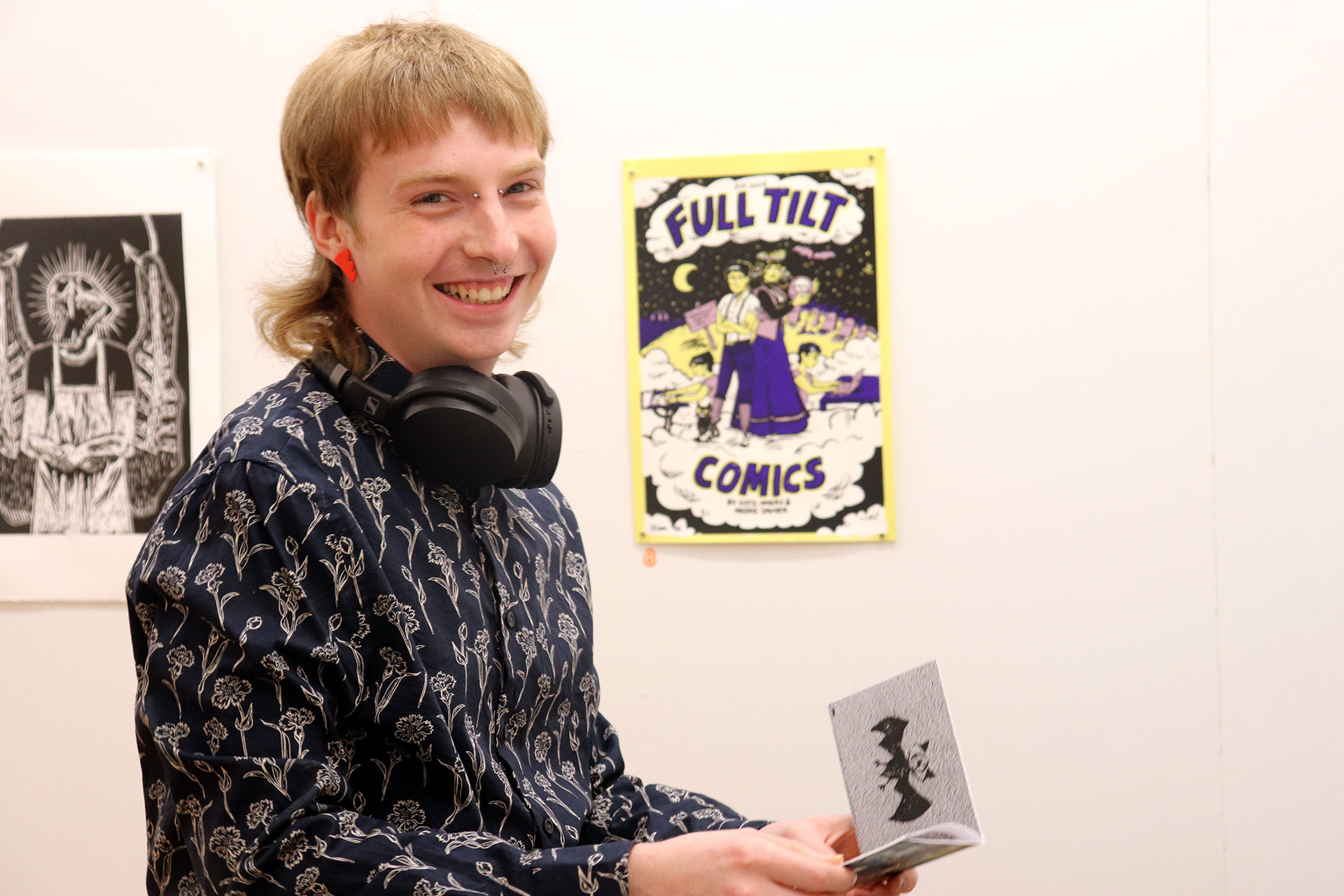
What inspired you to stage a “radioactive art show”?
The show is inspired by my hometown of North Apollo, Pennsylvania, where there used to be a nuclear plant. You can’t go on the grounds anymore because it’s still basically radioactive. Between the 1960s and 1970s, somewhere between 200 and 800 pounds of uranium went missing. The two theories with most credence are that it either leached into the environment or it was secretly sold to Israel to help them build atomic weapons. Honestly, I think both could be true. Because of all of this, the town has had long-lasting health effects, and I grew up feeling like I lived in a Stephen King small town, you know what I mean? So, yeah, it’s kind of all inspired after that.
And can you tell us more about the title?
The show is called “Geiger County.” A Geiger counter is a device that measures radioactivity in an area, and since the whole project is a very location-based kind of storytelling, “Geiger County” felt like a fun way to bring that idea into the name.
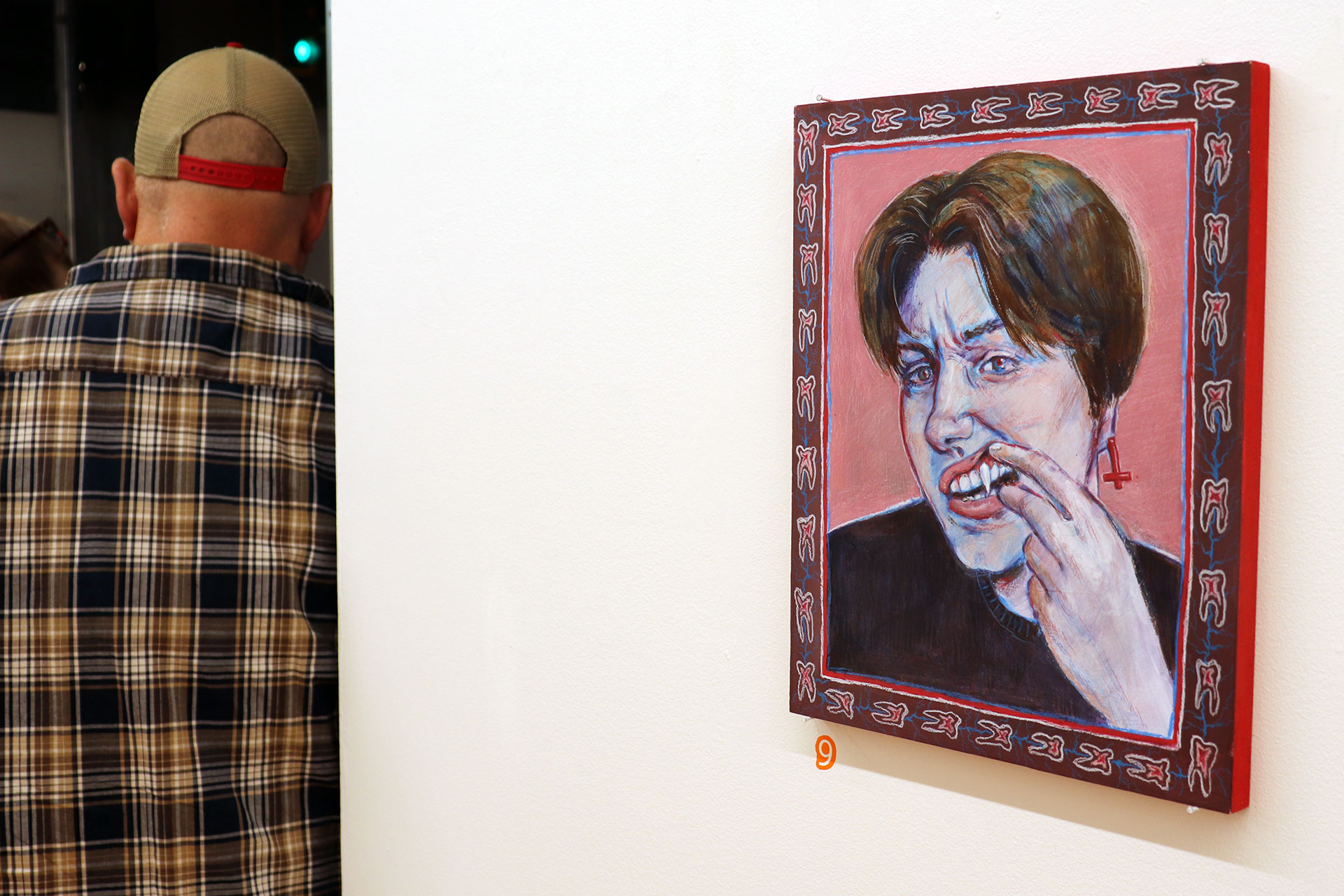
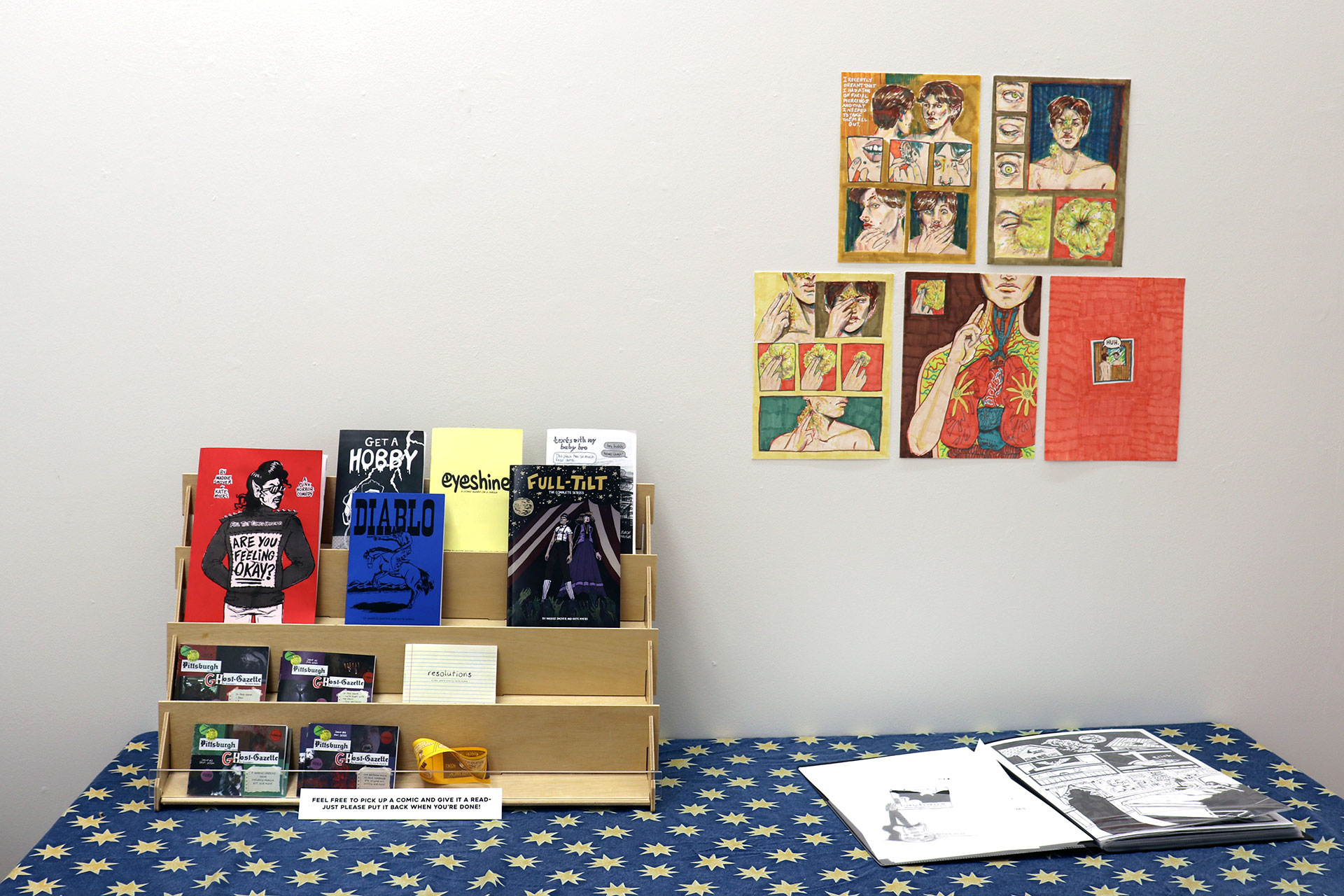
I’m noticing a lot of different mediums: sculpture, drawings, comics. How does all of that interact?
I’ve been imagining an alternate-universe version of my hometown where the radiation created creatures and strange phenomena. It felt like such a big idea at first that I wasn’t sure how to begin, but eventually I realized I could approach it through different mediums. All the pieces — sculpture, film, drawings — build off each other to create a shared atmosphere. I’ve always been a multimedia artist, so getting to show everything together in one space has been exciting. Usually, work gets separated by class or context, and now you can experience it all in one go, and it is really fun!


Is there one piece that you feel really represents the show?
It’s like choosing between my children, but I will say I really love Meat Lump, the film. I spent a whole semester on it and built the puppets that are also being displayed in the show. It’s weird and gross, but also cute and silly, and I think that mix makes it really fun.
How do you see this work continuing?
I think I’ll always come back to these themes. Like, it’s kind of just how I was raised, my history, how I grew up and the things I love. I have a lot more of this world to kind of explore, hopefully through film. I’m hoping to do a larger film based on this kind of concept.
To end, is there anything else you’d like to share?
I’d love to plug St. Baldrick’s, which is a nonprofit that raises money for childhood cancer research. Childhood cancer disproportionately affects my area because of the pollution and the lingering contamination, so it’s a cause that’s really personal to me. If you’re able to donate even a few dollars to St. Baldrick’s, I’ll give you a free print as a thank-you.
More from Kate Myers | katemyersart.wordpress.com | @katemyyers.art
Shienka Martinez is a junior pursuing a BFA in the School of Art.